Will the US invade Greenland?
Published
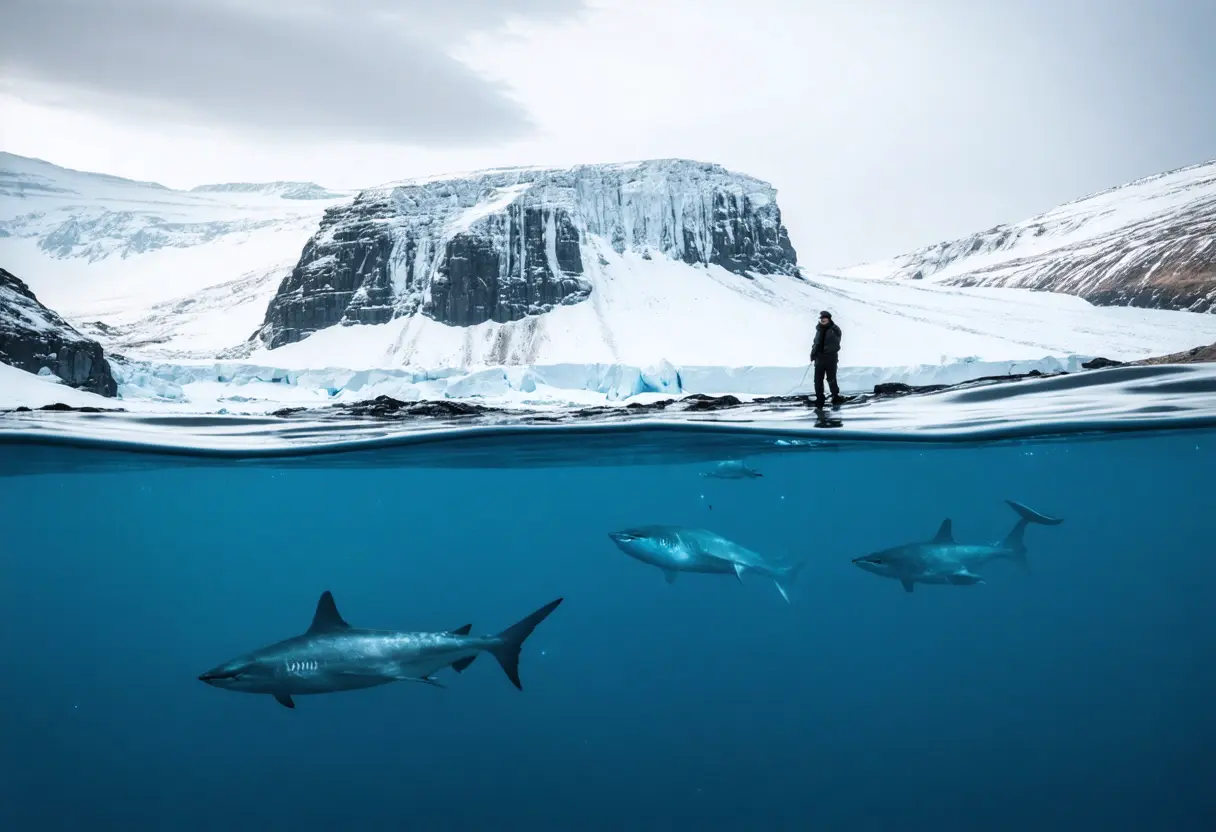
Will the US invade Greenland?
Every few years, a headline spikes and the same anxious question returns: Will the United States invade Greenland? The idea sounds like a Cold War thriller, and it has been fed by real events, including renewed great-power competition in the Arctic, Washington’s growing fixation on critical minerals, and the very public “buy Greenland” episode that put an old geopolitical concept back into mainstream conversation.
But if you strip away the clickbait, the short, factual answer is this: a US invasion of Greenland is extraordinarily unlikely. An annexation by force is even less likely. A negotiated purchase is theoretically imaginable in the way that “anything is imaginable,” but in the real world it runs into political, legal, and moral walls that make it close to impossible.
What is likely is continued, intensifying American pressure and courting: more military investment, more diplomacy, more economic incentives, and more rhetoric about “security,” “Russia,” “China,” and “the Arctic.” In other words, influence rather than invasion.
Let’s unpack the real drivers behind the question, why the Venezuela situation keeps getting dragged into it, and what would have to change for any scenario involving annexation or purchase to become plausible.
Greenland is not a vacant chessboard. It’s part of the Kingdom of Denmark.
Greenland is an autonomous territory within the Kingdom of Denmark. It has its own government and handles many domestic matters, while Denmark retains responsibility for defense and foreign affairs in cooperation with Greenlandic authorities. Greenlanders also have a clear and widely discussed political trajectory: many want more autonomy, and some support eventual independence.
That matters because a US move to “take” Greenland is not a matter of grabbing an unclaimed island. It would mean coercing or attacking a NATO ally (Denmark), overruling Greenland’s population, and detonating the credibility of the rules-based order the US itself has spent decades championing.
An “invasion of Greenland” would not be interpreted as a tactical maneuver. It would be seen as a global rupture.
Why this question keeps coming back: Arctic strategy, bases, minerals, and symbolism
If you want to understand why Greenland is constantly in the news, stop thinking about it as a frozen curiosity and start thinking about it as three things at once: geography, geology, and geopolitics.
Geographically, Greenland sits where North America meets the Arctic and the North Atlantic. In an era of long-range missiles, space assets, and sensor networks, that location is not a footnote. It is a strategic platform.
Geologically, Greenland is discussed in the same breath as rare earths, critical minerals, uranium, and other resources tied to clean energy supply chains and defense manufacturing. Not every mineral headline turns into a mine, and Arctic extraction is expensive and politically fraught, but the strategic interest is real.
Geopolitically, Greenland is a symbol. It represents Arctic access, climate-driven change, and the new scramble for influence in regions that used to be peripheral.
Those drivers are why American leaders talk about Greenland so much more openly today than they did twenty years ago. The discussion is not imaginary. The extreme scenario of an invasion is.
The “buy Greenland” episode: what it revealed, and what it didn’t
When the idea of purchasing Greenland was floated publicly in recent years, many observers laughed it off as a stunt. But inside the national security world, the underlying concept was not new. The US has historically used purchase and treaty mechanisms to expand territory, and American officials have contemplated Greenland in strategic terms since the Second World War.
What the episode actually revealed was not a secret plan to invade or annex. It revealed a few uncomfortable truths:
First, Washington is thinking more transactionally about strategic geography again, especially in the Arctic.
Second, public rhetoric can be clumsy, even when the underlying interest is serious.
Third, Denmark and Greenland have their own agency, and they reacted accordingly. A sale is not Denmark’s to offer in any simple way, and it is certainly not a commodity to be traded over the heads of Greenlanders.
So yes, the “US buying Greenland” idea exists as rhetoric and as a recurring historical fantasy. But it collides with the modern reality of self-determination and democratic legitimacy.
The Venezuela situation: why people connect it to Greenland
You asked specifically about “the Venezuela situation” and how it might affect the likelihood of a US invasion, annexation, or purchase of Greenland. The reason people connect these dots is straightforward: whenever Washington takes a hard line in the Western Hemisphere, critics and commentators look for a pattern. They ask whether the US is returning to a more openly coercive posture, whether it might flex power near its perceived sphere of influence, and whether resource politics are driving foreign policy.
In Venezuela’s case, the mix of sanctions, diplomatic isolation, oil politics, and regional security concerns creates a narrative that some people interpret as “the US will do anything for resources.” That narrative then gets mapped onto Greenland: critical minerals, Arctic routes, strategic basing.
But it’s a category error. Venezuela is a sovereign state in a region where the US has historically applied heavy pressure, sometimes disastrously. Greenland is tied to Denmark, a NATO ally, and sits inside a dense network of allied defense planning. The costs of coercion against Greenland would be dramatically higher.
If you’re looking for practical inference from the Venezuela discourse, it isn’t “the US will invade Greenland.” It’s “the US is willing to apply sustained pressure when it believes strategic interests are at stake.” In Greenland, that pressure shows up as diplomacy, basing agreements, infrastructure support, and investment competition, not amphibious landings.
What the US already has in Greenland: strategic access without annexation
A key reason “Will the US invade Greenland?” is mostly the wrong question is that the United States already has meaningful defense access through longstanding agreements, including major military infrastructure historically associated with US presence on the island. In other words, the US can pursue Arctic security objectives without owning Greenland.
From a Pentagon planning perspective, the marginal benefit of annexation compared to negotiated access is small, while the political and alliance costs are catastrophic. That is usually the decisive point.
If you can get what you want through agreements, you don’t burn down NATO to get a flag on a map.
How an invasion would actually play out politically: it would be a self-inflicted strategic disaster
To assess likelihood, you don’t just ask “Can the US do it?” You ask, “Would the US leadership choose to pay the price?”
An invasion of Greenland would instantly create several problems that Washington’s national security establishment is designed to avoid:
It would trigger a crisis with Denmark and likely fracture NATO. Even if legal arguments were spun, the perception would be that the US attacked an ally.
It would hand propaganda victories to Russia and China for a generation. Any US criticism of territorial aggression elsewhere would ring hollow.
It would create long-term resistance on the island. Greenland is not an empty ice sheet; it is home to communities with political institutions. Forced annexation would breed enduring opposition, which is the opposite of “strategic stability.”
It would spook other Arctic partners and push them to hedge against the US rather than cooperate.
That combination is why invasion scenarios read as internet speculation more than sober policy analysis.
Annexation: even less plausible than invasion
People sometimes distinguish between “invasion” and “annexation,” imagining a scenario where the US somehow absorbs Greenland legally after a crisis.
Annexation requires legitimacy. In the modern era, legitimacy depends on consent, treaties, and the will of the people who live there. Greenland has a clear identity and its own political future. If Greenland ever changes its status, it will be through Greenlandic politics, negotiations with Denmark, and international recognition. A unilateral annexation by Washington would be treated as an illegal land grab.
Could a future Greenland choose a radically different association with the US? In theory, a newly independent Greenland could negotiate very close security and economic ties with America. But that would not be annexation in the classic sense, and it would not resemble an invasion. It would resemble a small state seeking security guarantees and investment, the same way many states do.
Purchase: the only “nonviolent” scenario, and still deeply unrealistic
A US “purchase of Greenland” is the least absurd of the three scenarios because it has historical precedent in American expansion and because it avoids open warfare. But in practice, it runs into fundamental obstacles:
Greenland is not simply Denmark’s property to sell. The idea clashes with modern norms of self-determination and democratic consent.
Any serious move would require Greenlanders to agree, and that means referendum-level legitimacy, not a backroom deal.
Denmark has no incentive to entertain it. The political backlash domestically and across Europe would be immense.
For the US, offering some astronomical price would still not solve the legitimacy issue. Money doesn’t buy sovereignty from a people who don’t want to be bought.
So while “Will the US buy Greenland?” will remain a persistent search term and a recurring talking point, it is best understood as rhetorical signaling and media spectacle rather than a real policy pathway.
What is likely instead: deeper US-Greenland ties, more bases, more investment, and more competition with China and Russia
The realistic future is not invasion. It is intensifying courtship and strategic alignment.
Expect more of these developments, because they fit the incentives of all the players involved:
The US will continue to strengthen Arctic defense posture, including radar, surveillance, space-related infrastructure, and logistics, in cooperation with Denmark and Greenland.
Washington will compete with China’s economic outreach by offering more investment, diplomatic attention, and development support tied to infrastructure, airports, ports, and communications.
Critical minerals will remain a focal point. Not all projects will be viable, and environmental and local political debates will slow many of them, but the strategic conversation will only grow louder as global supply chain anxieties rise.
Greenland will keep leveraging its position to extract better deals and more respect from larger powers. Greenlandic leaders understand the island’s strategic value, and they will use it.
This is where Venezuela-style narratives about resources and leverage can be relevant, not because the US is about to invade Greenland, but because resource geopolitics drives competition in subtler, persistent ways.
The edge cases people worry about: what would have to happen for coercion to become thinkable?
If you’re reading this because you want a serious risk assessment, the honest answer is that no one can say “never” about anything in geopolitics. But you can say “so unlikely it would require extreme shocks.”
A coercive US move against Greenland would require multiple guardrails to fail at once: a dramatic breakdown in NATO cohesion, a severe global security crisis where Washington believes Greenland is existentially decisive, and a US domestic political climate willing to absorb worldwide outrage and long-term blowback.
Those are not the conditions we see today.
Even during periods of heated rhetoric and hardline postures, US institutions are structured around alliance management, not territorial conquest of allies. And Denmark is not isolated. It is embedded in Europe and NATO in a way that makes coercion strategically irrational.
So, will the US invade Greenland?
No, the United States is not likely to invade Greenland. The strategic logic points the other way: the US already gains key military advantages through agreements and allied cooperation, and an invasion would shatter NATO, empower adversaries, and undermine America’s global position.
What you should watch instead is the quieter story that rarely makes sensational headlines: the steady expansion of American influence in Greenland through defense cooperation, diplomacy, and economic competition. That is where the real action is, and where rhetoric, sentiment, and strategic planning actually converge.
If you’re trying to forecast the next five to ten years, bet on more Arctic military infrastructure, more debate over rare earths and critical minerals, more US-Denmark-Greenland negotiations over access and investment, and more headlines that flirt with the language of annexation without ever crossing into reality.
That is the real answer behind the search query “Will the US invade Greenland?” and it’s also the one that survives contact with how modern alliances, international law, and Arctic politics actually work.
Worth sharing?
Send this to someone who would find it useful.