Will China invade Taiwan in 2027?
Published
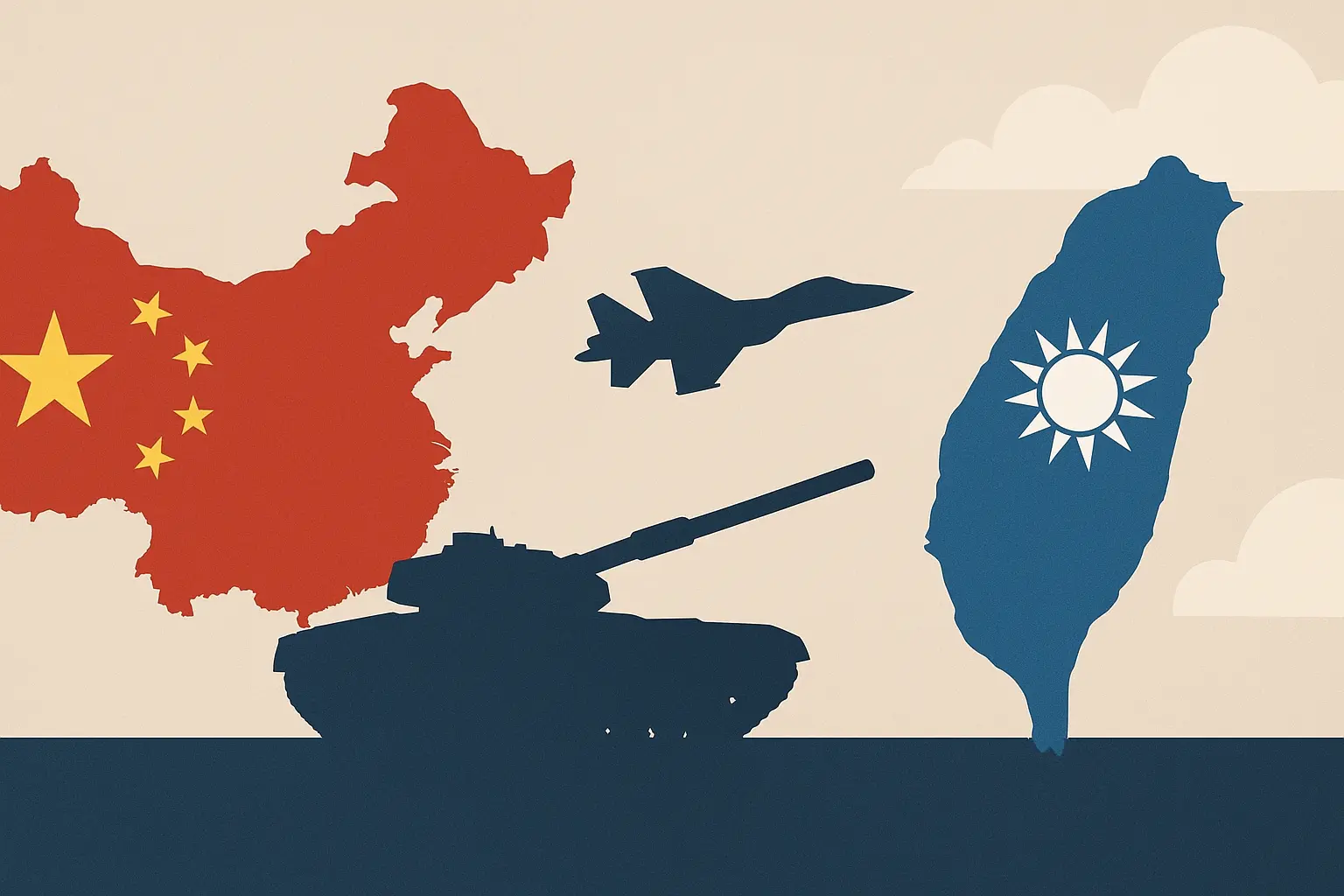
Will China invade Taiwan in 2027?
A date can be a weapon. It gets repeated, clipped into headlines, shared in group chats, and slowly hardens into “common knowledge.” For Taiwan, “2027” has become that kind of date: a year that feels close enough to plan around and distant enough to speculate about. Investors quietly ask whether supply chains will survive it. Families in Taiwan wonder what “normal life” looks like if the Taiwan Strait turns tense. Policymakers in Washington, Tokyo, and Beijing use the number as a reference point for budgets, exercises, and speeches.
So will China invade Taiwan in 2027?
No one outside a small circle in Beijing could answer that with certainty, and even inside that circle reality can change fast. But we can do something more useful than guessing. We can examine the incentives, the military constraints, the political timelines, and the warning signs that would make a 2027 Taiwan invasion more or less likely. We can also translate all of that into practical, actionable ways to track risk without drowning in doomscrolling.
Why “2027” became the focal point for a China-Taiwan invasion
The year didn’t appear from nowhere. It rose to prominence because multiple signals, some public and some interpreted, seem to converge around it.
The “2027” timeline and what it actually means
The most cited source in public debate is the idea that China’s military, the People’s Liberation Army (PLA), has been directed to be capable of taking Taiwan by 2027. This is often described as an “order to invade,” but capability targets and invasion decisions are not the same thing. Militaries set readiness milestones all the time, and leaders use them to keep institutions moving.
A capability milestone typically implies:
- Amphibious lift, sealift, airlift, and logistics improvements.
- Joint command and control that can coordinate air, naval, missile, cyber, and ground forces.
- Stockpiles of precision munitions and the industrial capacity to replace them.
- Training for contested landings, air assault, blockade operations, and urban fighting.
A political decision to invade would require much more than capability. It would require confidence that the military can succeed quickly, that domestic politics can absorb the costs, and that international blowback is manageable.
Why capability does not equal intent
A useful way to think about it is to separate “can” from “will”:
- Can the PLA execute an operation against Taiwan at an acceptable cost?
- Will Beijing choose to do so in 2027 rather than later or not at all?
Capability tends to increase gradually. Intent can change suddenly due to leadership priorities, economic shocks, perceived provocations, or miscalculation. That is why the question “Will China invade Taiwan in 2027?” is ultimately about conditions rather than calendars.
The strategic logic: what Beijing wants, what Taipei fears, and what Washington signals
If you want to predict the probability of a Taiwan invasion, start with motivations and constraints. Strategy is where incentives meet reality.
Beijing’s objectives: unification, legitimacy, and deterrence
Beijing’s stated goal is unification, and it frames Taiwan as a core sovereignty issue. But there are layers beneath that:
- Legitimacy: National unity plays well domestically and reinforces the ruling party’s narrative of restoring China’s status.
- Deterrence: Even without invading, sustained pressure on Taiwan can deter moves toward formal independence and discourage foreign support.
- Regional power projection: Control over Taiwan would reshape the military balance in the Western Pacific, affecting sea lanes and U.S. alliances.
The key point is that Beijing has options short of invasion that still advance its goals.
Taipei’s reality: resilience, readiness, and political signaling
Taiwan is not a passive actor. Over the last several years, it has pushed reforms that matter in a crisis: reservist training, civil defense discussions, and the acquisition of systems designed to deny and punish an attack rather than mirror China platform for platform.
Taipei also has to manage political signaling. Overly provocative gestures can raise tension. Overly timid moves can invite coercion. This tightrope matters in the years leading up to any putative 2027 scenario.
Washington, allies, and the “strategic ambiguity” factor
The United States has long maintained a posture often described as strategic ambiguity, blending arms support for Taiwan with deliberate uncertainty about the exact conditions under which it would intervene. Meanwhile, Japan, Australia, and European partners increasingly speak about stability in the Taiwan Strait as a global economic interest.
From Beijing’s perspective, the most dangerous scenario is one where Taiwan grows more secure and internationally connected over time. From Washington’s perspective, the most dangerous scenario is one where Beijing believes the window is closing and decides to act.
That dynamic can create a temptation to “move sooner,” but it can also deter action if Beijing concludes the costs are too high.
Military and logistical realities: what an invasion would actually require
“Invasion” is often used as shorthand, but Beijing has multiple military options. The question “Will China invade Taiwan in 2027?” depends partly on which operation we mean.
Three main pathways: invasion, blockade, or coercive campaign
A simplified menu of options looks like this:
- Full-scale amphibious invasion: The most dramatic and most difficult path. Requires landing forces, seizing ports and airfields, and sustaining them under fire.
- Blockade or “quarantine”: Uses naval and air power plus missiles to restrict trade and pressure Taiwan economically and psychologically. This can be calibrated and plausibly framed as “law enforcement.”
- Coercive strikes and decapitation attempts: Missile salvos, cyberattacks, and special operations to paralyze decision-making and air defenses, potentially paired with limited seizures of offshore islands.
An invasion is the hardest to pull off. A blockade is often seen as more feasible and could still be catastrophic for Taiwan’s economy.
Why amphibious assault is brutally hard
Taiwan presents daunting geography and operational challenges:
- Limited suitable landing beaches and easily targeted approaches.
- Rough seasonal weather in the Taiwan Strait, narrowing optimal windows.
- Dense urban terrain where defenders can slow advances.
- The need for sustained logistics across a contested sea and air corridor.
Even if initial landings succeed, the operation does not end. The attacker must maintain fuel, ammunition, medical evacuation, and replacement forces for weeks or months.
The missile and air power factor
China has built a formidable missile force and air capabilities that could threaten Taiwan’s airfields, radars, and command centers. But modern war also favors dispersal and hardening. Taiwan can operate from highways, use mobile air defenses, and leverage deception.
A realistic crisis could include:
- Missile strikes on runways and ports.
- Cyber operations aimed at communications, finance, and utilities.
- Electronic warfare to degrade sensors and targeting.
- Pressure campaigns to create panic and political division.
The more resilient Taiwan is, the less likely Beijing can count on a quick collapse, which matters enormously for invasion calculus.
A data-driven way to follow capability trends
If you want to track whether 2027 looks like an inflection point, watch for a few measurable indicators:
- Amphibious lift expansion: New landing ships, civilian roll-on/roll-off ships integrated into military planning, and large-scale joint landing exercises.
- Munitions production and stockpiles: Signs of surge capacity and procurement patterns.
- Joint training tempo: Complexity and realism of exercises, especially those simulating blockades and contested landings.
- Command reorganization: Shifts that improve joint operational coordination.
Here is a simple way to build a personal “risk dashboard” using publicly available reporting. You can paste this into a notes app and update it monthly.
Taiwan Strait Risk Dashboard (Monthly)

1) PLA activity
- Number of large joint exercises near Taiwan:
- Notable amphibious drills (Y/N + details):
- Air sorties and naval patrol patterns:

2) Economic posture
- China capital controls tightening? (Y/N)
- Strategic commodity stockpiling signals:
- Rhetoric about "self-reliance" increasing?

3) Diplomatic environment
- Crisis-level incidents (collisions, near misses):
- New sanctions, export controls, alliance statements:

4) Taiwan readiness
- Civil defense initiatives:
- Reserve training reforms:
- New arms deliveries (air defense, anti-ship missiles):

5) Market and logistics signals
- Shipping insurance spikes:
- Airline reroutes:
- Semiconductor supply chain hedging moves:
This does not predict war, but it forces you to focus on observable changes instead of viral speculation.
Political and economic constraints: the costs that make 2027 uncertain
War is not only a military problem. It is a regime stability problem, an economic problem, and a personal legacy problem for leaders.
China’s economic tradeoffs
A major conflict over Taiwan would likely trigger:
- Sanctions and export controls from advanced economies.
- Disruption of critical imports, especially energy.
- Capital flight pressures and financial market instability.
- A collapse in trade flows through the region.
Beijing may believe it can absorb some of this, especially if it anticipates gradual decoupling anyway. But the central question is whether leaders conclude that the cost of waiting is higher than the cost of acting.
Domestic politics and leadership timelines
Analysts often map geopolitical risk onto political cycles, including leadership milestones, party meetings, and election years abroad. The temptation is to treat those cycles as deterministic. They are not, but they do influence risk.
A leader who believes national unification is tied to personal legacy may see deadlines where others see flexibility. Conversely, leaders often prefer stability when economic headwinds are strong or when internal priorities require focus.
Taiwan’s elections and perceived red lines
Taiwan’s domestic politics also matter. Beijing watches for signals it interprets as movement toward permanent separation. Taipei, meanwhile, calibrates language and policy in a way that can either lower or raise Beijing’s threat perceptions.
The most dangerous periods in international politics are often those where each side believes the other is changing the status quo.
What would warning signs look like in 2026–2027?
If a 2027 China invasion of Taiwan were genuinely being prepared, it would likely create detectable ripples. Not all would be visible to the public, but many would.
Indicators that would increase concern
Look for clusters of signals rather than any single headline:
- Sudden, sustained mobilization: Reservist call-ups, unusually large training cycles, and logistics movements inconsistent with normal exercises.
- Civil defense and propaganda shifts: Messaging that prepares the public for sacrifice, disruptions, and confrontation.
- Economic insulation moves: Aggressive stockpiling, tighter capital controls, and policies that reduce vulnerability to sanctions.
- Maritime and airspace patterns: Extended “exclusion zones,” frequent intercepts, and legal framing of a quarantine.
- Diplomatic hardening: Evacuations of citizens, warnings to airlines and shipping, and intensified blame narratives.
Indicators that would lower near-term risk
There are also signals that suggest Beijing prefers continued pressure rather than war:
- Resumption or expansion of cross-strait engagement in trade, tourism, or dialogue formats.
- A focus on long-term coercion tools such as legal, economic, and influence operations rather than military escalation.
- De-escalatory military postures after crises, especially if paired with confidence-building measures.
The most plausible “grey zone” scenario around 2027
Many analysts consider a blockade-like operation, framed as a “quarantine” or “customs enforcement,” more plausible than an amphibious invasion in the near term. It could be designed to:
- Test U.S. and allied responses without committing to land combat.
- Create internal political pressure inside Taiwan.
- Force negotiations under duress.
That is not a reassuring alternative. A blockade could still produce severe economic damage and risk escalation. But it is important because people often ask “invasion or not,” while the real risk spectrum includes many coercive steps that can happen before an invasion.
Practical advice: how to think about 2027 without panic or denial
If you are reading this because you live in Taiwan, have family there, run a business exposed to the region, or simply want to understand global risk, the goal is to turn anxiety into preparation.
For individuals and families: readiness without catastrophizing
A realistic, calm approach includes:
- Build a communication plan: Agree on check-in times, backup apps, and a non-local contact who can relay messages.
- Prepare for short disruptions: Keep a few days to two weeks of essentials depending on your situation, including medications.
- Document readiness: Ensure passports, residency documents, and critical records are backed up securely.
- Learn local guidance: Follow official civil defense information and local community resources, not rumor threads.
If you are outside Taiwan but have family there, focus on connectivity and contingency planning rather than trying to “predict the date.”
For business leaders: scenario planning that actually works
If your supply chain touches Taiwan, especially semiconductors, electronics, or advanced manufacturing, planning should be concrete.
Use a three-tier scenario approach:
- Baseline tension: Increased inspections, occasional exercises, higher insurance costs.
- Sustained coercion: Quarantine or blockade-like pressure, shipping disruptions, cyber incidents.
- Major conflict: Severe shipping interruption, sanctions regime, multi-region recession risk.
Actionable steps:
- Map dependencies down to tier-2 and tier-3 suppliers.
- Pre-negotiate alternative logistics routes and inventory buffers.
- Stress-test your cyber posture assuming phishing and disruptive malware during a crisis.
- Review contract clauses for force majeure and delivery obligations.
For investors and analysts: track signals, not narratives
If you are watching the “Will China invade Taiwan in 2027?” debate as an investor, avoid overreacting to sensational predictions. Use a structured information diet:
- Follow a small set of credible sources consistently.
- Track objective indicators like shipping insurance, route changes, defense procurement, and diplomatic posture.
- Watch for sudden policy moves that suggest economic insulation and mobilization.
A rule of thumb: a single viral clip changes nothing. A month of reinforcing signals across military, economic, and diplomatic domains changes the odds.
Conclusion: 2027 is a lens, not a prophecy
The honest answer to “Will China invade Taiwan in 2027?” is that it remains uncertain, and anyone selling certainty is selling something else. What we can say is clearer: 2027 matters because it is associated with PLA capability milestones and because it has become a psychological marker for policymakers and the public. But the decision to invade depends on perceived costs, perceived opportunities, and the risk of escalation with the United States and regional allies.
If you want to stay grounded, stop treating 2027 as a countdown and start treating it as a set of conditions to monitor. Build a simple risk dashboard. Make practical plans that help in many kinds of disruption. Pay attention to clusters of warning signs, especially mobilization, economic insulation, and sustained coercive moves in the Taiwan Strait.
If this topic affects your life or work, your next step is straightforward: pick five indicators you will track monthly, write down what would make you change your plans, and share that plan with the people who depend on you. That is how you stay informed without being controlled by the calendar.
Worth sharing?
Send this to someone who would find it useful.