Why is Hockey so Expensive?
Published
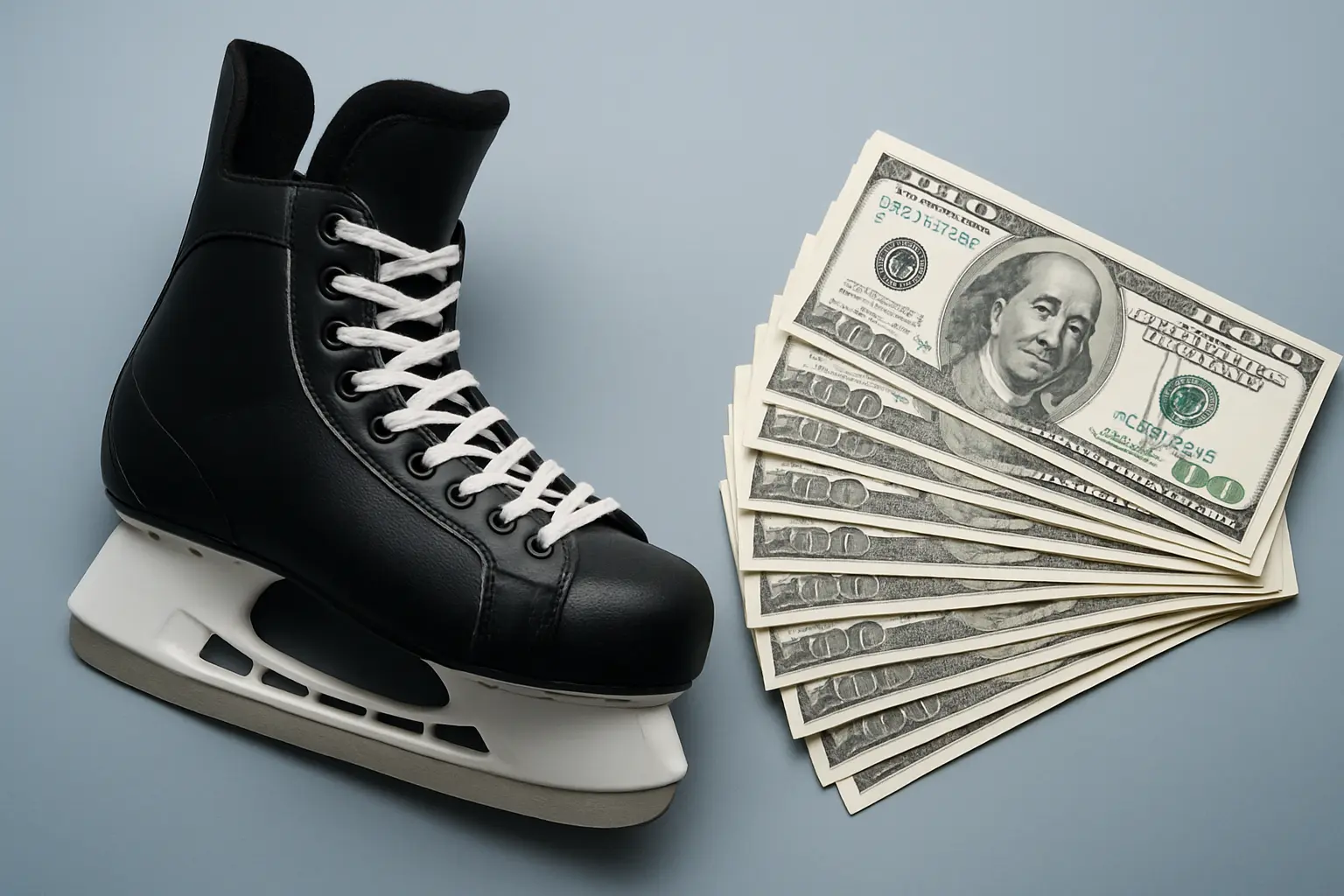
Why is Hockey so Expensive?
A lot of parents have the same moment the first time their kid falls in love with hockey. You walk out of the rink thinking you just found “their thing,” and then you see the numbers. Registration fees. Team dues. Private lessons. New skates because their feet grew again. A $400 stick that somehow becomes “normal.” Tournament travel. Hotel blocks. A team jacket that costs as much as a winter coat you actually need.
And that’s before you even get to the part no one talks about loudly: ice time is the scarce resource, and scarcity is the whole business model.
So why is hockey so expensive in the US and Canada, especially compared with other youth sports? The answer sits at the intersection of facility economics, travel culture, a pay-to-play development pipeline, and a new wave of private equity interest that is changing who controls the rinks, the leagues, and the pricing power.
Let’s break it down, with practical examples and what families can do about it.
The Simple Answer: Ice Is a Luxury Facility, Not a Field
Most youth sports can happen on public infrastructure. A soccer field is grass and lines. A baseball diamond is dirt and fencing. Basketball needs a slab of concrete and hoops. Even if you pay for club teams, the underlying “venue cost” is relatively low, and often subsidized by municipalities or schools.
Ice hockey needs a climate-controlled building that runs like a small power plant.
Why rink economics push prices up
A typical indoor rink has ongoing fixed costs that never stop, even when the building is empty:
- Electricity to run compressors, refrigeration, dehumidifiers, and lighting
- Natural gas or electricity for heating spectator areas and locker rooms
- Water and water treatment
- Ice maintenance equipment like Zambonis and edgers
- Staffing for operations, front desk, skate rental, and coaches
- Insurance and liability coverage
- Debt service if the facility was financed
- Repairs on a building that lives in freezing, wet conditions
If a rink needs to cover, for example, $80,000 to $150,000 per month in operating and financing costs (varies widely by market and facility), the only way to do it is to monetize ice time aggressively.
Ice time is a constrained inventory product
Rinks sell a limited number of “prime” hours. Weeknights after school and weekends are the high-demand slots. Early mornings and mid-day hours are cheaper because families cannot use them as easily.
A single sheet of ice has 24 hours in a day, but only a fraction is realistically sellable for youth practices:
- 3:30 pm to 9:30 pm weekdays
- 7:00 am to 9:00 pm weekends
That is the same window every program wants. When demand exceeds supply, prices rise, and rink owners have leverage.
A quick cost example: why hourly ice rates matter so much
One hour of ice can cost anywhere from a few hundred dollars to well over $600 in many metro markets. Now multiply it:
- Two practices per week for 20 weeks = 40 hours
- Plus weekly games and warmups, skills sessions, tryouts, extra clinics
If a team consumes 70 to 100 hours of ice in a season at $450 per hour, that’s $31,500 to $45,000 in ice rental alone. Divide by 15 players and you’re already at $2,100 to $3,000 per player before coaches, jerseys, refs, league fees, and travel.
That is the foundation under nearly every “Why is hockey so expensive?” conversation.
The Cost Stack Families Actually Pay: It’s Not Just Gear
Parents usually blame equipment first because it is visible and painful. But the real cost is the stack of recurring services that have become normal in competitive youth hockey.
Equipment: expensive, frequent, and specialized
Hockey gear is both protective and performance-based. Kids outgrow it fast, and elite-level marketing pushes constant upgrades.
Typical categories families pay for:
- Skates (often $150 to $1,000 depending on level)
- Stick(s) (often $150 to $400 each, and they break)
- Helmet, gloves, shoulder pads, elbow pads, shin guards, pants
- Team socks, jerseys, shells, bag, base layers
- Goalie gear, which can multiply costs dramatically
A practical gear strategy that saves money without compromising safety:
- Buy new helmets (fit and safety standards matter)
- Buy used shoulder pads, pants, and shin guards in good condition
- Use a used-stick marketplace for backup sticks
- Don’t chase “top line” skates until your player’s stride mechanics justify it
Team fees and “optional” spending that stops being optional
Youth hockey in the US and much of Canada increasingly operates as a services subscription:
- Registration and team dues
- Coaching fees or coaching “stipends”
- Off-ice training
- Skills clinics
- Power skating
- Video analysis
- Summer camps to “make the team” next season
The social pressure is real. When extra training becomes a baseline expectation, the sport shifts from competitive to financially selective.
Travel: the hidden multiplier
Travel is the most underestimated expense because it arrives in bursts and feels separate from “hockey fees.” But many families spend thousands per season on hotels, meals, gas, flights, and tournament entry packages.
Common travel cost drivers:
- Tournament culture, where teams are expected to travel for status
- Tier structures that require regional or national competition
- League geographies that stretch because local competition is thin
- “Stay to play” hotel rules (more on that later)
If your child is on a travel team playing 3 to 6 out-of-town tournaments, it’s easy to spend $2,000 to $8,000 on travel alone depending on distance and family logistics.
Why Hockey Is So Expensive in the US and Canada Specifically
Hockey is expensive almost everywhere, but the US and Canada have a unique combination of demand, cultural intensity, and structural incentives that pushes costs to the ceiling.
Canada: high participation, limited ice, and year-round hockey culture
Canada has deep hockey infrastructure, but demand is also extreme in many markets. In metro areas, ice is booked solid. Add a year-round development mindset and private skills businesses, and you get a continuous spend cycle.
Also, outdoor ice is less dependable than it used to be in many regions due to warmer winters. That pushes more activity indoors, where the cost meter is always running.
United States: fewer rinks per capita in many regions and a fragmented system
In many parts of the US, there simply are not enough sheets of ice relative to interest. Youth hockey growth has been strong in non-traditional markets, but building new rinks is expensive, zoning is complicated, and financing is tough.
US development is also more fragmented:
- Multiple leagues and governing layers
- Tiered systems (house, travel, AA, AAA)
- Independent clubs with separate brands and business models
That fragmentation can drive up marketing spending, coaching arms races, and duplication of resources, all of which gets passed to families.
Pay-to-play is a pipeline, not a side effect
For better or worse, the development pathway is often tied to private organizations, not school-based programs. That changes the incentives.
When advancement depends on private teams, private coaches, private ice, and private showcases, the entire ecosystem is motivated to sell you more hockey.
The Ice Time Problem: Monopolies, Bundling, and Rink Market Power
The fastest way to make hockey unaffordable is to limit competition for ice and then bundle access in ways that lock families in.
In some regions, one operator controls multiple rinks, or one club has priority access to the best hours. Even without an official monopoly, the market can behave like one if there are only one or two viable facilities nearby.
How rink control turns into pricing power
If a rink or a single operator controls the prime slots, they can:
- Raise hourly ice rates
- Require teams to buy bundled packages
- Restrict independent rentals
- Prioritize their own in-house programs over outside teams
- Set policies that indirectly force families into their ecosystem
This is where you see fees climbing even when the broader economy cools off. Ice time is not priced like a community service. It is priced like premium inventory.
Bundling and the “club as landlord” model
A common trend is the vertically integrated club:
- The same organization controls the rink schedule
- Runs the youth club
- Sells skills training and camps
- Runs tournaments
- Offers strength training
- Sells apparel
It can be convenient, but it also concentrates power. When the club is effectively your landlord, the ability to shop around disappears.
“Stay to play” tournament rules and travel markups
Some tournaments require teams to book hotels through specific partners. Families often complain that these rates are higher than comparable options, and that it removes normal consumer choice.
Even when the tournament itself is reasonably priced, the overall weekend becomes expensive because the travel pipeline is designed to capture value at every step.
The Private Equity Controversy in Youth Hockey: Why It Matters
Private equity is not inherently evil. Sometimes it brings capital to renovate facilities, build new rinks, and professionalize operations. The controversy comes from what private equity is built to do: increase returns.
That usually means higher revenue, tighter cost controls, and a focus on scalable business models. In youth sports, “scalable” often translates into consolidation, subscription-style training, and pricing structures that push families toward higher tiers.
What private equity tends to do in youth sports
When private equity enters a youth hockey market, you may see:
- Acquisition of multiple rinks in a region
- Standardized pricing and policies across facilities
- Stronger enforcement of prime-time rates
- Increased emphasis on travel tournaments and branded events
- More “value-added” services sold to families (skills, video, combine testing)
- Long-term contracts or membership structures that reduce churn
The concern is not just higher costs. It is also reduced choice.
Why consolidation can make hockey even more expensive
In a competitive rink market, a family or a club can negotiate, switch facilities, or find creative scheduling. In a consolidated market, there is less leverage.
When one group owns multiple sheets of ice:
- They can set the floor price for ice time
- They can prioritize internal programs
- They can make it harder for independent coaches to rent ice
- They can squeeze smaller community clubs that can’t absorb cost increases
That can reshape youth hockey from a community sport into a premium consumer product.
A practical “spot the signs” checklist for families
If you are wondering whether your area is being affected by consolidation or private equity style strategies, look for:
- Sudden uniform price increases across multiple rinks
- Fewer open rental slots for independent skates
- More required club fees tied to facility access
- Tournament schedules that push long-distance travel
- A shift from seasonal billing to year-round payments
- Reduced transparency around how fees are allocated
None of these prove wrongdoing. They do signal a shift toward a more commercialized system.
What You Can Do About It: Actionable Ways to Lower Hockey Costs
You cannot singlehandedly change rink economics, but you can make smart choices that keep hockey sustainable.
1) Treat hockey like a budget category, not a surprise
Add up the true annual cost before the season starts:
- Team dues and registration
- Estimated travel spend
- Equipment replacement forecast
- Lessons and clinics
- Summer camps
- Lost work time if relevant
If you want a simple template, copy this and fill in your numbers:
Annual hockey budget
- Registration/team dues: $
- Ice add-ons (skills, clinics): $
- Equipment (planned): $
- Equipment (unexpected): $
- Travel (hotels, gas/airfare, meals): $
- Misc (apparel, tape, sharpening): $
Total: $
Seeing the full picture helps you decide what actually moves the needle for your player versus what is just cultural noise.
2) Choose the right level, not the most expensive level
In many markets, the jump from house to travel can double or triple costs. The jump from travel to AAA can be another major leap.
Questions to ask before committing to a higher tier:
- Will my child get more puck touches and meaningful minutes?
- Is the coaching demonstrably better or just branded better?
- Is the travel schedule development-focused or status-focused?
- Are we paying for outcomes, or paying for hope?
Development is not automatically proportional to spending. Ice time quality and coaching quality matter more than logos.
3) Buy used gear strategically and build a swap network
If your community doesn’t have a gear swap, start one. Hockey families are sitting on thousands of dollars of outgrown equipment.
High-impact swap targets:
- Pants, shoulder pads, shin guards, elbows, gloves
- Practice jerseys
- Skates for younger players (inspect runners and boot integrity)
Avoid used helmets unless you know the history and fit is perfect.
4) Reduce travel without sacrificing competition
You can often cut travel costs by making intentional choices:
- Prioritize leagues with tighter geography
- Limit tournaments to 2 to 3 meaningful events
- Choose one “big” trip instead of many medium ones
- Share hotel rooms when appropriate
- Carpool to reduce gas and parking
If your club treats constant travel as mandatory, ask why. A good answer includes player development logic, not just “exposure.”
5) Ask for transparency and push for community options
Families have more influence than they think, especially in numbers. Things worth asking your club or rink:
- How much of dues goes directly to ice time?
- What is the hourly ice rate the team is being charged?
- Are there lower-cost practice options, like early morning or shared ice?
- Are there scholarships or financial assistance programs?
- Can the club publish a fee breakdown?
If you’re in a region facing consolidation, community advocacy matters too. Municipal involvement, school partnerships, and nonprofit models can keep rinks from becoming purely profit-optimized assets.
Conclusion: Hockey Isn’t “Naturally” Expensive, It’s Structurally Expensive
Ice hockey costs a lot because it depends on expensive infrastructure, limited prime-time inventory, and a development culture that monetizes progression. In the US and Canada, those pressures are amplified by travel expectations, pay-to-play pipelines, and, increasingly, consolidation dynamics that look a lot like monopolies in local rink markets.
The private equity controversy in youth hockey is really a question of control. Who owns the ice, who sets the prices, and who gets access when demand is high?
If you want hockey to stay in your family’s life without turning into a financial stress test, take a step back and make deliberate choices: pick the right level, cut low-value spending, plan travel with intent, and demand transparency. And if your community is watching rink ownership consolidate, get involved early. The cheapest hockey is the hockey that still has real competition, real community options, and ice time that isn’t treated like a luxury commodity.
If you’re a parent, coach, or rink stakeholder, start one conversation this week that includes actual numbers: hourly ice rates, fee breakdowns, and travel totals. Cost clarity is where affordability begins.
Worth sharing?
Send this to someone who would find it useful.