Why did Trump invade Venezuela?
Published
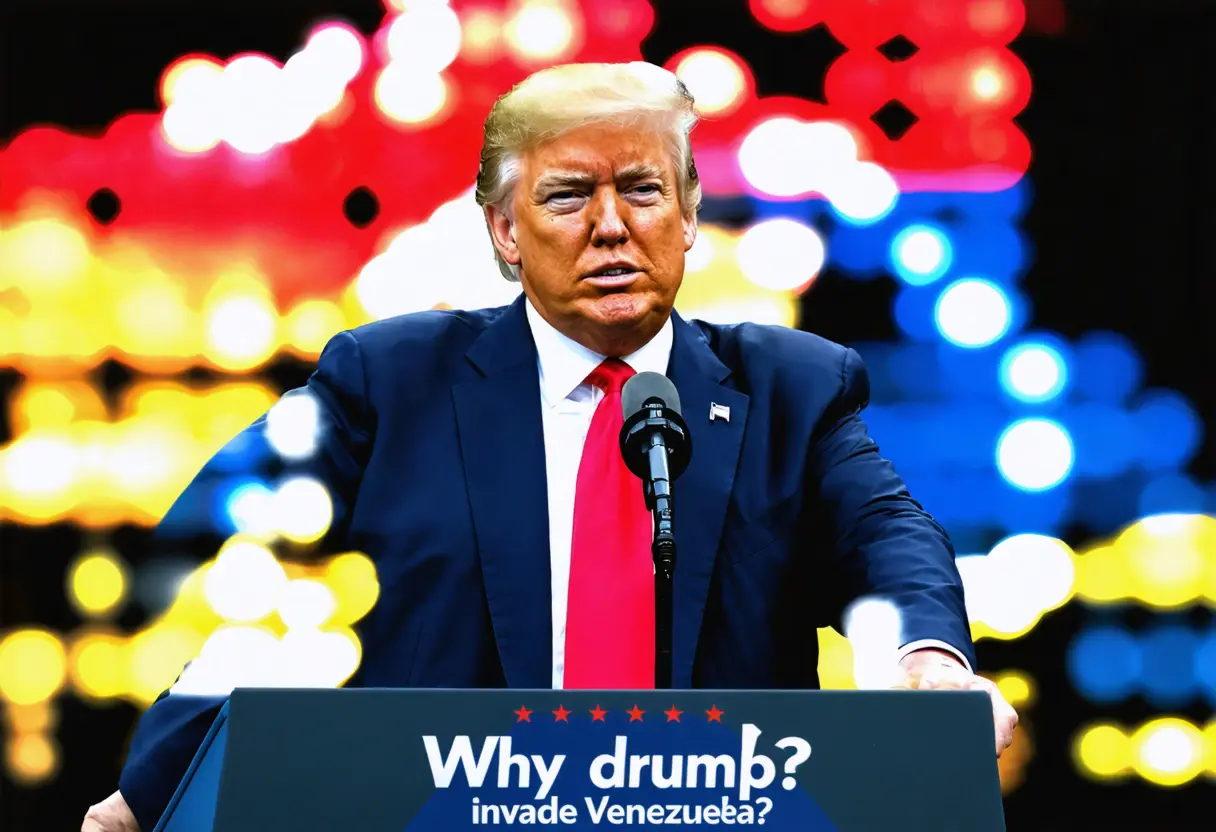
Why Did Trump Invade Venezuela?
If you came here after seeing a headline, a viral tweet, or a YouTube clip claiming “Trump invaded Venezuela,” let’s start with the most important fact.
Donald Trump did not invade Venezuela during his presidency. There was no U.S. military invasion, no occupation, and no officially acknowledged combat campaign on Venezuelan soil under the Trump administration.
So why is this question searched so often, and why do so many people believe it happened?
Because between 2017 and 2021 the United States, under Trump, applied intense pressure on Venezuela’s government through sanctions, diplomatic recognition of an opposition leader, threats of military action, covert intrigue rumors, and a series of high-profile incidents that made an invasion feel plausible. In everyday language, many people collapsed “regime change pressure” into “invasion.”
This article explains what actually happened, what Trump tried to do, what he publicly threatened, what was rumored, and why Venezuela became one of the most combustible foreign policy stories of his term.
The short, factual answer: there was no invasion
If by “invade” you mean what the U.S. did in Iraq in 2003 or Panama in 1989, that did not occur in Venezuela. U.S. troops did not enter Venezuela as part of an acknowledged military operation ordered by Trump. No U.S. invasion plan was executed.
But if you mean “Why did Trump try to topple Nicolás Maduro?” or “Why did Trump push for regime change in Venezuela?” then we can answer the real question behind the headline.
Why people think Trump invaded Venezuela
Search terms like “Trump invade Venezuela,” “US invasion of Venezuela,” and “why did Trump attack Venezuela” spike because several things happened at once:
Trump repeatedly hinted that military options were on the table. His administration backed efforts to remove Maduro politically. The U.S. escalated sanctions in ways that felt like economic warfare to many Venezuelans. And there was a chaotic mix of opposition uprisings, defectors, and botched paramilitary adventures that created a fog of near-war.
It’s the difference between an actual invasion and an atmosphere that made one seem imminent.
What Trump was actually trying to do in Venezuela
The Trump administration’s Venezuela policy was built around one primary goal: ending Nicolás Maduro’s rule and replacing him with a government Washington saw as legitimate and democratic.
That wasn’t a secret. Trump officials said it openly, and Trump personally framed Venezuela as a symbol of socialism’s failure, a talking point he used repeatedly in U.S. domestic politics.
The methods were not an invasion. They were a blend of economic pressure, diplomatic isolation, and open support for the opposition.
1) Regime change by recognition: the Guaidó moment
In January 2019, the U.S. recognized Venezuelan opposition figure Juan Guaidó as the country’s legitimate interim president, arguing that Maduro’s 2018 re-election was illegitimate.
This recognition strategy aimed to split the Venezuelan state, encourage military defections, and shift international legitimacy away from Maduro. It was dramatic and unprecedented in modern hemispheric diplomacy. For a period, dozens of countries followed the U.S. lead.
This was not an invasion, but it was a direct attempt to change Venezuela’s government without an election under Maduro’s terms.
2) Sanctions: maximum pressure on oil, finance, and officials
The centerpiece of Trump’s approach was sanctions. The U.S. increased targeted sanctions on Venezuelan officials and broadened restrictions that hit the country’s ability to access international finance and, crucially, sell oil.
Venezuela is an oil state. Choking off oil revenue was intended to deprive Maduro of the funds needed to maintain loyalty networks and security forces. Supporters described this as leverage to force free elections. Critics described it as collective punishment that worsened an already catastrophic economic crisis.
If you’re searching “why did Trump sanction Venezuela,” the core answer is: the administration believed sanctions could force a political break inside the regime, leading to a transition away from Maduro.
3) The “military option” rhetoric that never went away
Trump publicly said in 2017 that the U.S. had “many options for Venezuela, including a possible military option.” That line reverberated for years. Other officials were more careful, but the message was clear enough to fuel panic in Caracas and speculation in Washington.
Threatening force can be a bargaining tool. It can also be a signal to allies and adversaries. In Venezuela’s case, it raised expectations among opposition supporters that U.S. troops might eventually intervene, and it hardened Maduro’s narrative that Venezuela faced imperial aggression.
It still wasn’t an invasion. It was a threat, and sometimes a bluff, hanging over the crisis.
Why Trump cared about Venezuela: the real motives
No single motive explains U.S. policy, but several practical and political drivers shaped Trump’s posture. If you want an honest answer to “Why did Trump want to invade Venezuela?” you have to look at how Venezuela intersected with American politics, energy, geopolitics, and the Western Hemisphere.
Venezuela was a perfect domestic politics story for Trump
Trump repeatedly used Venezuela to attack “socialism” in U.S. political messaging, especially toward Latino voters and in battleground states like Florida. For the Trump coalition, Venezuela was not just a foreign country. It was a cautionary tale.
Hardline policies against Maduro played well with key communities, including many Venezuelan-Americans and Cuban-Americans who strongly oppose leftist authoritarianism and remember what state collapse looks like.
If you’re asking “Why did Trump go after Venezuela,” part of the answer is: it fit neatly into his domestic political brand.
Oil and energy were always in the background
Venezuela has some of the world’s largest proven oil reserves. Even though Venezuela’s production collapsed long before Trump, the idea that the country could eventually return as a major supplier matters geopolitically.
U.S. policy was not simply “for oil.” That’s too simplistic. But oil revenue is the lifeblood of the Venezuelan state, and any serious effort to pressure Maduro inevitably revolved around oil sanctions, oil exports, and control of oil income.
Geopolitics: Russia, China, Cuba, and the “backyard” logic
Venezuela had deep ties with Russia and China, and intelligence and security cooperation with Cuba. For U.S. hawks, Venezuela looked like a hostile outpost with outside patrons in the Americas.
Trump-era officials, including prominent hardliners, viewed weakening Maduro as a way to reduce Russian and Cuban influence in the region and reassert U.S. leverage in the hemisphere.
That’s one reason you saw Venezuela repeatedly discussed alongside Cuba and Nicaragua, framed as a “troika of tyranny.”
A humanitarian collapse that demanded a response, but divided experts on what response
Venezuela experienced a historic economic and humanitarian crisis, mass migration, shortages, and the breakdown of basic services. Neighboring countries absorbed millions of refugees and migrants. The scale of the suffering put Venezuela on the international agenda.
Trump officials argued Maduro’s government was the core cause and had to go. Many humanitarian and regional experts agreed on the diagnosis of authoritarianism and mismanagement but warned that sweeping sanctions and escalatory rhetoric could worsen civilian suffering and entrench the regime.
This is where the debate still lives: not whether Venezuela was in crisis, but whether Trump’s approach helped or harmed the prospects of a democratic transition.
The incidents that fueled “invasion” rumors
Several moments made the idea of a U.S. invasion feel real, even though one never happened.
In 2019, Venezuela’s opposition attempted to trigger a tipping point involving protests, calls for the military to switch sides, and a push to bring humanitarian aid across borders. The effort failed. The security forces largely stayed with Maduro.
Then came episodes like the 2020 “Operation Gideon” fiasco, a failed incursion involving a small band of fighters and a Florida-based private security connection. It was not a U.S. military operation, but it amplified global confusion. Many people saw “Americans involved” and concluded “Trump invaded.”
This confusion is exactly why the search query persists.
Why Trump didn’t invade, even though he sometimes sounded like he might
If Trump wanted Maduro gone and kept floating military language, why didn’t it happen?
Because the practical obstacles were enormous.
An invasion of Venezuela would have been a major war in a large, complex country with difficult terrain, urban centers, and a politicized security apparatus. It would have risked regional backlash, civilian casualties, insurgency, and direct confrontation with external actors who had stakes in the regime’s survival. And it would have conflicted with Trump’s broader preference, at least rhetorically, to reduce new large-scale military entanglements.
There’s also a simple reality of the U.S. system: even presidents who talk tough still face institutional constraints, risk calculations from the Pentagon, and political blowback at home.
The result was a policy that was aggressive without crossing the line into an overt invasion.
So what’s the most accurate way to describe Trump’s Venezuela policy?
If you want language that’s both factual and clear, here it is:
Trump did not invade Venezuela. He pursued a high-pressure regime change strategy using sanctions, diplomatic recognition of the opposition, international coalition-building, criminal indictments of Venezuelan officials, and repeated public hints that military action was possible.
Whether that strategy was wise is still debated. What isn’t debated is that it fell short of an invasion.
The bottom line: why the “Trump invaded Venezuela” story won’t die
It won’t die because it captures an emotional truth people felt at the time: the U.S. and Venezuela were on a collision course, and it looked like the collision could turn military.
But the factual truth matters, especially when the internet blurs rumor into history.
Trump didn’t invade Venezuela. He tried to squeeze Maduro out, loudly, and in a way that made the world think an invasion could happen. In the end, Maduro remained in power throughout Trump’s presidency, Venezuela remained in crisis, and the story became a cautionary tale about how far pressure can go without achieving the political outcome it promises.
If what you really meant was “Why did Trump target Venezuela?” the answer is a mix of ideology, domestic politics, geopolitics, and the belief that maximum pressure could force a transition. If what you meant was “Why did Trump invade Venezuela?” the honest answer is: he didn’t.
Worth sharing?
Send this to someone who would find it useful.