Why are there so many abandoned Ghost Towns in rural Japan, and should I buy a house there?
Published
Why are there so many abandoned Ghost Towns in rural Japan, and should I buy a house there?
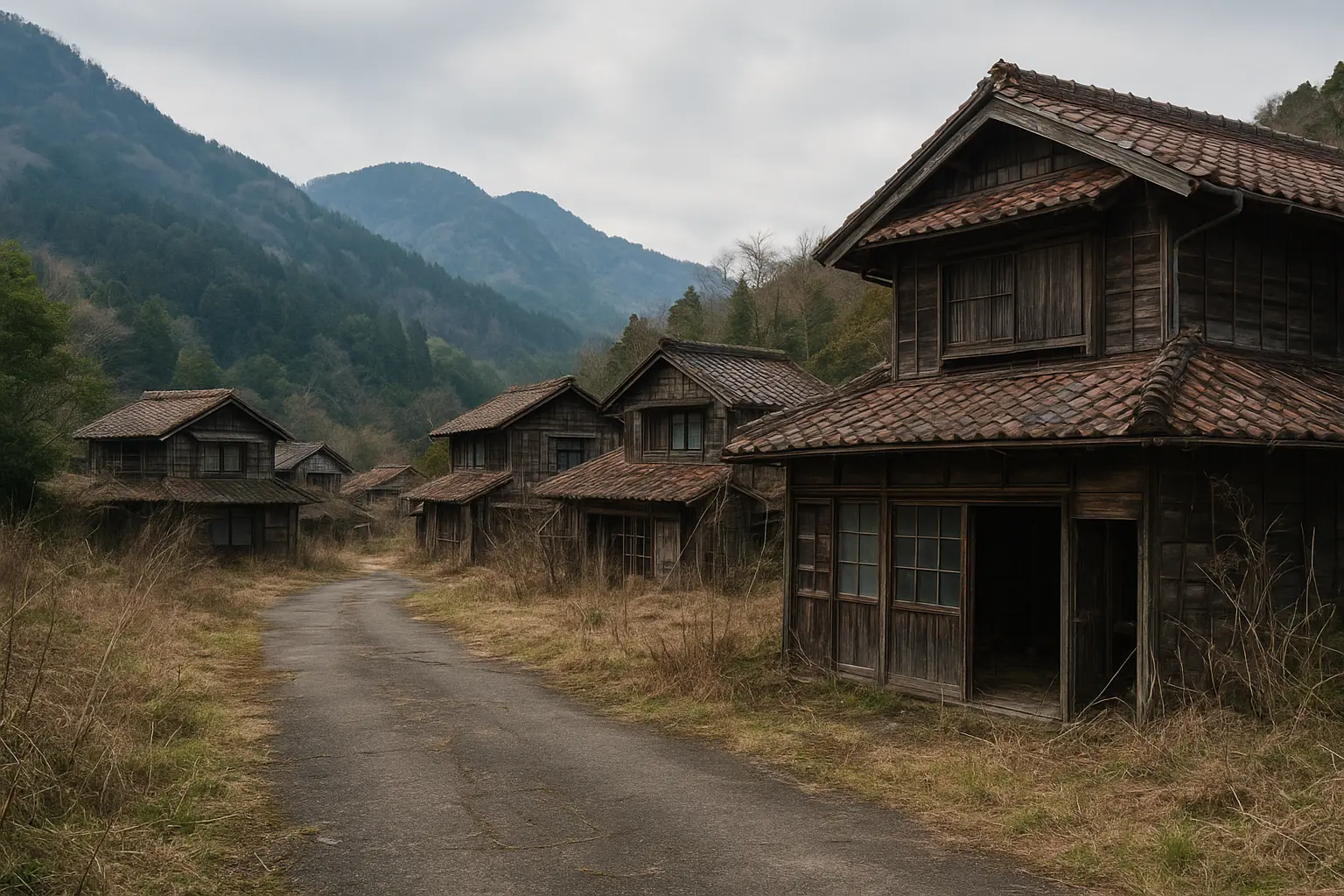
You arrive in a mountain village an hour from the nearest Shinkansen stop. The air smells like cedar and wood smoke. A small river cuts through terraced fields, and there is a shrine gate half swallowed by moss. The houses look intact from the road, but up close the shutters are bolted, the gardens have turned into thickets, and the only sound is a vending machine humming beside a closed community center. It feels cinematic, but it is also deeply ordinary in rural Japan.
These places are not “ghost towns” in the American Wild West sense. Many still have a handful of residents, a weekly trash pickup, maybe a doctor who visits once a month. What they share is momentum in the wrong direction: fewer births, more deaths, and a steady drip of young people leaving for education and work. For foreigners, that creates a tempting question: if houses are so cheap, should you buy one?
This guide explains why there are so many abandoned ghost towns in rural Japan, where the trend is heading, and how to decide whether buying a house there is a smart move or a romantic mistake.
The real reason rural Japan has so many “ghost towns”: a demographic implosion
Japan’s countryside is not empty by accident. It is the predictable outcome of demographics plus economics.
Japan is aging fast, and rural areas age faster
Japan has one of the oldest populations on earth. The basic pattern is simple: low birth rates, high life expectancy, and decades of young people moving to big cities. When a village loses its working-age residents, everything else follows.
Common markers you will notice in shrinking towns:
- Elementary schools consolidated or closed
- Fewer buses and reduced train service
- Clinics and grocery stores operating on limited hours
- Volunteer groups maintaining roadsides and shrines because the municipality cannot keep up
- Houses sitting vacant after an elderly owner dies or moves into care
Vacant homes in Japan are often called akiya (空き家). Many are not abandoned in the “no one owns this” sense. They are legally owned, but functionally unused, sometimes for decades.
Why people leave: jobs, education, marriage markets
Rural Japan is often beautiful and peaceful, but it is not where the majority of opportunities are.
- Jobs: Corporate headquarters, tech, finance, and many service-sector roles cluster around Tokyo, Osaka, Nagoya, Fukuoka, and Sapporo.
- Education: University and specialized training require moving. People who leave at 18 often build their adult life elsewhere.
- Relationships: Marriage rates correlate with stable income and social networks. Small towns have fewer peers and fewer “new arrivals,” which reinforces outmigration.
Over time, the population pyramid in rural areas becomes top-heavy, and the “replacement” generation is missing.
Inheritance and “nobody wants the house” creates a backlog
A common akiya story goes like this: grandparents built a home. Their children moved to a city. When the grandparents pass away, the heirs inherit a property they do not live near, do not want to maintain, and cannot easily sell. So it sits.
Why not just sell quickly?
- Rural houses can be worth less than the cost of demolition.
- Some properties have unclear boundaries or missing paperwork.
- There may be multiple heirs who must agree.
- Taxes and maintenance feel smaller than the emotional and bureaucratic burden of dealing with it.
That is how entire neighborhoods can “look lived in” on the outside and still be mostly empty.
Why houses can be cheap (and why “cheap” is not the same as “good deal”)
You will see headlines about “$10,000 homes” and “free houses” in Japan. Those offers exist, but they are rarely simple.
The akiya paradox: low purchase price, high total cost
In many rural markets, the building itself is treated as depreciating, almost like a car. Land value can also be low outside of development corridors. A property might be listed at a price that is basically symbolic, because the real question is: can someone take responsibility for it?
Typical costs that surprise buyers:
- Renovation to modern standards (insulation, wiring, plumbing)
- Pest and mold remediation
- Seismic reinforcement for older structures
- Roof repairs, especially in snowy regions
- Septic system upgrades
- Ongoing maintenance of vegetation, gutters, and drainage
If you are comparing “buying a cheap house in rural Japan” to renting an apartment in Tokyo, you are not comparing like with like. Rural ownership is closer to buying a small, aging farm property anywhere: affordable entry, expensive stewardship.
Location is everything, even in the countryside
Two rural houses priced similarly can be worlds apart in practicality.
A “good” rural location tends to have:
- 20 to 40 minutes to a regional city with a hospital and supermarkets
- Reliable internet (fiber if possible)
- A maintained road that is plowed in winter
- Reasonable access to a train line or highway
- Some local services still functioning (post office, clinic, hardware store)
A “bad” rural location tends to have:
- Single-lane mountain roads with landslide risk
- No cell signal and no internet options beyond limited hotspots
- Heavy snow without reliable municipal clearing
- A community that is already mostly gone, meaning less mutual help and fewer services
- Higher wildlife pressure on the property (boar, monkeys, bears depending on region)
That second category is where “ghost town” vibes become real, and where the cheapest listings often live.
Future trends: will rural Japan empty out, stabilize, or rebound?
Foreign buyers often ask whether they are getting ahead of a trend. The honest answer is mixed.
The demographic trajectory is still downward
Japan’s population has been declining for years, and rural areas typically decline faster than cities. Even if immigration increases, it tends to concentrate in urban job markets. That means many rural municipalities will keep shrinking, and some will consolidate public services across larger regions.
In practical terms, expect:
- More school closures and mergers
- More pressure on hospitals and elder care
- Higher per-capita infrastructure costs for municipalities
- More vacant housing stock entering the market
That can create opportunities for buyers who want space and can be self-sufficient, but it also raises the risk that services near your home will disappear after you buy.
There are pockets of resilience
Not all rural areas are doomed. Some places attract new residents due to tourism, remote work, agriculture, or lifestyle migration from cities.
Stronger candidates often include:
- Towns near well-known onsens or ski resorts
- Coastal areas with tourism and fishing economies (though watch tsunami risk zones)
- Regions with active relocation incentives and co-working hubs
- “Second-ring” rural areas within 1 to 2 hours of major cities
The bet you are making is not “Japan vs decline.” It is “this specific town vs decline.”
Remote work helps, but it does not erase distance
If your income is remote and stable, rural Japan can be compelling. But remote work does not solve:
- Medical access in emergencies
- Winter road closures
- Child education choices
- Social isolation if you do not speak Japanese
- The need for contractors and tradespeople for repairs
Remote work makes rural life possible. It does not make it effortless.
Should a foreigner buy a house in a rural Japanese ghost town?
Buying property in Japan is more straightforward than many people assume, but living well in rural Japan takes planning.
Can foreigners buy property in Japan?
In most cases, yes. Japan generally allows foreigners to buy land and buildings without requiring permanent residency. What you do not automatically get is a visa. Property ownership does not grant the right to live in Japan long-term.
So your decision splits into two tracks:
- Ownership: usually possible.
- Residence: depends on your visa status (work visa, spouse visa, business manager visa, etc.).
If you plan to use the house as a vacation home, visa constraints matter differently than if you want to relocate permanently.
The top reasons foreign buyers regret it
Regret usually comes from underestimating operational realities, not from the house itself.
Common pitfalls:
- Buying far from essentials because the listing photos looked idyllic
- Underestimating renovation time and cost, especially for older kominka
- Assuming the local government will handle everything the way a city does
- Not realizing the property has shared access roads, disputed boundaries, or unregistered additions
- Getting stuck with a house that is hard to resell, even at a low price
In the worst cases, owners end up paying for a house they rarely use because it is uncomfortable in winter, too humid in summer, or too far from everything.
The top reasons it can be a great idea
When it works, it works because the buyer’s goals match the reality.
Good-fit scenarios:
- You want a low-cost base for long stays and you enjoy DIY repairs.
- You have stable remote income and can handle occasional isolation.
- You are buying in a town with at least minimal services and a realistic path to maintain the property.
- You plan to integrate, learn Japanese, and participate in the community.
- You want land for gardening, small-scale farming, or a workshop, not just a pretty façade.
If you approach it like a long-term project instead of a bargain hunt, rural Japan can be deeply rewarding.
A practical decision framework for buying an akiya in rural Japan
Here is how to evaluate an abandoned house in rural Japan like a local would, while accounting for foreigner-specific risks.
Step 1: Decide your use case (and be brutally honest)
Ask yourself which of these you are actually doing:
- Vacation home: 2 to 8 weeks a year, low expectations, minimal community integration.
- Part-time living: several months a year, remote work, you need reliable utilities.
- Full relocation: you need healthcare access, community ties, and long-term comfort.
- Business: guesthouse, café, farm stay, studio, or rental.
Each use case changes what “good location” means.
Step 2: Budget for total cost, not purchase price
A quick planning rule: if the house is very cheap, assume you will spend multiples of the purchase price making it livable, unless it has been maintained and renovated recently.
Build a rough model:
- Purchase price
- Realtor fees (if applicable)
- Taxes and registration
- Renovation and furnishings
- Ongoing annual costs (taxes, insurance, maintenance)
- Travel costs to reach the property
You can even sketch it like this:
Year 1 total = purchase + fees + registration + renovation + furnishing + utilities setup
Year 2+ total = taxes + insurance + maintenance + utilities + travel + contingency
If the numbers still make sense after adding a 20 to 30 percent contingency, you are thinking clearly.
Step 3: Check the non-negotiables on site
Do not buy based on photos alone. Visit in different weather if you can.
Non-negotiables worth verifying:
- Road access: Can a small truck reach the house? Who clears snow?
- Water: city water vs well. If well, what is the condition and quality?
- Sewage: sewer connection vs septic. If septic, when was it serviced?
- Internet: test options, not promises.
- Foundation and roof: look for sagging, leaks, and termite signs.
- Humidity and ventilation: musty smell can signal deeper issues.
- Hazards: check flood, landslide, and tsunami maps for the exact address.
Many municipalities publish hazard maps online. Use them, and treat them as seriously as price.
Step 4: Understand legal and social realities
Rural Japan runs on relationships. There is often a neighborhood association, shared responsibilities, and community expectations.
Ask about:
- Neighborhood dues and cleanup days
- Shared access roads or irrigation channels
- Property boundary clarity and whether a survey exists
- Any unpermitted extensions or structures
- Whether the home is in an area with special zoning or cultural preservation rules
For foreigners, a bilingual real estate professional or judicial scrivener can save you from costly misunderstandings.
Step 5: Consider the exit plan before you enter
Resale liquidity can be low. Renting can be hard. Some towns have active akiya banks and demand, others do not.
Questions to ask yourself:
- If you needed to sell in 2 to 5 years, who would buy this?
- If you could not travel for a year, who would maintain the property?
- If renovation costs ballooned, could you pause without the house deteriorating?
If the answer is “I have no idea,” slow down.
Finding opportunities: where to look and how to negotiate realistically
If you are serious about buying, broaden your search beyond viral listings.
Use akiya banks, but verify everything
Many municipalities run akiya banks, basically listing portals for vacant homes. They can be a good starting point, especially because some towns bundle subsidies for renovation or relocation. But listings may be outdated, and details can be incomplete.
Practical tips:
- Contact the municipality office directly and ask what support exists for non-Japanese residents.
- Confirm whether the seller is ready to proceed and whether there are inheritance complications.
- Ask for recent photos and a clear list of included land parcels.
Renovation subsidies and relocation incentives
Some rural towns offer subsidies for:
- Renovation (especially for insulation, seismic upgrades, or energy efficiency)
- Child-rearing families
- Starting a business
- Moving in from outside the prefecture
These programs can be valuable, but they often have conditions: residency requirements, time commitments, or limits on who qualifies. Foreigners may qualify in some cases, but never assume. Ask for written criteria.
Negotiation: what actually moves the needle
In rural markets, negotiation often hinges on reducing future hassle for the seller.
You may get better outcomes by offering:
- Fast timelines with clear documentation
- Willingness to take the property “as-is”
- Agreement to handle cleanup and disposal
You may get worse outcomes if you demand extensive repairs in a market where contractors are scarce.
Conclusion: buying a house in a rural Japanese ghost town can be smart, but only with clear eyes
There are so many abandoned ghost towns in rural Japan because the country is living through a demographic implosion that hits villages first: fewer births, longer lives, urban migration, and a backlog of inherited homes no one wants to manage. That trend is not reversing soon, which means the supply of akiya will likely remain high and in many regions it will grow.
Whether you should buy a house there depends less on the price and more on your tolerance for maintenance, your need for nearby services, your visa reality, and your willingness to engage with a place that is changing. If you treat it like a cheap escape hatch, you may end up with an expensive burden. If you treat it like a long-term project with a real plan, it can be one of the most meaningful purchases you ever make.
If you are considering it, make your next step a structured one: choose a region, visit in person, run a total cost budget with contingency, and speak with a local expert who can check legal status and infrastructure. The best rural Japan purchases are not the cheapest houses. They are the houses you can actually live in, maintain, and still love after the honeymoon ends.
Worth sharing?
Send this to someone who would find it useful.