What world events did The Simpsons correctly predict (and what still hasn't happened?)
Published
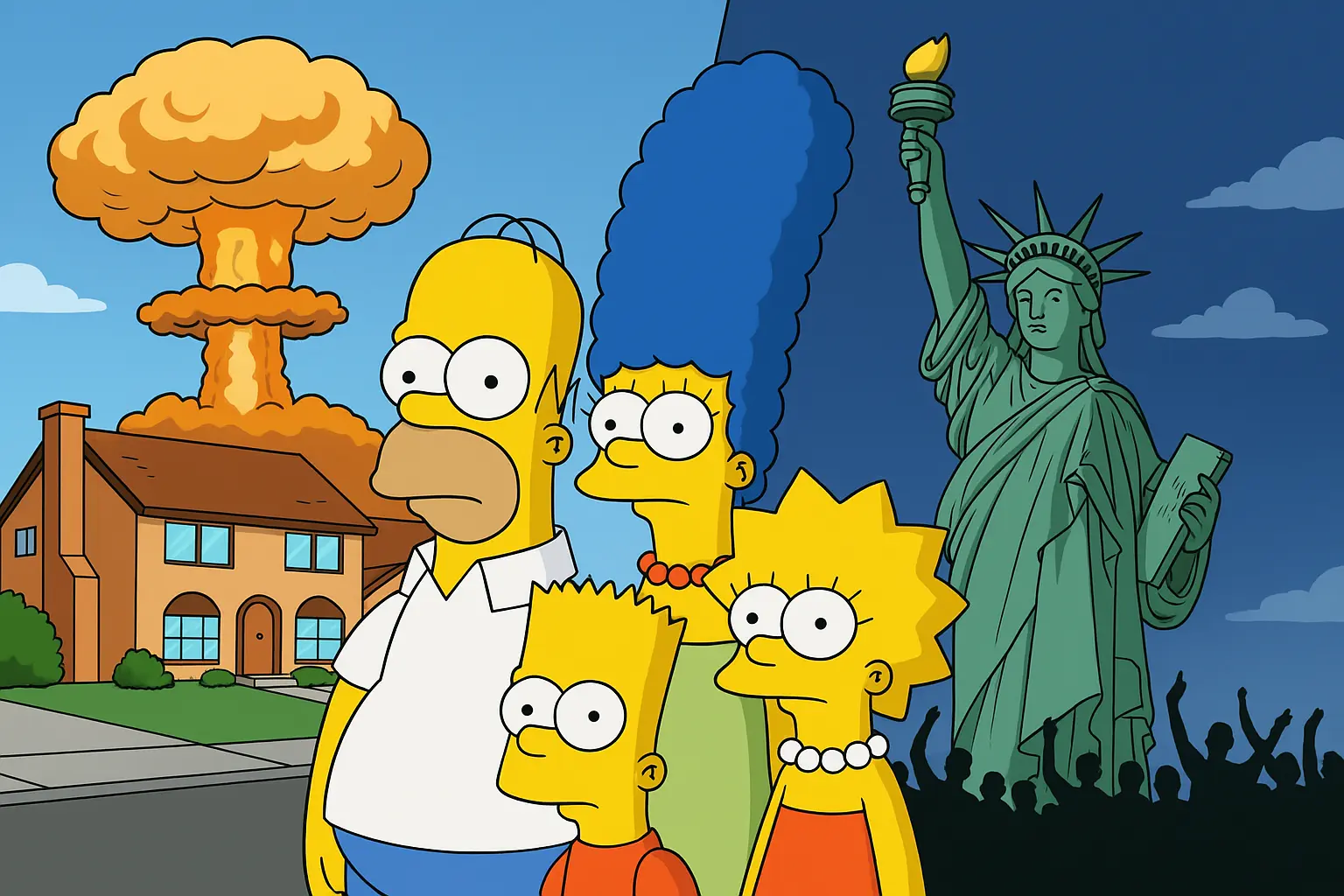
What world events did The Simpsons correctly predict (and what still hasn’t happened?)
If you have ever watched The Simpsons and then scrolled the news later, you have probably felt that slightly eerie click of recognition. A throwaway gag from 1998 suddenly looks like a headline from 2026. A joke about politics turns into a screenshot people repost like it is a prophecy. It is tempting to believe the writers have a time machine, but the real story is more interesting: a long running show staffed by smart satirists, trained to extrapolate trends, ends up being “right” surprisingly often.
This guide does two things. First, it breaks down what world events did The Simpsons correctly predict (and what still hasn’t happened?) with clear examples and context, including fresh 2026 updates. Second, it goes beyond trivia: you will get a practical framework for evaluating “Simpsons predictions,” plus technical implementation details and a real world workflow for building your own prediction tracker.
Why The Simpsons seems to predict the future (and why that matters in 2026)
Before diving into the hits and misses, it helps to understand the mechanics. The Simpsons has aired hundreds of episodes across decades. With that much surface area, it can “predict” through sheer volume, and still, some predictions are uncanny.
Here are the core reasons it happens:
- Trend extrapolation: Writers take a real pattern and extend it into an absurd endpoint, which sometimes becomes reality as the world catches up.
- Satire of power systems: Politics, media, tech companies, and finance repeat their incentives. Satire ages well when the incentives do not change.
- Selection bias: People remember the “correct predictions” and forget the thousands of jokes that never connect to reality.
- Retroactive matching: A vague joke is later framed as a precise forecast through viral posts, cropped images, or missing context.
- Global meme amplification: In 2026, AI captioning, remix culture, and instant video search make it easier to attach an episode clip to any news event, whether it fits perfectly or not.
A useful way to think about it is this: The Simpsons is not an oracle. It is a high output cultural mirror. Sometimes the mirror reflects tomorrow.
The big ones: world events The Simpsons correctly predicted (with timelines and 2026 context)
Not every “prediction” is legitimate, and some viral claims are outright fake. The list below focuses on widely documented examples with clear episode references and real world parallels.
1) Donald Trump as U.S. President (and the ripple effects)
Episode: “Bart to the Future” (Season 11, 2000)
What happened: Donald Trump became U.S. President in 2016.
In the episode, Lisa becomes president and mentions inheriting a budget crisis from President Trump. The joke was rooted in Trump’s public persona as a celebrity businessman and political flirtation in the 1990s. The prediction gained a second life after 2016 because it felt specific, not generic.
2026 update: The lasting “prediction” is not only Trump winning once, but the broader pattern the show flagged: celebrity politics, a blurred boundary between entertainment and governance, and a media ecosystem where attention is currency. In 2026, this pattern is not confined to the United States. Multiple countries have seen political figures succeed through media dominance rather than traditional party infrastructure.
Practical takeaway: When satire hits real political outcomes, it often reveals structural incentives, not psychic foresight. Track incentives, and you will “predict” better than tracking personalities.
2) Smartwatches and wrist based communication
Episode: “Lisa’s Wedding” (Season 6, 1995)
What happened: Smartwatches became mainstream in the 2010s and normalized calling, messaging, and health tracking from the wrist.
The episode shows characters using watch like communicators. The tech existed in prototypes and sci fi, but the mainstream adoption curve is what makes this feel like a prediction.
2026 update: Wearables in 2026 are more about passive sensing than notifications. Heart rhythm analysis, sleep staging, stress proxies, and continuous temperature trends are standard, and the wrist is only one form factor. Rings, earbuds, and patches matter too. The show’s “watch phone” was right about the interface direction: convenience wins.
Actionable advice: If you want to spot future “Simpsons style” tech predictions, look for prototypes that solve a convenience problem. Adoption usually follows:
- A niche user group finds it indispensable.
- A major platform integrates it into an ecosystem.
- Social norms adapt.
3) Autocorrect fails that feel painfully real
Episode: “Lisa on Ice” (Season 6, 1994)
What happened: Autocorrect and predictive text frequently change intent, sometimes in embarrassing ways.
The classic gag shows a device changing “beat up Martin” into “eat up Martha.” It is not “predicting” a specific product, but it nails the human experience of algorithmic mediation.
2026 update: The modern equivalent is not just autocorrect. It is LLM assisted writing that confidently rewrites meaning, or email clients that auto suggest replies that sound plausible but are wrong. The failure mode remains consistent: automation optimizes for probability, not truth.
Practical takeaway: If a tool predicts your intent, you need a verification habit. Create a “last mile check” for anything sent externally:
- Read messages out loud before sending.
- Check names, dates, and numbers manually.
- Avoid one tap auto replies for sensitive contexts.
4) Video calls becoming normal life
Episode: “Lisa’s Wedding” (Season 6, 1995)
What happened: Video calling became daily behavior, especially after 2020.
In the episode, there are casual video conversations that resemble modern consumer video chat. Again, the concept existed, but the cultural normalization did not.
2026 update: Video calls are now layered with AI features: background generation, real time captioning, translation, and meeting summaries. The next frontier is “presence,” not merely video: spatial audio, avatar mode, and real time language localization.
Actionable advice: To keep meetings efficient in 2026, adopt a lightweight protocol:
- Default agenda in the calendar invite.
- Meeting notes stored in a shared doc with decisions at the top.
- AI summary enabled, but always reviewed by a human for commitments and numbers.
5) Disney buying Fox (and what it says about media consolidation)
Episode: “When You Dish Upon a Star” (Season 10, 1998)
What happened: Disney acquired 21st Century Fox assets in 2019.
A quick background gag shows a sign that implies Fox is a division of Disney. This is one of the cleanest “corporate consolidation” predictions.
2026 update: Consolidation did not stop at one deal. The bigger 2026 story is bundling and re bundling across streaming, sports rights, and ad tech. Consumers bounce between subscriptions and bundles, while studios optimize for IP that can extend across films, series, games, and merch.
Practical takeaway: For creators and marketers, consolidation changes discoverability. Protect yourself by diversifying distribution:
- Publish on at least two platforms plus your own newsletter.
- Keep a first party audience list.
- Repurpose content into formats that travel well: short clips, audio, and searchable articles.
6) Fault lines in crypto culture: NFTs and speculative mania vibes
Episode reference: Not a single clean “NFT episode,” but multiple plots satirize speculative bubbles, collectibles, and hype driven investing (for example, episodes involving fad products, inflated valuations, and get rich quick schemes).
People often claim The Simpsons “predicted NFTs” with screenshots, but many viral images are misleading or taken out of context. What the show did accurately capture was the social pattern: hype cycles, influencer amplification, and the emotional logic of speculation.
2026 update: By 2026, the market has matured unevenly. Speculative NFT mania is far quieter than in 2021, while tokenization and blockchain infrastructure show up more in enterprise plumbing, digital identity experiments, and niche communities. The show’s satire applies to every wave of “new money” culture.
Actionable advice: If you are evaluating a new asset trend, use a simple checklist:
- Does it solve a problem for non speculators?
- Is there recurring utility, not just resale value?
- Are fees, custody, and security risks transparent?
- Can you explain it without buzzwords?
7) Pandemic era behavior and “doomsday” preparedness vibes
Episode reference: Several episodes include disease scares and social panic. A famous example is “Marge in Chains” (Season 8, 1993), which involves a flu outbreak and public overreaction.
It is not a literal prediction of COVID 19, but it captures the dynamics: misinformation, scapegoating, supply shortages, and institutional confusion.
2026 update: Public health in 2026 is a “systems” conversation. Ventilation standards, remote work policies, and outbreak dashboards are part of normal risk management in many organizations. The big lesson from the last decade is not “a pandemic happened,” it is that globalized systems propagate shocks quickly.
Actionable advice: Organizations should treat health disruptions like cyber risk:
- Document contingency workflows.
- Maintain communication templates.
- Keep a minimal stock of essentials for continuity.
- Train managers on remote first operations.
Predictions people think are real, but are questionable, exaggerated, or fake
A lot of viral “Simpsons predicted X” posts collapse under basic scrutiny. In 2026, AI generated images and remixed clips make this even worse.
Here is how to spot the most common failure modes:
- No episode citation: If nobody can name the season and episode, treat it as unverified.
- Image looks too crisp: Modern font rendering and HD compositing often indicate a fake.
- Context mismatch: A still frame can imply something that the full scene contradicts.
- “Predicted” is actually “referenced”: Sometimes an episode directly references an already existing idea, prototype, or headline.
A quick verification checklist (you can actually use)
Use this mini workflow before sharing:
- Search the claim with:
site:wikipedia.org Simpsons "episode name"orSimpsons "quote" season episode. - Look up the episode synopsis and original air date.
- Watch the clip in context, not just the screenshot.
- Compare the real event timeline.
- Decide whether it is a prediction, a coincidence, or a retroactive fit.
If you run a newsroom, a brand account, or even a personal newsletter, this saves you from reposting something that will get dunked on in the replies.
What still hasn’t happened: “Simpsons predictions” that remain unfulfilled (as of 2026)
Some jokes are about futures that never arrive, or futures that arrive differently. These are the fun ones, because they show how hard prediction really is.
1) Jetpacks as a normal commute tool
Status in 2026: Not mainstream.
Jetpacks exist as demonstrations and niche devices, but they are not a practical commuting layer for cities. The blockers are not imagination. They are physics, noise, safety, cost, maintenance, and regulation.
Reality check: If you want to guess whether a transportation tech will scale, ask:
- Does it reduce risk compared to existing options?
- Can infrastructure support it at city scale?
- Is the cost per mile competitive?
- Can an average person use it safely?
Jetpacks fail multiple points.
2) Fully autonomous cars everywhere
The Simpsons has featured self driving gags and automated future visions for years. Reality is more nuanced.
Status in 2026: Autonomy is real in limited domains, but not universal.
Robotaxis operate in constrained geographies under defined conditions, while consumer vehicles deliver driver assistance that still demands attention. The gap between “sometimes autonomous” and “everywhere autonomous” remains large because edge cases are endless: weather, construction, human unpredictability, and messy road norms.
Performance benchmark (2026 lens): If you are evaluating autonomy claims, do not accept “it works in demos.” Ask for:
- Disengagement rates in real world operation
- Operational design domain boundaries
- Incident reporting transparency
- How the system handles rare events, not just average conditions
3) A neat, unified “world government” style future
The show occasionally depicts centralized global coordination or simplified geopolitics. Reality tends to fragment.
Status in 2026: Cooperation exists, but so does fragmentation.
Supply chain resilience strategies, regional blocs, and competing tech standards have increased complexity. Instead of a single unified governance layer, we see overlapping alliances and standards bodies.
Actionable advice for businesses: Build flexible compliance and localization into product planning:
- Support multiple payment rails.
- Design for data residency requirements.
- Keep vendor optionality where possible.
4) Colonizing Mars as a normal human destination
The Simpsons jokes about space futures like many sci fi adjacent shows.
Status in 2026: Not happening at “normal” scale.
Space activity is more intense than decades ago, but human settlement remains aspirational. The blockers are life support logistics, radiation exposure, cost, and the long tail of medical and psychological risks.
A better prediction: In 2026, the more realistic near term story is robotics, satellites, and space services, not mass human migration.
A technical approach: build your own Simpsons prediction tracker (with benchmarks)
The content gap in most “Simpsons predictions” articles is that they stay at trivia level. If you want a sharper approach, treat this like a data problem: store claims, verify citations, score similarity, and track outcomes over time.
Below is a practical workflow you can implement in a weekend.
Step 1: Create a structured dataset
Use a simple schema so each claim can be evaluated consistently.
{
  "claim_id": "SIM-TRUMP-2000",
  "episode_title": "Bart to the Future",
  "season": 11,
  "air_date": "2000-03-19",
  "scene_description": "Lisa mentions inheriting a budget crisis from President Trump",
  "predicted_event": "Donald Trump becomes US President",
  "event_date": "2016-11-08",
  "verification_links": [
    "https://en.wikipedia.org/wiki/Bart_to_the_Future"
  ],
  "status_2026": "Occurred",
  "confidence": 0.9,
  "notes": "Specific reference to Trump as president"
}
Store it in a spreadsheet, Airtable, Notion, or a small database.
Step 2: Add a scoring model that resists hype
To avoid retroactive fitting, score each claim on dimensions that matter.
Use a 1 to 5 scale:
- Specificity: Is it precise or vague?
- Novelty: Was it already discussed publicly?
- Temporal distance: How far in advance was it?
- Similarity: Does the real event match key details?
- Evidence quality: Do we have the clip, context, and citations?
Then compute a weighted score.
def prediction_score(specificity, novelty, temporal, similarity, evidence):
    weights = {
        "specificity": 0.25,
        "novelty": 0.20,
        "temporal": 0.15,
        "similarity": 0.25,
        "evidence": 0.15
    }
    return (specificity*weights["specificity"] +
            novelty*weights["novelty"] +
            temporal*weights["temporal"] +
            similarity*weights["similarity"] +
            evidence*weights["evidence"])
Step 3: Benchmark your tracker against baseline probability
Here is the uncomfortable truth: with hundreds of episodes, some alignment is guaranteed. To measure “impressiveness,” you need a baseline.
A simple benchmark:
- Estimate how many distinct “future leaning” jokes exist across the show.
- Estimate the base rate of those categories occurring in real life.
For example, “a big tech product becomes mainstream” has a high base rate. “A specific corporation acquires a specific other corporation” has a lower base rate, so it is more impressive when it hits.
Performance benchmark idea (2026 update): If you build a dataset of 200 claims, calculate:
- Percentage that are verifiable with episode and scene context
- Percentage that are strong matches (score above a threshold, like 3.8/5)
- Median lead time (years between air date and event date)
A credible tracker will often reveal that only a minority of viral claims survive verification, and that the strongest “predictions” cluster in a few categories: politics, consumer tech, and corporate consolidation.
Step 4: Automate verification support (without trusting AI blindly)
In 2026, you can use AI to assist research, but you should not let it be the authority.
A practical pipeline:
- Use a transcript source to search quotes.
- Use a video search tool to locate scenes.
- Use AI to suggest possible episode matches.
- Require a human to confirm the clip and context.
If you publish content, include episode title, season, air date, and a synopsis link for every claim. That one habit separates solid research from meme recycling.
Real world case studies: where “Simpsons predictions” misled people (and what to learn)
Case study 1: The viral “Simpsons predicted [current event]” post that brands kept resharing
A common pattern: a news event breaks, a “Simpsons predicted it” image goes viral, and brand accounts repost it to ride the trend. Later, someone fact checks it, finds the image is edited, and the brand looks careless.
What fails:
- No citation
- No context
- Speed prioritized over credibility
Better playbook:
- Delay by 15 minutes.
- Run the 5 step verification checklist.
- If unverified, post a curiosity angle instead of a claim: “People are comparing this to a Simpsons scene. Here is what we found.”
Case study 2: Overtrusting satire as forecast in finance and tech
Retail investors sometimes treat cultural narratives like signals. A joke about a fad can be interpreted as “the show warned us,” which becomes a kind of folk risk model.
What fails:
- Confusing social commentary with timing
- Ignoring base rates and structural incentives
Better playbook:
- Use satire as a prompt to ask: “What incentive does this reveal?”
- Then validate with actual metrics: user growth, revenue, churn, regulation, and competition.
Case study 3: Educators using “Simpsons predictions” to teach media literacy (a win)
Not every case is a failure. Teachers and librarians increasingly use Simpsons prediction compilations to teach verification, bias, and source checking. Students enjoy the hook, and the lesson sticks.
What works:
- High engagement
- Clear demonstration of misinformation mechanics
- A fun way to practice citation discipline
Actionable lesson plan (simple):
- Assign 5 “Simpsons predicted X” claims.
- Require students to locate episode info and a primary clip.
- Classify each as: verified, exaggerated, false, or unclear.
- Discuss why false ones spread faster.
Conclusion: treat Simpsons predictions as a tool, not a belief system
So, what world events did The Simpsons correctly predict (and what still hasn’t happened?) The show nailed several high profile alignments, from Trump’s presidency to smartwatches, video calls, and Disney buying Fox, while many other claims dissolve under scrutiny. The deeper lesson for 2026 is not that Springfield can see the future. It is that systems repeat, incentives rhyme, and satire often points at the direction of change long before the change feels inevitable.
If you want to go beyond memes, build a small tracker, score claims for specificity and evidence, and benchmark them against base rates. You will end up with something more valuable than a listicle: a repeatable way to tell the difference between an eerie coincidence and a verified cultural forecast.
If you want, reply with a handful of “Simpsons predicted” claims you have seen recently, and I will help you verify them using the checklist and turn the results into a clean, citation ready dataset.
Worth sharing?
Send this to someone who would find it useful.