What is Artemis 2?
Published
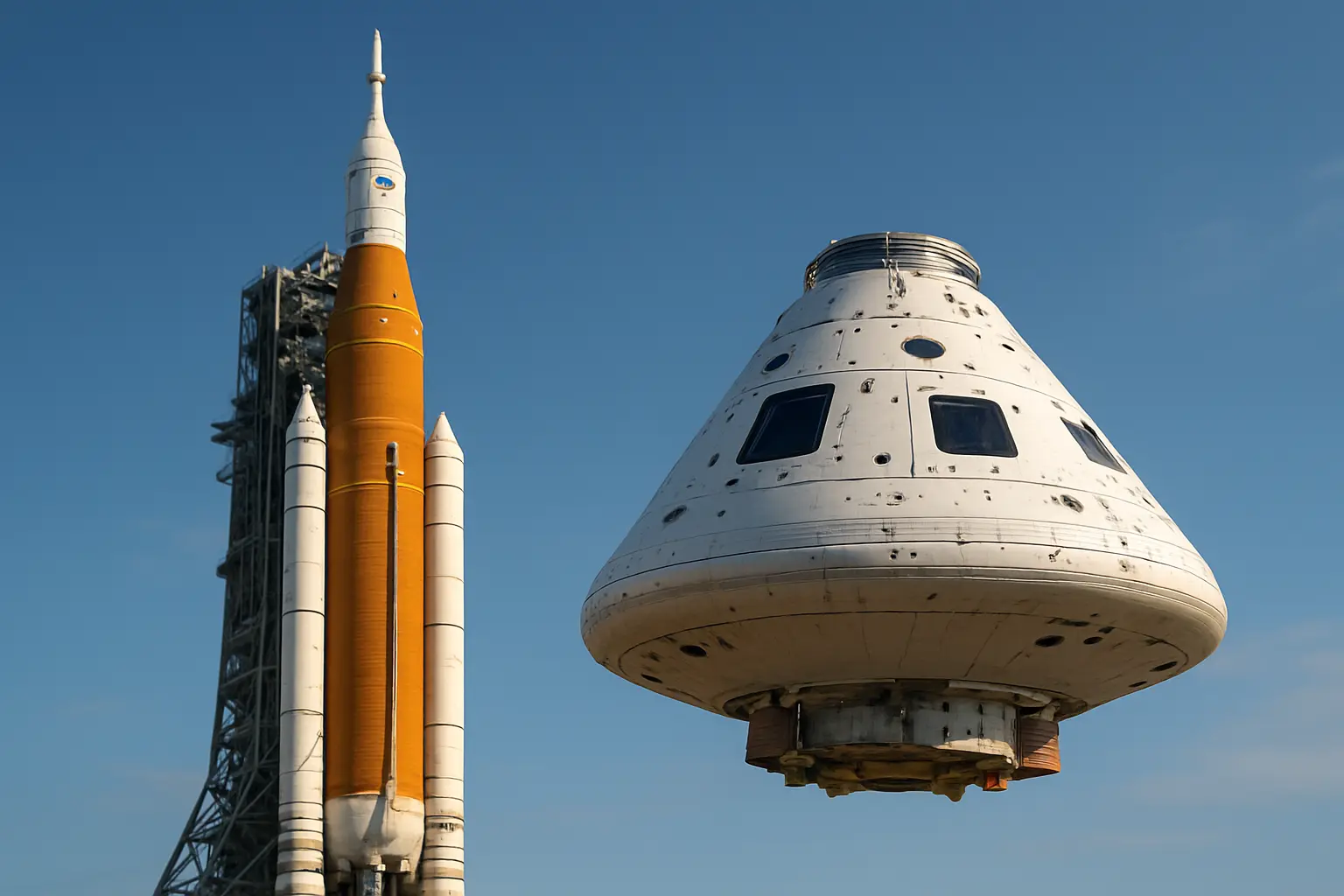
What is Artemis 2?
Picture this: you are watching a live feed from NASA, and instead of another satellite launch or cargo run to the International Space Station, you are seeing humans ride a brand new super-heavy rocket beyond low Earth orbit. Not to stay close to home, but to arc around the Moon and return, proving that deep-space human exploration is back on the table in a serious way. That mission is Artemis 2, and it sits right at the hinge point between bold promises and real capability.
Artemis 2 is not just “the next launch.” It is the first crewed mission of NASA’s Artemis program, designed to validate the systems that will eventually land astronauts on the lunar surface and, later, support longer-duration exploration that feeds into Mars ambitions. If Artemis 1 was the uncrewed stress test, Artemis 2 is where humans step into the capsule and everything becomes more demanding: life support, crew operations, emergency procedures, navigation, and mission control choreography all have to work as advertised.
Below is what Artemis 2 is, why it matters, how it works, who is going, and what you can watch for if you want to follow the mission like a pro.
Artemis 2 in one clear definition
Artemis 2 is NASA’s first crewed flight test of the Space Launch System (SLS) rocket and the Orion spacecraft, sending astronauts on a multi-day mission that flies beyond Earth orbit, loops around the Moon, and returns safely to Earth.
It is a “dress rehearsal” for human deep-space operations, but it is also more than that because the dress rehearsal is itself historic: it will be the first time humans travel to the vicinity of the Moon since Apollo 17 in 1972.
If you have seen the phrase “crewed lunar flyby” or “crew test flight around the Moon,” that is Artemis 2.
Quick facts at a glance
- Mission type: Crewed lunar flyby and deep-space systems test
- Primary hardware: NASA SLS rocket and Orion spacecraft
- Goal: Validate crewed performance of Orion, SLS, and ground systems in a lunar mission profile
- Destination: Lunar vicinity (not a landing)
- Why it matters: Proves the integrated system before Artemis 3 attempts a lunar landing
Where Artemis 2 fits in the Artemis program
The Artemis program is NASA’s umbrella effort to return humans to the Moon and build a sustainable presence there. The key idea is to move from “flags and footprints” missions to repeatable exploration with better technology, stronger international partnerships, and infrastructure that can support future missions.
Artemis 2 sits in the middle of a stepped progression:
- Artemis 1: Uncrewed Orion mission around the Moon and back to Earth to validate heat shield, navigation, communications, and deep-space operations.
- Artemis 2: Crewed Orion mission around the Moon and back to Earth, validating life support, crew operations, and emergency modes.
- Artemis 3: A mission planned to land astronauts near the lunar south pole using a human landing system, with Orion delivering crew to lunar orbit.
In other words, Artemis 2 is the confidence bridge. Without it, a landing attempt would be a leap rather than a step.
Why the “Moon flyby” still matters, even without a landing
A common question is: why spend so much money to just fly around the Moon?
Because the highest-risk parts of deep-space crewed flight happen before anyone touches the surface:
- Leaving Earth orbit and operating in deep space: communications delays, radiation exposure, and navigation challenges increase.
- Crew life support reliability: the spacecraft must support humans continuously for days, with minimal options for “quick help.”
- High-speed Earth reentry: Orion returns at lunar reentry velocities, pushing the heat shield to extreme conditions.
- Abort and contingency readiness: mission planners need validated options if something goes wrong at different phases.
A lunar flyby is the most efficient way to test all of that without adding the additional complexity of a landing system, lunar surface EVA timelines, and surface power and thermal management.
The spacecraft and rocket: SLS and Orion, explained in plain English
Artemis 2 uses two flagship pieces of hardware that are easy to name but harder to visualize. Here is what they do in practical terms.
Space Launch System (SLS): the heavy-lift rocket
SLS is NASA’s super-heavy rocket built to send large payloads beyond low Earth orbit. For Artemis 2, SLS provides the raw performance to launch the Orion spacecraft toward the Moon.
What makes SLS unique for Artemis 2 is not just its thrust, but its mission role: it has to deliver Orion on a precise trajectory while meeting strict crew safety requirements. “Human-rated” performance means more redundancy, tighter quality controls, and more stringent verification than many uncrewed rockets face.
Orion: the crew capsule for deep space
Orion is the spacecraft that the crew rides in. It includes:
- A crew module where astronauts live and work
- A service module that supplies propulsion, power, oxygen, and water
- A launch abort system (used during ascent) designed to pull the crew capsule away from danger if needed
Orion’s job is not to be a “space hotel.” It is built for deep-space transit and safe return. That means robust heat shielding, strong radiation tolerance relative to low Earth orbit missions, and operational flexibility for lunar mission profiles.
A key test item: life support and crew operations
Artemis 2 is where Orion’s crewed systems move from theory and ground tests to reality. Some of what NASA will validate includes:
- Cabin atmosphere management and carbon dioxide removal
- Temperature and humidity control for real humans doing real work
- Food and water logistics in a confined environment
- Waste management systems that actually have to function over multiple days
- Crew timelines, sleep cycles, and workload pacing under deep-space constraints
This is the kind of testing that rarely looks flashy on camera, but it is exactly what determines whether deep-space missions are sustainable.
What Artemis 2 will do: mission profile and major milestones
While final timelines can evolve, the mission concept is consistent: launch, head to lunar vicinity, fly a loop around the Moon, then return.
Here is the mission broken into understandable phases.
1) Launch and ascent
The crew launches aboard SLS with Orion at the top. The ascent phase is where the integrated system experiences high vibration, acoustic loads, and dynamic stresses. It is also the phase where abort systems are most relevant.
What to watch for: smooth staging events, Orion spacecraft separation, and initial spacecraft power-up transitions.
2) Travel beyond low Earth orbit
After reaching space, Orion transitions into deep-space operations. Navigation, communications, and onboard power all shift into the rhythm of a multi-day mission.
Practical detail: Even a short crewed lunar flyby involves careful resource budgeting. Mission planners track consumables like oxygen and water, and power generation from solar arrays, with tight margins.
3) Lunar flyby and deep-space navigation
Orion performs a trajectory that swings it around the Moon. This phase tests:
- Precision navigation and orbit determination
- Deep Space Network communications performance
- Crew procedures during critical burns and navigation updates
- Camera, sensor, and spacecraft pointing operations
The Moon also provides a powerful symbolic moment. The crew will likely capture Earthrise-style imagery that becomes part of the cultural footprint of Artemis.
4) Return to Earth and reentry
The return is the culminating technical proof. Orion will reenter Earth’s atmosphere at very high speed compared to low Earth orbit capsules. The heat shield must handle extreme heating, and the parachute system must perform flawlessly.
What to watch for: reentry communications blackout period, chute deployment sequence, and recovery operations.
A simplified view of mission logic
If you like thinking in systems, Artemis 2 is basically verifying this chain:
Launch safely -> Reach deep space -> Navigate precisely -> Keep crew alive and functional
-> Return at lunar velocity -> Land safely -> Recover crew and data
Break any link, and the architecture is not ready for lunar landing missions.
Who is on Artemis 2 and what they will do in flight
NASA has publicly announced the Artemis 2 crew: Reid Wiseman (commander), Victor Glover (pilot), Christina Koch (mission specialist), and Jeremy Hansen (mission specialist, CSA).
That crew composition matters for a few reasons:
- It includes astronauts with deep operational experience, including spaceflight and mission leadership.
- It includes international partnership through the Canadian Space Agency, reflecting how Artemis is structured as a coalition effort rather than a purely national program.
- It balances roles for spacecraft operations, systems oversight, and mission objectives that blend engineering validation with exploration milestones.
What the crew actually does on a “test flight”
A crewed test flight is not a sightseeing tour. Astronauts will be running checklists, verifying hardware behavior, documenting anomalies, and intentionally exercising the spacecraft.
Typical crew tasks on a mission like Artemis 2 include:
- Running operational checkouts of spacecraft systems under real conditions
- Practicing manual piloting modes and navigation backups
- Conducting communications tests, including with mission control and backup pathways
- Performing habitability evaluations, like sleep station comfort, lighting, noise levels, and workflow efficiency
- Capturing video and imagery for engineering analysis and public engagement
If you have ever watched a behind-the-scenes aerospace test campaign, the vibe is similar: controlled, methodical, and deeply procedural, but with the added intensity that the test team is inside the machine.
Why Artemis 2 matters: the big-picture impact
Artemis 2 is important in a way that is both practical and cultural. It advances engineering readiness, but it also resets expectations about what human spaceflight is for.
1) It validates a deep-space human transportation system
The Artemis architecture hinges on the idea that Orion can reliably carry people beyond Earth orbit and bring them home. Artemis 2 is the first full demonstration of that capability with humans aboard.
From a program perspective, that is a gating factor. A landing mission is not just about the lander. It depends on everything upstream working with crew.
2) It reduces risk for Artemis 3 and later missions
Artemis 3 is planned to attempt a lunar landing. Artemis 2 helps by:
- Stress-testing mission operations and timeline design
- Validating real crew workload assumptions
- Confirming spacecraft performance margins with humans onboard
- Proving integration between launch, spacecraft, communications, and recovery teams
A useful way to think about it is that Artemis 2 buys confidence. Confidence is not a vibe, it is measured in closed failure modes, verified procedures, and known system behavior.
3) It advances international and commercial collaboration
Artemis is built around partnerships: international agencies contributing modules, science, and systems, and commercial providers contributing launch services, landers, and technology. Artemis 2 showcasing a multinational crew reinforces that direction and helps anchor long-term cooperation.
4) It creates a new public “moment” for lunar exploration
Apollo shaped generations because it was visible, coherent, and human. Artemis 2 has the potential to do something similar because it is a simple story people can follow: humans going back to the Moon, even if they do not land yet.
How to follow Artemis 2 like a space nerd (in a good way)
If you want to track Artemis 2 beyond headlines, you can follow it with the same tools used by space enthusiasts and educators. Here are a few practical approaches.
Watch for specific milestones, not just the launch
Launch coverage is exciting, but much of the mission value comes later. Set alerts for:
- Orion separation and post-separation spacecraft checkout
- Major trajectory burns and navigation updates
- Lunar flyby timing and closest-approach parameters
- Reentry and splashdown timeline
Read mission updates with a question in mind
Instead of passively consuming news, pick one question to track:
- How is Orion’s life support performing?
- Are there any changes in the flight plan due to consumables?
- What were the most important crewed checkouts completed?
- How did communications perform in deep space?
This makes updates more meaningful and helps you understand what “success” actually means.
Build your own mini mission log
If you are a student, educator, or just curious, create a simple log you can maintain during mission coverage. A template can look like this:
## Artemis 2 Mission Log

- Date/Time (UTC):
- Milestone:
- What happened:
- Why it matters (1-2 sentences):
- Open questions:
- Source link:
This is surprisingly effective if you want to retain what you learn, or if you plan to write a summary later.
If you are teaching or learning, turn it into a project
Artemis 2 is full of measurable topics that work well for school or personal learning projects:
- Estimate travel time to lunar distance based on typical translunar trajectories
- Compare reentry velocities: low Earth orbit vs lunar return
- Research radiation environments: Earth’s magnetosphere vs cislunar space
- Map Artemis missions on a timeline and identify dependencies
If you want an actionable starting point, pick one metric and track it across Artemis 1 and Artemis 2, such as mission duration, distance from Earth, or major burns performed.
Common questions about Artemis 2 (and straightforward answers)
Is Artemis 2 the same as Artemis 3?
No. Artemis 2 is a crewed lunar flyby mission. Artemis 3 is planned as a lunar landing mission, with additional systems required to put astronauts on the surface and bring them back.
Will Artemis 2 land on the Moon?
No. The plan is to fly around the Moon and return to Earth. The goal is to validate crewed deep-space systems, not conduct surface operations.
How long will Artemis 2 last?
NASA has described Artemis 2 as a multi-day mission. Exact duration can vary with final trajectory and mission objectives, but the intent is long enough to meaningfully test life support, operations, and deep-space navigation.
Why not just skip to a landing?
Because skipping the first crewed integrated test of Orion and SLS would increase risk dramatically. Artemis 2 is the step that makes a landing attempt more responsible and technically grounded.
Conclusion: Artemis 2 is the mission that turns Artemis into reality
Artemis 2 answers a simple, high-stakes question: can this new system carry humans to the Moon’s neighborhood and bring them home safely? Everything else in the Artemis roadmap depends on that answer being yes.
If you want to follow the return of human deep-space exploration in a way that is more than just watching a rocket launch, track Artemis 2’s milestones, learn the mission logic, and pay attention to the unglamorous details like life support performance and reentry results. That is where the real story is.
Keep Artemis 2 on your radar, and when the mission flies, treat it like what it is: the moment the Moon stops being a destination for robots only and becomes, again, a place humans can reach.
Worth sharing?
Send this to someone who would find it useful.