What are the best Minecraft alternatives in 2026?
Published
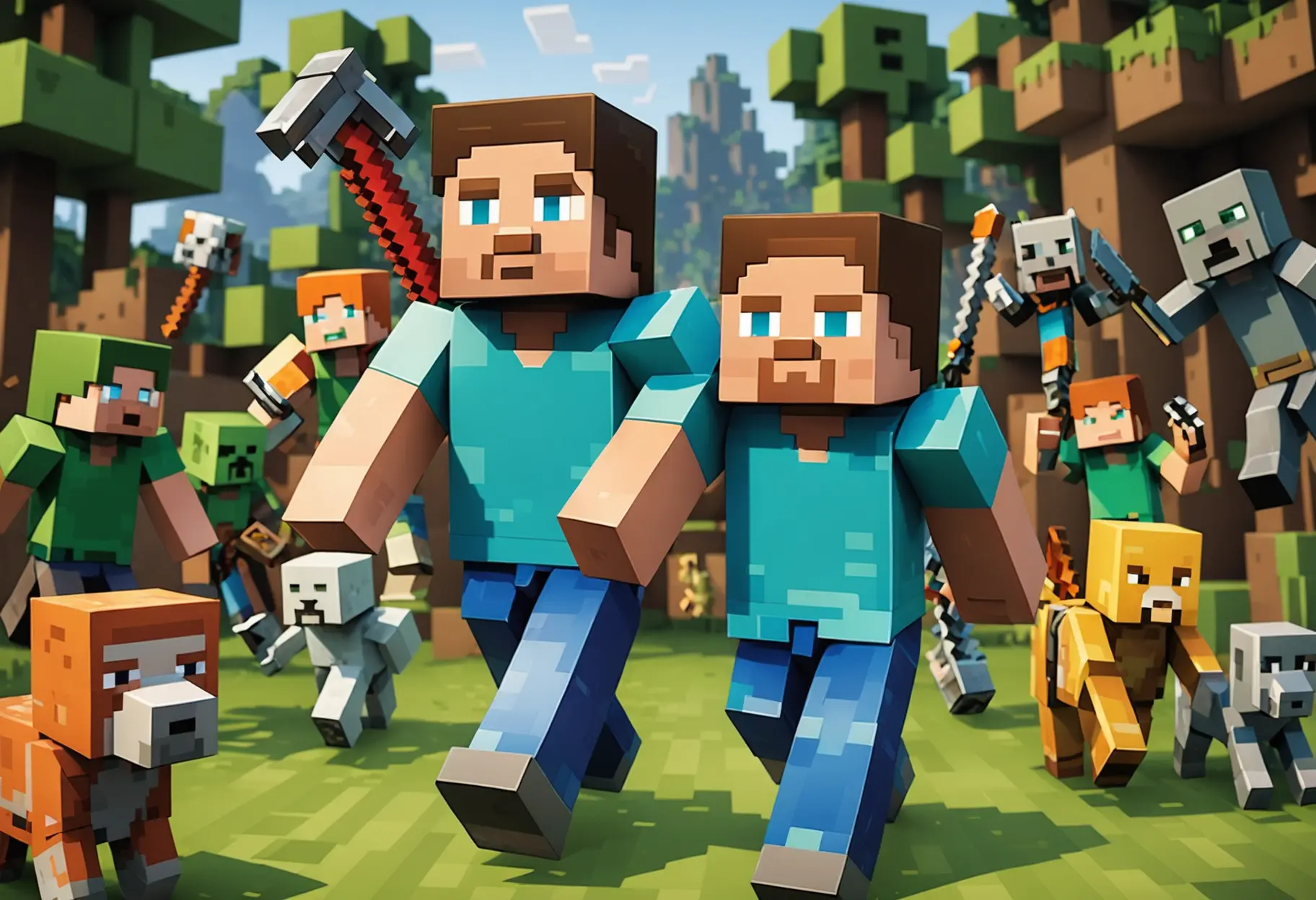
What are the best Minecraft alternatives in 2026?
Minecraft is still the default answer when someone says “I want a sandbox game where I can build anything.” But 2026 has quietly become a golden era for Minecraft alternatives. The genre has matured, and now there are genuinely different flavors of “blocky building,” from pure creative-mode architecture to hardcore survival crafting, automation, farming sims, and multiplayer worlds that feel closer to MMOs than to a simple sandbox.
This guide is written for the person who loves Minecraft but wants something fresh. Maybe you’ve burned out on the same progression loop. Maybe you want better combat, deeper automation, prettier lighting, more quest structure, or a calmer cozy vibe. Below are the best Minecraft alternatives in 2026, with real reasons to pick each one and who it suits best.
If you’re searching things like “games like Minecraft,” “Minecraft alternative for PC,” “best sandbox building games 2026,” “open world crafting games,” or “voxel games like Minecraft,” you’re in the right place.
First, what actually counts as a Minecraft alternative in 2026?
A good Minecraft alternative usually hits at least two of these pillars: building, survival, crafting, exploration, and emergent gameplay. The best ones add their own identity. Some go wide, with huge worlds and multiplayer servers. Others go deep, with complex tech trees, story quests, or farming and decorating that feels more like a life sim.
Also, not every alternative is voxel-based. In 2026, plenty of “Minecraft-like” games use different art styles but still scratch the same itch: gather resources, craft tools, build a base, explore a procedural world, repeat until it’s 2 a.m.
The best Minecraft alternatives in 2026 (the games you can sink months into)
Terraria (best for progression, bosses, and “one more upgrade” addiction)
Terraria is still the most reliable answer to “What should I play after Minecraft?” and it has aged incredibly well. It’s 2D, yes, but the loop is so tight it’s basically a masterclass in progression. You build, mine, craft, and then you hit a wall, and the game nudges you toward a boss fight that unlocks a whole new tier of gear, biomes, and materials.
What makes Terraria feel like a true Minecraft alternative is the freedom in how you approach it. You can play it like a builder, an explorer, a collector, or a combat-focused grinder. In 2026, it remains one of the best sandbox survival crafting games because it respects your time while still giving you endless goals.
Play Terraria if: you want structured progression, satisfying combat, tons of loot, and a world that keeps escalating.
Skip it if: you specifically need first-person 3D building.
Valheim (best for co-op survival and “build a home that matters”)
Valheim hits a sweet spot that Minecraft rarely reaches without mods: survival that feels grounded and building that feels meaningful. The physics and building constraints create structures that look like real architecture, and the world is beautiful in a moody, Nordic way. It’s also one of the best multiplayer alternatives to Minecraft because co-op is not an afterthought. You genuinely feel stronger together, and the longship-and-campfire vibe is immaculate.
The “Minecraft-like” part is there: gather, craft, build, explore, upgrade. The difference is tone and pacing. Valheim makes you earn comfort, and the best bases become living spaces, not just utility boxes.
Play Valheim if: you want co-op survival, base-building that feels tactile, and exploration with danger.
Skip it if: you want relaxed, low-stakes creative building.
LEGO Fortnite (best for accessible survival building with mainstream multiplayer energy)
By 2026, LEGO Fortnite has cemented itself as a serious contender in the “Minecraft alternatives” conversation, mostly because it’s so easy to recommend. It’s approachable, visually readable, and designed for social play. You gather resources, craft stations, build villages, and expand your world in a loop that’s instantly understandable even to people who don’t typically play survival games.
It won’t satisfy players looking for deep redstone-like logic systems or ultra-hard survival, but if what you really want is a modern, low-friction sandbox you can jump into with friends, it’s one of the most practical picks.
Play LEGO Fortnite if: you want a friendly Minecraft-like game with easy co-op and modern platform reach.
Skip it if: you want technical depth or complex automation.
Roblox (best “infinite games like Minecraft” platform, especially for kids and social play)
Roblox isn’t one game, it’s an ecosystem. And in 2026, that matters. If your goal is variety, social experiences, and endless community-built worlds, Roblox is arguably the biggest “Minecraft alternative” by sheer gravity. You can find survival crafting, building sandboxes, tycoon base builders, roleplay cities, hardcore parkour, and everything in between.
Quality varies wildly, but the best Roblox experiences can be shockingly polished, and it remains one of the top searches for “games like Minecraft for kids” and “online building games.”
Play Roblox if: you want endless variety and social servers, and you don’t mind curating what you play.
Skip it if: you want one cohesive premium game with a consistent design vision.
ARK: Survival Ascended (best for dinosaur survival and chaotic multiplayer stories)
If Minecraft is a camping trip, ARK is moving to a dangerous island and immediately deciding to tame a dinosaur. ARK’s survival crafting is heavy, systems-driven, and often hilariously brutal, but it creates stories that few games can match. Your base isn’t just a creative project; it’s a fortress protecting your tames, your resources, and your ego.
As a Minecraft alternative, ARK is less about block-by-block creativity and more about survival systems, tribe dynamics, and building functional bases that scale into industrial operations. The learning curve is real, and so are the stakes.
Play ARK if: you want big survival systems, creatures, breeding, and server drama in the best sense.
Skip it if: you want calm creative building or minimal grind.
Grounded (best “Minecraft but tiny” survival experience with strong design polish)
Grounded takes the survival crafting formula and makes it feel fresh by shrinking you to ant-size in a backyard. That one twist changes everything: blades of grass become trees, puddles become lakes, and every spider encounter is a potential disaster. It’s also one of the most polished survival crafting games available, with excellent co-op flow and a satisfying base-building loop.
Compared to Minecraft, Grounded feels more curated, more authored, and more readable. It’s less infinite sandbox, more “crafted survival adventure,” which is exactly what many Minecraft fans want in 2026.
Play Grounded if: you want a high-quality survival crafting game with clear progression and great co-op.
Skip it if: you want procedural worlds and limitless terrain.
No Man’s Sky (best for exploration, base building, and “Minecraft in space” vibes)
No Man’s Sky is one of the strongest answers to “open world crafting games like Minecraft” if you’re willing to trade blocks for planets. The loop is exploration-first: scan worlds, harvest materials, upgrade tech, build bases, and gradually turn your ship and tools into endgame machines.
It’s not a strict Minecraft clone. The building exists, but it sits inside a broader exploration and upgrade fantasy. In 2026, it’s especially compelling if you like the idea of a Minecraft-style survival loop stretched across a galaxy.
Play No Man’s Sky if: you want infinite exploration, sci-fi crafting, and base building with a sense of scale.
Skip it if: you mainly play Minecraft for redstone contraptions and voxel construction.
Core Keeper (best for cozy mining, base building, and co-op progression)
Core Keeper feels like it was built by people who understand why Minecraft mining is so satisfying. It’s top-down, with a strong emphasis on digging outward from a central base, discovering biomes, upgrading crafting stations, and fighting bosses that gate progression. The base becomes a warm hub, especially in co-op, where everyone contributes to farms, storage organization, and crafting pipelines.
If you want a Minecraft alternative that’s relaxed but still has direction, Core Keeper is a smart pick in 2026. It’s the kind of game that turns “I’ll play for 20 minutes” into a whole evening.
Play Core Keeper if: you want mining, crafting, cozy base progression, and easy co-op.
Skip it if: you need first-person building or massive 3D structures.
Vintage Story (best for hardcore crafting realism and slow survival immersion)
Vintage Story is the choice for players who love the survival part of Minecraft and wish it were deeper, slower, and more grounded. Think: knapping stone tools, food preservation, seasonal planning, and a crafting system that feels like a survival simulation rather than a quick recipe list.
It’s still voxel-based, so it scratches the “block world” itch, but the philosophy is totally different. This is less “punch a tree, build a castle,” and more “learn how to live here.” For the right player, it’s one of the most rewarding Minecraft alternatives available.
Play Vintage Story if: you want realistic survival crafting, meaningful progression, and immersion over speed.
Skip it if: you want instant gratification or fast creative builds.
Dragon Quest Builders 2 (best for guided building, charming story, and creative town design)
Dragon Quest Builders 2 remains a standout because it merges Minecraft-style building with a strong single-player RPG backbone. You’re not just building for yourself. You’re rebuilding towns, meeting characters, completing building “blueprints” that teach you design patterns, and watching NPCs actually use the spaces you create.
In 2026, it’s still one of the best games like Minecraft for players who want structure, charm, and a reason for every build beyond pure aesthetics.
Play DQB2 if: you want a story-driven Minecraft-like game with satisfying building and NPC town life.
Skip it if: you want endless procedural worlds and pure sandbox.
Trove (best for MMO-style voxel vibes and quick online sessions)
Trove is a voxel MMO with fast-paced dungeon runs, loot chasing, and light building through player clubs and personal spaces. It’s not the deepest builder, but it’s a legitimate Minecraft alternative if your favorite part of Minecraft is actually the server community, cosmetics, and the feeling of an online world where you’re always progressing.
It’s especially relevant for players searching “multiplayer games like Minecraft” but who want more combat and MMO pacing.
Play Trove if: you want bite-sized online progression with voxel style and constant rewards.
Skip it if: you want deep survival mechanics or serious building tools.
Best Minecraft alternatives by what you actually want
If your search is really about a specific itch, here’s the practical way to choose without overthinking it.
If you want the closest “Minecraft but different,” go with Terraria for progression or Vintage Story for deeper survival.
If you want co-op base building that feels alive, pick Valheim or Grounded, depending on whether you prefer mythic wilderness or a curated backyard adventure.
If you want endless community content and social play, Roblox is the broadest answer, while LEGO Fortnite is the easiest on-ramp for mixed-skill groups.
If you want survival with spectacle and long-term server stories, ARK: Survival Ascended is the heavyweight.
If you want “Minecraft in space,” No Man’s Sky still owns that lane.
If you want cozy mining and crafting with friends, Core Keeper is the sleeper hit that keeps converting Minecraft veterans.
If you want a story-driven builder where your creations serve a purpose, Dragon Quest Builders 2 is hard to beat.
What to look for before you commit (because not every “Minecraft-like” game hits the same)
A lot of people search for the best Minecraft alternatives and end up disappointed because they assumed “sandbox” means the same thing everywhere. In practice, the biggest differences are pacing and friction.
Some games are pure creativity tools where you can build immediately. Others make you earn building through survival pressure. Some are procedural and endless, while others are handcrafted and designed with narrative beats. Multiplayer can range from casual drop-in co-op to server ecosystems with raids, politics, and long-term economies.
If you know whether you want relaxing building, hardcore survival, automation complexity, or a guided adventure, you’ll pick the right alternative on the first try.
The bottom line: the best Minecraft alternatives in 2026
The “best” Minecraft alternative in 2026 depends on what part of Minecraft you love most. For most people, the safe, high-satisfaction picks are Terraria, Valheim, Grounded, No Man’s Sky, and Core Keeper, because they each deliver a strong core loop with real depth and long-term playability. If you want a deeper survival sim in a voxel world, Vintage Story is the connoisseur’s choice. If you want mainstream social energy, LEGO Fortnite and Roblox are hard to ignore. And if you want survival chaos at scale, ARK: Survival Ascended remains unmatched.
Minecraft set the template. In 2026, you finally get to choose the version of that template that fits you best.
Worth sharing?
Send this to someone who would find it useful.