The Science of Forest Bathing
Published
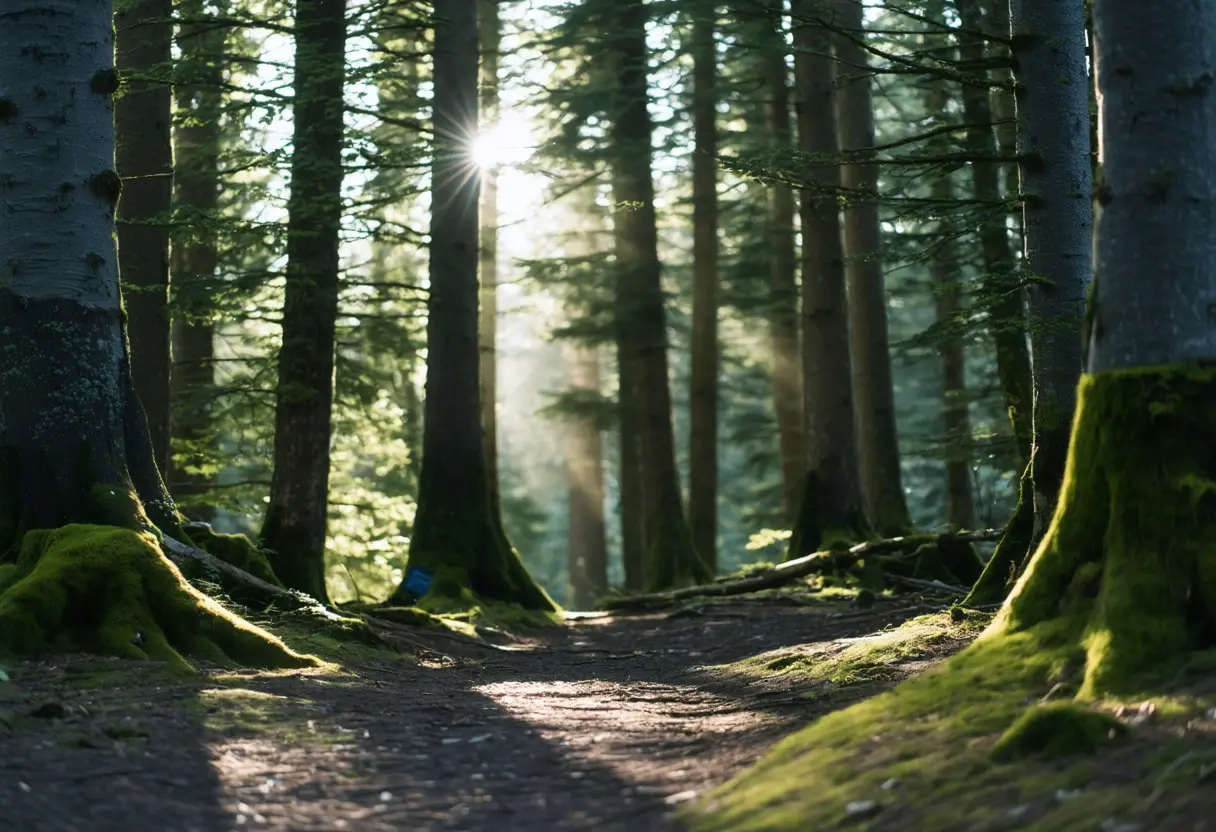
The Science of Forest Bathing: Why a Short Walk in Nature Can Change Your Body and Mind
There’s a particular kind of quiet you only hear under trees. It’s not silence, exactly. It’s the steady hush of leaves moving, birds negotiating territory, and your nervous system letting go of the idea that it needs to be on call.
In the last decade, “forest bathing” has become one of those phrases that floats around wellness culture, sometimes stripped of meaning, sometimes exaggerated into miracle-cure territory. But the underlying idea is both older and more practical than the trend: spending time in a natural setting measurably improves human health. Not metaphorically. Measurably.
Still, if you’re here because you’ve heard that forest bathing works “because of the UV from plants,” we need to get something straight early: plants don’t emit meaningful ultraviolet (UV) radiation in the way the sun does. UV exposure comes primarily from sunlight, not from trees. Nature walks do influence the biology of stress, mood, immune function, blood pressure, and sleep, but the dominant mechanisms are different: cleaner air, cooler microclimates, reduced noise, movement, attention restoration, and exposure to plant-derived compounds in the air called phytoncides, among others.
That doesn’t make forest bathing less compelling. It makes it more real.
This is the investigative version of the story: what forest bathing is, what the science actually says, what’s plausible, what’s hype, and how to build a simple “nature dose” into your week for maximum mental and physical health benefits.
What “Forest Bathing” Really Means (and Why the Japanese Term Matters)
Forest bathing is a translation of the Japanese term Shinrin-yoku, coined in Japan in the early 1980s. The phrase means, essentially, “taking in the forest atmosphere.” It’s not about hiking miles, chasing heart-rate zones, or doing anything performance-oriented. It’s closer to mindful immersion: walking slowly, breathing, looking, listening, letting your attention settle.
Japan didn’t popularize Shinrin-yoku because it sounded poetic. It emerged during a time of growing urbanization, long working hours, and stress-related illness. It was, and still is, part of a public-health conversation: a low-cost, low-risk intervention with broad reach.
Today, you’ll see related search terms everywhere: forest bathing benefits, shinrin-yoku meaning, science of forest bathing, nature therapy, nature walk mental health, phytoncides immune system. Some of the claims are careful. Others are sensational. The truth sits in between: forest bathing is not a magic reset, but it is a powerful lever.
The Core Science: What Changes in Your Body After Time in Nature
When researchers look at forest bathing, they tend to measure a few reliable categories: stress physiology, cardiovascular markers, mood and attention, sleep, and immune parameters.
1) Your stress response downshifts
One of the most consistent findings in nature exposure research is a reduction in markers associated with stress. This can include lower cortisol (a stress hormone), shifts toward parasympathetic nervous system activity (the “rest and digest” state), and reductions in self-reported anxiety or rumination.
This makes sense if you think like a clinician or a field researcher rather than an influencer. Many urban environments keep your brain in a low-grade threat-monitoring mode: traffic noise, dense crowds, constant signage, and the subtle pressure of moving fast. A forest is the opposite kind of stimulus: softer edges, fractal patterns, predictable soundscapes, and fewer demands on directed attention.
2) Blood pressure and heart rate often improve, even after short walks
A short walk in a green space commonly correlates with improvements in blood pressure and heart rate variability, particularly in people who are already stressed or sleep-deprived. Is it the trees alone? Not purely. Movement matters. Temperature matters. Noise reduction matters. But the consistent pattern is hard to ignore: green environments tend to support cardiovascular recovery.
3) Mood improves and attention “unclenches”
A major explanation here is Attention Restoration Theory: nature gently engages your attention without exhausting it. In practice, that looks like less mental fatigue, improved mood, and better ability to concentrate after time outdoors. If you’ve ever come back from a walk in a park and felt like your mind had been rinsed out, that’s the subjective version of what researchers try to quantify.
4) There are intriguing immune effects, and phytoncides are a leading candidate
One of the most discussed biological pathways in forest bathing research involves phytoncides, which are volatile organic compounds released by plants, especially trees. Think of the smell of pine, cedar, or cypress, that crisp “forest” scent. Those are chemicals plants use for their own defense and signaling.
Some studies have reported changes in immune markers after forest exposure, including activity associated with natural killer (NK) cells, which play a role in immune surveillance. The interpretation requires humility: immune systems fluctuate, and study designs vary. But the hypothesis is plausible: breathing in certain plant aerosols in combination with reduced stress could shift immune function in a favorable direction.
If you want a grounded takeaway, it’s this: forest air is different from indoor air, and it can be biologically active. Not in a mystical way, in an airborne-chemistry way.
About the “UV from Plants” Claim: What’s True, What’s Not, and What Might Be Confused
Let’s be precise, because precision matters if you’re making health choices.
Plants do not meaningfully emit UV radiation that benefits humans. UV exposure relevant to human physiology comes from the sun. What plants do is reflect and filter light, alter the microclimate, increase humidity, and reduce heat. Tree canopies can significantly reduce UV exposure by providing shade.
So why does “UV from plants” show up in conversations about nature and health?
There are a few likely confusions:
First, sunlight exposure does affect health. UVB rays help your skin synthesize vitamin D. That can matter for mood, immunity, and bone health, although it’s not a blank check: excessive UV increases skin cancer risk, and vitamin D is not a reason to get burned. A short outdoor walk can increase daylight exposure, which also helps regulate circadian rhythm, independent of UV.
Second, “volatile organic compounds” can be mistaken for “UV.” The real forest mechanism people are often gesturing at is phytoncides, not UV.
Third, visible and near-infrared light may play a role in wellbeing. Some researchers explore how natural light environments affect physiology. That’s not the same as “plants giving off UV,” but it can sound similar in casual retellings.
If you came here expecting UV to be the primary explanation, the better and more accurate story is richer: light, air chemistry, stress biology, sound, movement, and attention all work together.
Why Even a Short Nature Walk Works (Yes, Even 15 Minutes)
The most useful part of forest bathing is that it doesn’t require a remote wilderness or a weekend away.
A short walk in a park, a tree-lined neighborhood, a botanical garden, a riverside path, even a cemetery with old trees can act like a nervous-system “pattern interrupt.” You step out of the stimulus loop. Your breathing changes. Your gaze relaxes. Your shoulders drop two centimeters without you noticing.
From a practical health standpoint, this is the sweet spot: low friction, repeatable, scalable. Consistency beats intensity.
And you don’t need to believe in anything. Your body responds to environments whether or not you’re convinced.
Forest Bathing vs. Hiking vs. Exercise: What’s the Difference?
A lot of people hear “forest bathing” and assume it’s just hiking with better branding. It’s not. Hiking is great, but it tends to be goal-driven: distance, elevation, pace.
Shinrin-yoku is intentionally non-performative. You can walk slowly. You can stop. You can sit. You can wander a short loop. You can leave your phone in your bag and actually notice what your mind does when it isn’t being fed.
The physiology you’re after is not only fitness adaptation. It’s recovery.
This is also why forest bathing can be accessible for people who can’t do strenuous exercise: older adults, people recovering from illness, those with chronic pain, or anyone burned out and depleted.
The Real-World Mechanisms: What Nature Is Doing to You, in Plain Language
Here’s what I see, again and again, when you translate research into real life.
Nature reduces cognitive load. Your brain processes fewer urgent inputs. That’s not laziness. That’s recovery.
Nature changes your breathing. Without you thinking about it, your breath often gets slower and deeper. That alone can shift autonomic balance.
Nature dampens noise and harsh light. Forests and parks soften the sensory environment. Your system interprets that as safety.
Nature air can be cleaner and more humid. That can make breathing feel easier, especially compared to indoor spaces with dry air and recirculation.
Nature invites micro-movement. Walking on uneven ground, turning your head, stepping around roots, adjusting posture. It’s gentle, varied movement your body likes.
Nature gives you “soft fascination.” The flicker of leaves, cloud movement, water ripples. These hold attention without draining it.
If you want a single line that captures the science of forest bathing, it’s this: your body is an environmental sensor, and green environments often read as safe enough to heal.
How to Practice Forest Bathing (Shinrin-yoku) for Maximum Benefits
You don’t need a ritual, but you do need to protect the quality of your attention. The difference between “a walk outside” and “forest bathing” is whether you let the environment reach you.
Start with a time window you can actually repeat. Twenty minutes is plenty. If you can do longer, great. But if you’re trying to build a habit, reliability wins.
Choose a place with trees if possible. If you live in a city, search for “nearby park,” “arboretum,” “urban forest,” or “botanical garden.” Even a street with mature trees can work better than a loud commercial strip.
Leave your phone in your pocket. If you need it for safety, keep it, but don’t feed your brain the usual inputs. Give it a chance to downshift.
Walk slowly enough that you can notice details: the smell of bark, the temperature under shade, the variation of greens, the sound of wind moving through different species. This isn’t fluff. Sensory engagement is part of why forest bathing works.
If you want to intensify the effect, add stillness. Sit on a bench or a fallen log. Let your gaze wander. When thoughts arise, don’t wrestle them. Just come back to what you can see and hear.
The best forest bathing routine is the one you can do when life is messy.
A Weekly “Nature Dose” You Can Actually Maintain
People love to ask for the perfect protocol. Here’s the most realistic approach I’ve seen hold up in the real world:
Do short nature walks during the week, and one longer immersion when you can. That might mean a quick park loop before work, a lunch break under trees, and a weekend visit to a trail or wooded area.
The point isn’t to chase a number. It’s to make nature exposure a standard part of your recovery toolkit, like hydration or sleep.
If you’re parenting, bring the kids but make part of it unstructured. Let them wander. You’ll benefit too.
If you’re busy, schedule it like a meeting. Your nervous system doesn’t care about your inbox.
If mobility is limited, sit near a window facing trees, spend time in a garden, or find a shaded green space with seating. Forest bathing is not defined by steps.
Safety and Common Sense: UV, Ticks, Air Quality, and Expectations
If you’re getting more daylight, remember the basics: avoid sunburn. Sunlight can support mood and circadian rhythm, but too much UV harms skin. Shade from trees helps, but it’s not perfect protection.
In wooded areas, check tick guidance for your region and do a quick clothing and skin check after. If air quality is poor due to wildfire smoke or pollution, choose a different time or place. Forest bathing is about health; breathing smoke defeats the purpose.
Also, treat forest bathing like what it is: a supportive practice, not a replacement for medical care. It can meaningfully reduce stress and improve wellbeing, but it’s not a standalone cure for depression, hypertension, or immune disorders. It’s a lever, not a miracle.
Why This Works in a Modern Life That Never Stops
The most persuasive argument for forest bathing isn’t a single biomarker or a single study. It’s the pattern.
We built a world that is excellent at stimulation and terrible at recovery. Shinrin-yoku is recovery, designed by an environment humans evolved in, delivered in a way modern people can use.
The forest doesn’t ask you to optimize. It doesn’t grade you. It just changes the conditions around you long enough for your body to remember what “off” feels like.
If you take one thing from the science of forest bathing, let it be this: you don’t need a week-long retreat. You need a consistent relationship with the living world.
Start with one short walk. Under trees, if possible. Slowly enough that you can actually arrive. Then do it again next week, not because it’s trendy, but because it works.
Worth sharing?
Send this to someone who would find it useful.