The Modern Nomad Protocol
Published
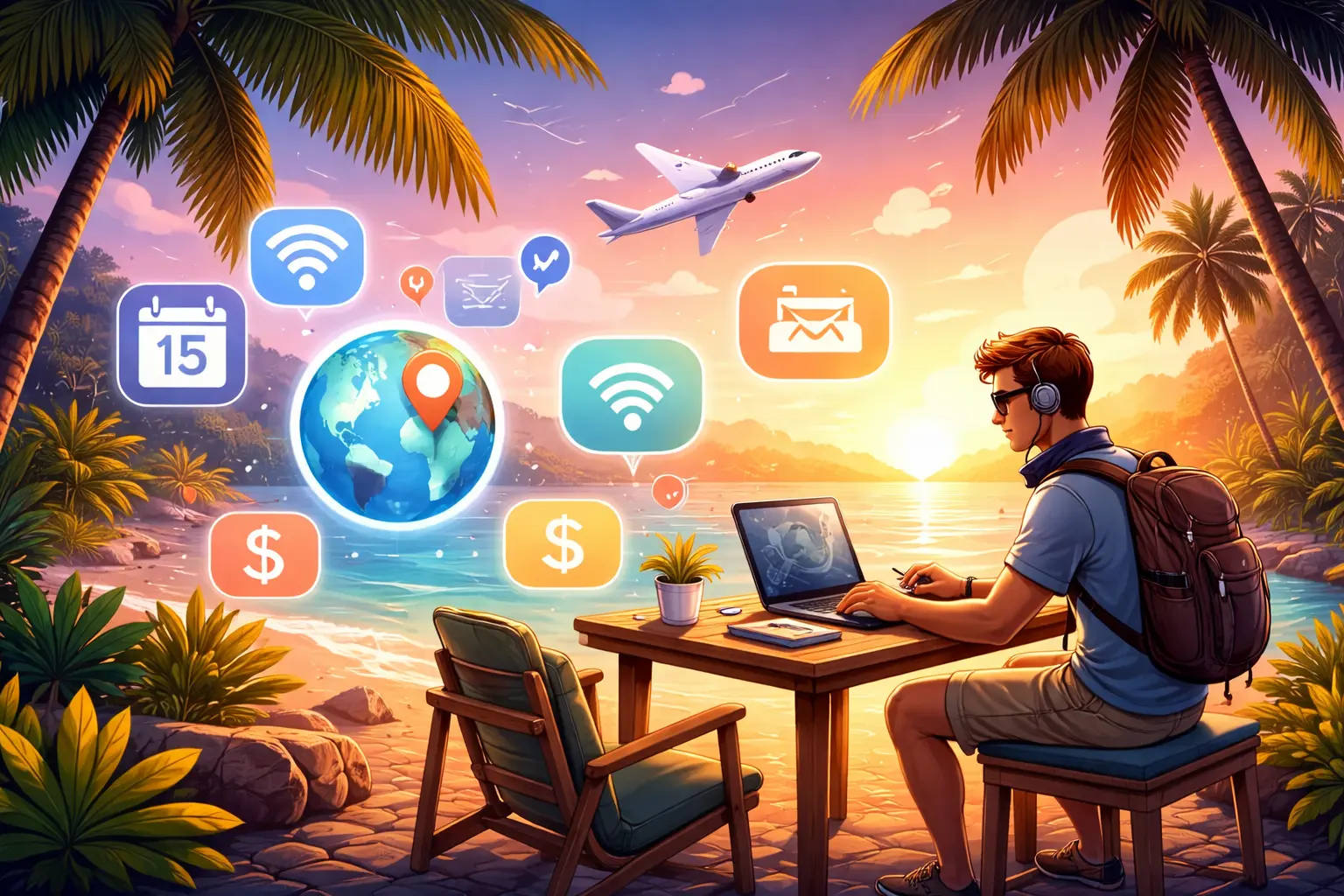
The Modern Nomad Protocol
How to build a career while traveling the world, without burning out, freeloading, or turning into a walking cliché.
The internet sells the digital nomad dream like it’s a hack: buy a one-way ticket, open a laptop in Bali, and let “passive income” wash over you while sunsets do the rest. The reality is messier and, honestly, more interesting.
A modern nomad is not just someone who works remotely. A modern nomad is someone who can move through countries and cultures with competence, humility, and long-term career leverage. You’re not escaping life. You’re building one across borders.
This is The Modern Nomad Protocol: a practical, ethical guide to self-development and career advancement while traveling the world. It’s built from what actually works in the field: remote work logistics, career strategy, social integration, financial resilience, and the kind of ethical travel mindset that lets you feel proud of how you move through the world.
The First Principle: Your Career Must Travel Better Than Your Backpack
If your income depends on one client, one platform, or one fragile routine, your “freedom” is a high-risk costume. The modern nomad protocol starts with a simple constraint: your career needs to remain functional under movement.
That means choosing work that is portable, durable, and upgradeable. Portable means you can do it from anywhere with reliable Wi‑Fi and a quiet room. Durable means it survives time zones, border issues, and market shifts. Upgradeable means you get better at it each year, not just busier.
This is where a lot of people fail. They optimize for travel first, and work second. The result is anxiety. Or burnout. Or a scramble for quick gigs that erode self-respect.
In practice, career-first doesn’t mean corporate. It means you treat your work like an asset.
Step One: Pick a “Nomad-Proof” Career Track (Not Just a Job)
Search terms like best remote jobs and work from anywhere careers are popular for a reason. But “remote” is not a career plan. It’s a location setting.
The modern nomad protocol favors career tracks that compound: skills that lead to better opportunities, higher rates, and stronger networks over time. These usually fall into a few categories:
Remote knowledge work tends to travel well: software engineering, product design, data analytics, cybersecurity, UX research, technical writing, marketing strategy, SEO consulting, paid media, brand design, video editing, and project management.
Client-based expert work is extremely nomad-friendly once you’re credible: coaching, fractional leadership, consulting, copywriting, recruitment, finance ops, and operations.
Build once, sell repeatedly can work, but it’s harder than influencers admit: courses, templates, SaaS, newsletters, digital products. This lane rewards patience and genuine expertise.
The key is to choose one track and commit long enough to get genuinely good. Being a generalist is fine, but being vague is expensive.
If you don’t know what to choose, pick something with (1) clear market demand, (2) a visible portfolio, and (3) a proven path to higher pay. Then give yourself 12 months of serious practice. Nomad life is easier when your income is not fragile.
Step Two: Build a Reputation Engine That Works Across Borders
Travel makes you forgettable unless you become deliberate about how people remember you.
Your resume matters less than your reputation. Your reputation comes from proof. Proof comes from artifacts.
So you build a simple system: a personal site, a portfolio, a writing habit, and a “this is what I do” narrative so clear it can survive a noisy café and a bad Zoom connection.
A strong nomad reputation engine usually includes:
A clean website with one sentence that says what you do, who you do it for, and the result you create. Case studies that read like problem-solving stories, not brag sheets. A LinkedIn presence that demonstrates your thinking, not your desperation. A small body of writing, even if it’s just monthly, where you explain your approach in public.
This is the difference between “remote worker” and “global professional.” Remote workers compete on price. Global professionals compete on clarity.
Also, do not underestimate how powerful it is to be the person who ships. Nomads who consistently deliver become rare fast. Companies don’t mind time zones if they can trust outcomes.
Step Three: Build Your “Two-Layer Income” So Travel Stops Feeling Risky
One of the most practical financial strategies for long-term travel is the two-layer model:
Layer one is stable baseline income. A remote job, a retainer, a predictable client. Something boring. Something that keeps the lights on and the insurance paid.
Layer two is upside. A second client, a product, a consulting offer, affiliate revenue, speaking gigs, a newsletter sponsorship. Something that grows.
This structure reduces panic and keeps you from making desperate decisions in foreign countries. It also stops you from turning every day into an anxious hustle. Your nervous system matters. You can’t build a career while living in constant micro-survival mode.
A nomad protocol isn’t just about making money. It’s about making money in a way that doesn’t make you brittle.
Step Four: Master the Logistics Like a Professional, Not a Tourist
There’s a difference between traveling and living internationally. The modern nomad protocol treats logistics as a core competency.
If you want to rank for “how to become a digital nomad” or “how to work remotely while traveling,” you’ll see endless packing lists and Wi‑Fi hacks. Useful, yes. But the real edge comes from systematizing the boring stuff:
You choose destinations based on work compatibility, not just vibes. You travel slower than your dopamine wants. You pick accommodations where you can sleep and work. You plan around time zones instead of fighting them. You keep redundancy: two cards, two backups, two ways to connect.
You also learn a hard truth: cheap can be expensive. A low-cost apartment with terrible internet can cost you a client. A party hostel can cost you your health. A chaotic schedule can cost you your reputation.
Professional nomads don’t romanticize instability. They design around it.
Step Five: Time Zones Are Not the Enemy, Your Schedule Is
A real remote career is often built by being dependable. The moment you cross continents, your calendar becomes either a weapon or a liability.
The modern nomad protocol recommends building a default weekly structure you can keep in almost any place. Not rigid, but reliable. Something like:
Deep work blocks that happen at the same local time. Meetings clustered on specific days. Admin tasks batched. A clear cutoff so your life doesn’t become an endless half-work vacation.
When you do this, traveling the world stops feeling like you’re constantly “catching up.” It feels like you have a life, and your life just happens to be in different countries.
Step Six: Ethical Nomadism Is Not Optional Anymore
The phrase “global citizen” can sound self-congratulatory if it’s not backed by behavior. Ethical travel isn’t about performative guilt. It’s about acting like your presence has consequences.
Remote workers can unintentionally raise rents, distort local economies, and create enclaves that extract value without contributing. The modern nomad protocol asks you to travel with reciprocity.
Ethical digital nomads do a few consistent things, and they’re not complicated:
They pay fair prices without flexing wealth or haggling aggressively in fragile economies. They respect visas and local laws instead of treating countries like “content backdrops.” They support local businesses intentionally: markets, cafés, tailors, gyms, bookstores, guides. They learn enough of the language to be polite and functional, which is a simple form of respect. They don’t treat locals like service staff or side characters. They build relationships outside nomad bubbles.
The ethics aren’t abstract. They’re daily choices: how you tip, how you negotiate, where you spend, how you behave in shared spaces, how you talk about the place online.
If you’re going to call yourself cosmopolitan, earn it.
Step Seven: Cultural Intelligence Is a Career Skill
People talk about “networking for nomads” like it’s just coworking spaces and mixers. Real networking happens when you become culturally fluent enough to collaborate across differences without being exhausting.
Cultural intelligence is your ability to adapt your communication style, understand social context, and avoid the classic mistakes: being too direct in indirect cultures, too informal in formal ones, too fast in relationship-based business environments.
If you want an international career, not just a remote paycheck, this becomes a differentiator. You become the person who can work with a German engineering team, a Singaporean operations leader, and a Brazilian creative director without making every meeting awkward.
That skill translates into leadership. And leadership translates into leverage.
Step Eight: Build Community Without Becoming a Tourist in Your Own Life
Loneliness is the unglamorous tax of full-time travel. Most people don’t plan for it. They assume new places will automatically create connection. Sometimes they do. Often they don’t.
The modern nomad protocol treats community like a habit, not a miracle.
You choose one or two anchor activities that travel with you: a martial art, a running club, dance classes, language exchange, climbing gyms, volunteering, coworking communities. You show up consistently for a month instead of bouncing after four days. You become recognizable.
You also keep friendships at home alive like it matters, because it does. A global life is not a replacement for roots. It’s an expansion of them.
If you’re building a career while traveling, stable relationships protect your mental health and stabilize your decision-making. That’s not sentimental. It’s strategic.
Step Nine: Your Body Is Your Infrastructure
Nomads love to talk about freedom. But freedom without health is just expensive discomfort.
If you’re working remotely while traveling long-term, your body becomes your primary infrastructure. Protect it like a serious person.
Sleep is non-negotiable. Alcohol becomes a tax. Bad posture becomes chronic pain. Random street food without common sense becomes lost weeks.
You don’t need perfection. You need baseline competence: regular movement, protein, hydration, sunlight, medical backups, dental care before big trips, and enough routine that your nervous system stops thinking it’s under threat.
Burnout is common among digital nomads because travel adds invisible cognitive load: new currencies, new languages, constant decisions. A healthy body is how you carry that load.
Step Ten: Career Advancement While Traveling Requires Intentional “Progress Loops”
Here’s an uncomfortable truth: many people travel for years and end up with the same professional level they started with, just with better photos.
The protocol prevents that by building progress loops into your life. This is where self development becomes real, not hashtagged.
A progress loop is simple: you pick a skill that increases your earning power or impact, you practice it weekly, you ship something public, and you get feedback.
Examples that work in the real world:
A marketer traveling through Mexico commits to publishing one deep case study per month. Within a year, they’re known for a niche and can charge double. A designer in Vietnam documents redesigns publicly, learns to present work better, and becomes a lead, not just a contractor. A developer in Lisbon chooses one specialty like performance optimization, builds a public repo, and starts receiving inbound offers. A coach in Thailand refines one signature framework and starts selling outcomes instead of sessions.
Travel can either distract you or refine you. The difference is whether you measure growth.
The Modern Nomad Mindset: Don’t Consume the World, Collaborate With It
The internet’s version of nomadism is consumption: countries as playlists, cultures as aesthetics, people as temporary extras.
The modern nomad protocol is different. It’s built on contribution and mutual respect.
You treat each place as someone’s home. You treat work as a craft. You treat your career as a long game. You treat your freedom as something you maintain through competence, not something you stumble into through luck.
That’s what makes this protocol sustainable. You become the kind of person who can live anywhere because you’ve learned how to be responsible everywhere.
A Practical Starting Plan (If You Want to Begin This Month)
If you’re staring at this article thinking, “Great, but what do I do first?”, here’s a grounded way to start without overcomplicating it.
Pick one remote-friendly career track you can commit to for a year. Build one portfolio page or case study that proves you can create results. Secure a baseline income stream, even if it’s modest. Choose your first destination based on Wi‑Fi reliability, safety, and your work hours, not just Instagram. Book a stay long enough to create routine, ideally four weeks or more. Set a weekly schedule before you arrive, not after you’re overwhelmed. Learn ten phrases in the local language and use them daily. Spend money locally with intention. Publish one piece of work in public each month so your career advances while your passport fills.
That’s the protocol in motion.
The Real Promise of the Modern Nomad Protocol
The goal is not to travel forever. The goal is to become the kind of person who could, because you’ve built portable competence, financial resilience, and ethical awareness.
When you do it right, you stop chasing places to feel alive. You carry your life with you, and you make it better as you go.
That’s modern nomadism: not escape, not performance, not exploitation. A career that travels well, and a way of moving through the world that leaves you stronger and leaves places unharmed.
If you want a compass for the next decade, make it this: build skills that compound, move slowly enough to belong, and treat the world like a relationship, not a resource.
Worth sharing?
Send this to someone who would find it useful.