Is Bitcoin still worth it in 2026?
Published
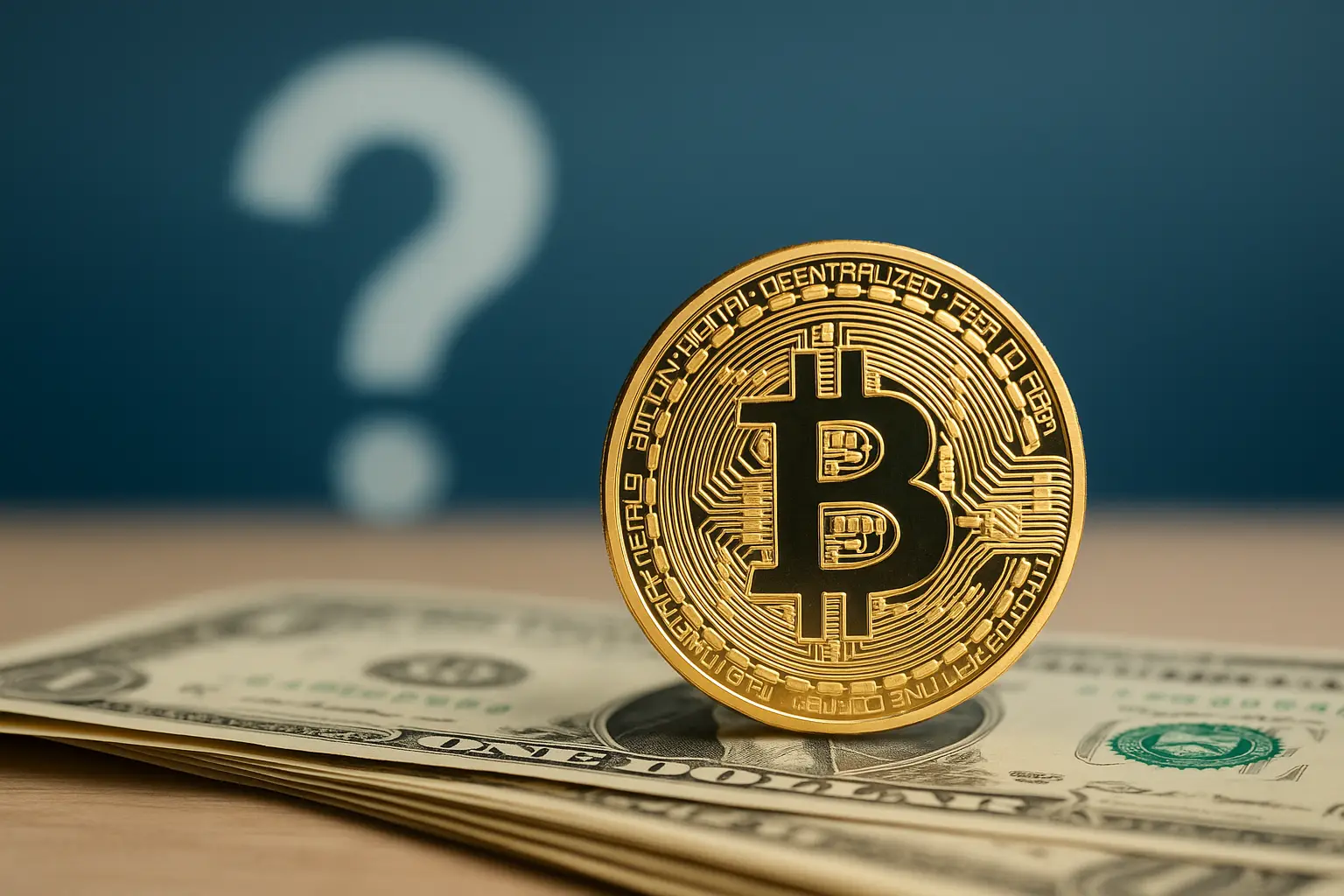
Is Bitcoin still worth it in 2026?
Bitcoin has a way of pulling you back in. Maybe you bought your first satoshis during a hype cycle and swore you were done after the next crash. Maybe you ignored it for years, then noticed that it is still here, still moving, still shaping headlines and portfolios. In 2026, the question is no longer whether Bitcoin is “real.” The more practical question is: is Bitcoin still worth it in 2026 for someone who wants to grow wealth without getting wrecked by volatility, scams, or unrealistic expectations?
The answer depends on what “worth it” means to you. If you want a guaranteed 10x in a year, Bitcoin is a terrible plan. If you want an asset with a long track record of surviving bear markets, attracting institutional capital, and functioning as a global, censorship resistant monetary network, Bitcoin remains one of the most compelling asymmetric bets in modern finance.
This guide walks through how Bitcoin has changed by 2026, what risks still matter, and how to approach it with a strategy that can survive the next cycle.
Where Bitcoin stands in 2026: adoption, narratives, and market structure
Bitcoin in 2026 is less of a fringe tech experiment and more like a volatile macro asset that sits somewhere between digital gold and an early stage monetary network. That shift matters, because it changes how you evaluate it.
The “digital gold” narrative is more mature
The store of value thesis has aged better than the “buy coffee with it” pitch. The base layer is optimized for security and settlement, not retail payments at scale. Faster payments and small transactions are typically handled through second layer solutions such as the Lightning Network, custodial apps, or other scaling approaches.
What this means for investors is that Bitcoin’s role looks increasingly like:
- A scarce asset with a fixed supply policy
- A hedge against long term currency debasement (not a perfect one, but a plausible one)
- A liquidity sensitive asset that reacts strongly to global risk appetite
Institutional involvement changed the game and the vibe
By 2026, Bitcoin exposure is more accessible through traditional rails than it was a few years ago. More on ramps mean:
- Easier buying and selling, which can increase liquidity
- More correlation with broader markets during risk off periods
- More sophisticated trading, which can compress certain inefficiencies
Institutional adoption does not remove volatility. It tends to repackage it. Big players use leverage, derivatives, and hedging. That can smooth some moves and amplify others, especially around macro events, ETF flows, and liquidation cascades.
The 2024 halving still echoes through 2026
Bitcoin’s supply issuance schedule continues to shape long term psychology. Historically, halvings have reduced new supply and contributed to multi year cycles, even though past performance does not guarantee future results.
Actionable takeaway: in 2026, many investors frame Bitcoin as a multi year allocation rather than a quick flip, and they plan around drawdowns that can still be brutal.
Is Bitcoin still worth it in 2026 for the average investor?
For most people, the real question is: does Bitcoin improve my financial plan or complicate it? Bitcoin can still be worth it in 2026, but only if it fits your goals, time horizon, and risk tolerance.
Scenarios where Bitcoin can be worth it
Bitcoin may be worth considering if you identify with one or more of these:
- You want exposure to an asset with scarcity and global demand that is not tied to any single government.
- You can hold through major volatility without panic selling.
- You are willing to learn basic security practices, or you are comfortable paying for reputable custody.
- You have a long time horizon, typically 3 to 10 years, not 3 to 10 weeks.
Scenarios where Bitcoin is probably not worth it
Bitcoin is likely a poor fit if:
- You need the money within the next 12 to 24 months for rent, tuition, or a home down payment.
- You cannot emotionally handle a 30 to 60 percent drawdown, because those are still possible.
- You are already carrying high interest debt and hoping Bitcoin will bail you out.
- You are chasing the “next Bitcoin” instead of building a resilient plan.
A useful way to think about it: Bitcoin is not a substitute for an emergency fund, insurance, or a diversified portfolio. It is an optional, high volatility component that may improve long term outcomes if sized correctly.
Key risks in 2026: what can still go wrong
Even in 2026, Bitcoin is not “safe” in the way a savings account is safe. It is safer than it used to be in some respects, and riskier in others.
Volatility remains the entry fee
Bitcoin’s volatility is not a glitch. It is the price of admission for an asset that is:
- Globally traded 24/7
- Highly liquid relative to most crypto assets, but still small compared to major sovereign bond markets
- Sensitive to leverage and derivatives positioning
If you buy Bitcoin, assume you will at some point see your position down massively on paper. Plan for that before you buy, not after.
Regulatory shifts can move markets quickly
By 2026, regulation is clearer in many regions, but it is not uniform. Tax treatment, reporting requirements, and restrictions on exchanges can change. Even if Bitcoin itself is hard to ban at the protocol level, access points can be regulated heavily.
Practical advice:
- Keep records of buys, sells, transfers, and fees.
- Understand how your jurisdiction taxes capital gains.
- Avoid sketchy platforms that advertise “no KYC” as the main value proposition.
Custody risk is still one of the biggest risks
The most common way people lose Bitcoin is not through the protocol failing. It is through:
- Exchange collapses or withdrawal freezes
- Phishing and SIM swap attacks
- Malware and seed phrase theft
- Sending funds to the wrong address or wrong network
If you are holding a meaningful amount, you need a custody plan that matches your skill level.
“Bitcoin is worth it” does not mean “all crypto is worth it”
In 2026, scams are more sophisticated. “Yield” products, leveraged points schemes, and influencer tokens still prey on greed and confusion.
A rule that saves money: if the pitch focuses on guaranteed returns, passive income, or urgency, step back. Bitcoin’s value proposition is simple enough that it does not need a marketing funnel.
Practical strategies for buying Bitcoin in 2026 without getting wrecked
If you decide Bitcoin is still worth it in 2026, the next question is how to buy and hold it in a way that does not sabotage your finances.
1) Use position sizing that you can live with
A common mistake is going all in during a hype period. A more durable approach is to treat Bitcoin as a percentage of your investable portfolio.
Example allocation bands people often consider:
- Conservative: 1 to 3 percent in Bitcoin
- Moderate: 3 to 7 percent in Bitcoin
- Aggressive: 7 to 15 percent in Bitcoin
These are not recommendations, just a way to frame sizing. The right number depends on your income stability, other assets, and your ability to hold during drawdowns.
2) Consider dollar cost averaging (DCA)
Dollar cost averaging means buying a fixed amount on a schedule, regardless of price. It reduces timing stress and can help you avoid buying a lump sum at the top.
A simple DCA plan:
- Pick a weekly or monthly amount you can afford.
- Automate purchases with a reputable exchange or broker.
- Periodically move funds to cold storage if you self custody.
- Reassess allocation quarterly, not daily.
Here is a basic example you can adapt in a spreadsheet or script:
Monthly DCA plan:
- Buy $200 of BTC on the 1st of each month
- If BTC drops 20% or more from the last monthly buy, add an extra $50
- If BTC rises 50% or more within 3 months, do nothing special
- Every quarter, rebalance if BTC exceeds target allocation by 2%
The point is not the exact numbers. The point is building a rule set that prevents emotional trading.
3) Know the difference between trading and investing
If you are asking “Is Bitcoin still worth it in 2026?” you are likely thinking about investing, not day trading. Many people confuse the two and end up with the worst of both worlds: long term risk with short term stress.
A clean separation helps:
- Investing: multi year horizon, low turnover, focus on custody and risk management
- Trading: short horizon, strict rules, stop losses, tax complexity, high emotional load
If you do not have a tested trading system and a willingness to lose money learning, default to investing.
4) Decide on custody: exchange, ETF, or self custody
In 2026, you have three common approaches. Each has tradeoffs.
Exchange custody
- Pros: easy, liquid, fast
- Cons: counterparty risk, account hacks, withdrawal issues
ETF or brokerage exposure
- Pros: simple taxes in some jurisdictions, fits retirement accounts, no seed phrases
- Cons: management fees, no direct ownership, relies on traditional financial infrastructure
Self custody with a hardware wallet
- Pros: direct control, censorship resistance, no counterparty risk
- Cons: personal responsibility, risk of losing seed phrase, setup learning curve
If you self custody, keep it boring and methodical. Use a reputable hardware wallet, back up your seed phrase offline, and consider a multi location backup strategy.
A minimal self custody checklist:
- Buy a hardware wallet from the manufacturer, not a random reseller
- Write the seed phrase on paper or metal, never in cloud notes
- Enable a PIN and consider an additional passphrase if you understand it
- Do a small test withdrawal first
- Verify addresses carefully before sending larger amounts
5) Plan your exit strategy before you need it
“Worth it” is not just about buying. It is about realizing gains or using Bitcoin intentionally.
Two common approaches:
- Rebalance approach: periodically sell a portion if Bitcoin grows beyond your target allocation.
- Goal based approach: sell when it funds a specific goal, such as paying off debt, building an emergency fund, or a home purchase.
Example rebalancing rule:
- Target allocation: 5 percent Bitcoin.
- If Bitcoin rises to 8 percent, sell down to 5 percent.
- If Bitcoin drops to 3 percent, buy back up to 5 percent only if your financial situation allows.
This forces you to sell some into strength and buy into weakness without trying to predict tops.
Evaluating Bitcoin as an investment in 2026: a simple framework
If you want to evaluate whether Bitcoin is still worth it in 2026 without getting lost in hot takes, use a framework that combines fundamentals, macro, and personal fit.
Bitcoin fundamentals to watch
- Network security and hash rate: higher security generally strengthens confidence.
- Distribution and liquidity: deeper markets can reduce some forms of manipulation, though not eliminate volatility.
- Fees and usage: rising fees can signal demand for block space, but also push small transactions to second layers.
- Development and ecosystem health: steady progress on wallets, custody, and scaling tools matters more than flashy announcements.
You do not need to track everything daily. Pick a few indicators and check them monthly.
Macro factors that influence price
Bitcoin often behaves like a high beta macro asset, especially during liquidity shifts. Factors include:
- Interest rate expectations and real yields
- Global liquidity and risk appetite
- Major exchange or ETF flows
- Regulatory headlines
A practical mindset: you do not need to predict macro perfectly. You need to avoid building a plan that requires perfect timing.
Personal fit checklist
Ask yourself these questions:
- Can I hold for at least 3 years without needing the money?
- Would I panic sell if my position dropped 50 percent?
- Am I buying because of conviction and strategy, or because of FOMO?
- Do I understand how I will store it and how taxes work where I live?
- If Bitcoin goes nowhere for 2 years, will I be fine?
If the honest answers make you uncomfortable, reduce size or stay out. Skipping an investment is also a strategy.
Common myths in 2026 that still trap investors
A lot of the “Is Bitcoin still worth it in 2026?” debate gets derailed by myths. Here are a few that still cause expensive mistakes.
Myth 1: “It is too late because Bitcoin is already big”
Bitcoin can be both large and still have upside. “Too late” is not a useful metric. The real question is whether Bitcoin’s long term adoption curve is still expanding and whether the asset can meaningfully fit into your portfolio.
If you treat Bitcoin as a long term allocation rather than a lottery ticket, “too late” becomes less relevant.
Myth 2: “Bitcoin is guaranteed to go up after a halving”
Halvings affect supply issuance, but price is still set by demand, liquidity, and market structure. The halving is not a cheat code. It is a variable, not a promise.
Myth 3: “Self custody is always better”
Self custody is powerful, but it is not automatically better for everyone. If you are likely to lose your seed phrase, fall for phishing, or skip backups, a regulated ETF or a reputable custodian may be safer for you.
The best custody is the one you can execute reliably.
Myth 4: “You must buy one full Bitcoin”
You can buy small amounts. Owning 0.01 BTC is still owning Bitcoin. Many beginners delay because they think partial ownership is pointless. It is not.
Conclusion: so, is Bitcoin still worth it in 2026?
Bitcoin is still worth it in 2026 for investors who want long term exposure to a scarce, globally accessible asset and who can tolerate volatility, learn basic security, and size their position responsibly. It is not worth it for anyone looking for quick guaranteed returns, anyone relying on it to fix cash flow problems, or anyone who cannot commit to a plan that survives deep drawdowns.
If you want to take the next step, make it practical:
- Decide what percentage of your portfolio Bitcoin could be without keeping you up at night.
- Choose a simple DCA schedule you can sustain for at least a year.
- Pick a custody method you can handle safely, whether that is an ETF, a reputable exchange, or self custody.
- Write down an exit or rebalancing rule before emotions get involved.
Do that, and “Is Bitcoin still worth it in 2026?” turns from a debate into a strategy you can actually execute.
Worth sharing?
Send this to someone who would find it useful.