How to make a New York Cheesecake?
Published
How to make a New York Cheesecake?
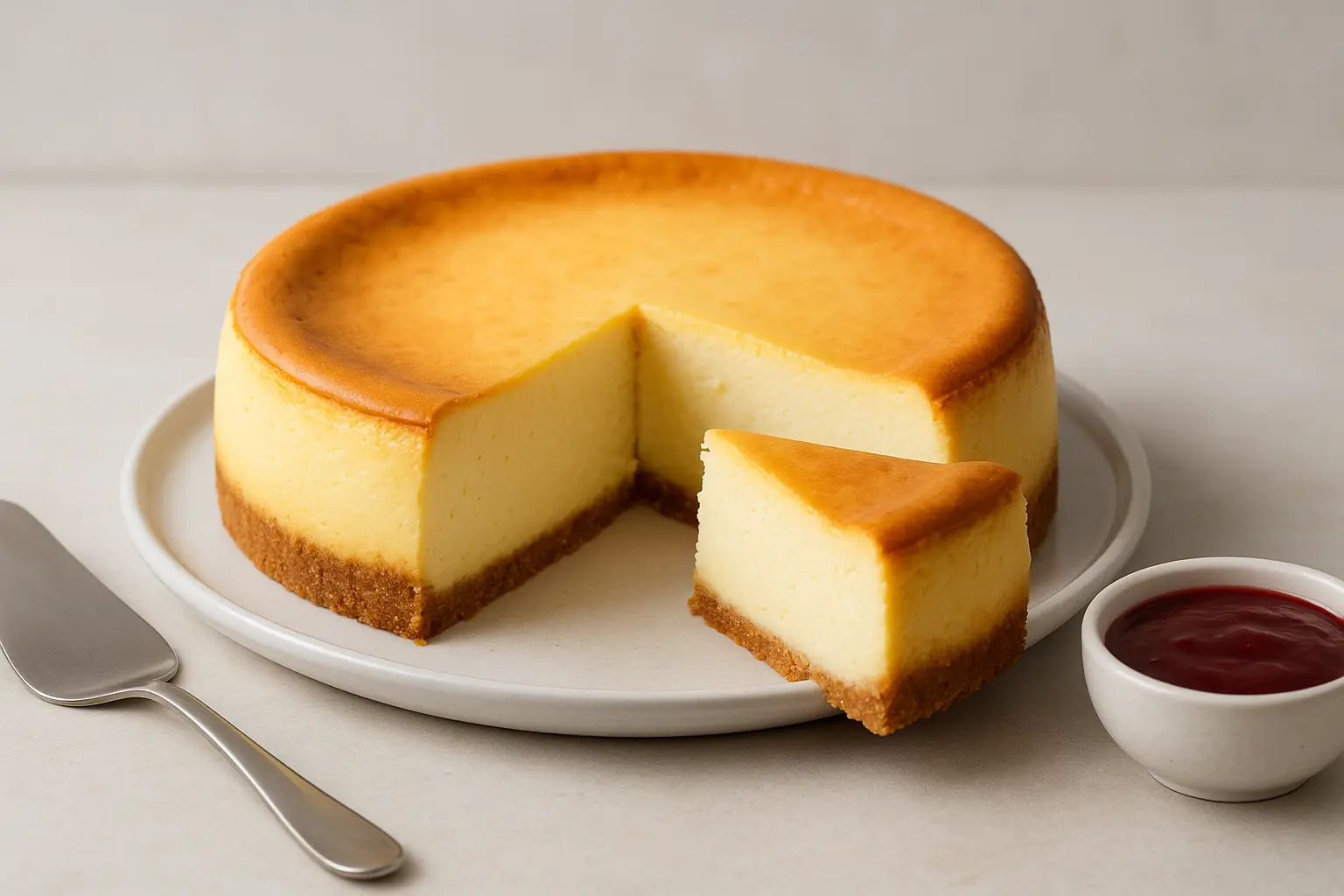
New York cheesecake has a reputation for being both simple and intimidating. Simple because it is basically cream cheese, sugar, eggs, and patience. Intimidating because the margin between “silky and tall” and “cracked, grainy, and weeping” can feel narrow if you have been burned by a cheesecake that split like a fault line the moment it cooled. The good news is that the classic New York style is one of the most forgiving cheesecakes once you understand what it wants: low and steady heat, minimal air in the batter, and a slow landing back to room temperature. Master those, and you will get that dense, creamy slice with a faint tang, a buttery crust, and the kind of height that makes it look like a bakery display cake.
This guide walks you through exactly how to make a New York cheesecake at home, with practical steps, why each step matters, and troubleshooting tips for common issues like cracks, soggy crust, and lumpy filling. If you have been searching for “best New York cheesecake recipe,” “how to make cheesecake without cracks,” or “water bath vs no water bath,” you are in the right place.
What makes a New York cheesecake “New York”?
A New York cheesecake is typically richer and denser than many other styles. It usually relies on full-fat cream cheese, plenty of eggs, and often sour cream or heavy cream to add tang and a smooth mouthfeel. It is baked, not set in the fridge like no-bake cheesecake, and the texture is meant to be firm enough to slice cleanly while still creamy on the tongue.
Here is what you are aiming for:
- A dense, creamy interior with a subtle tang.
- A tall cake with clean sides, commonly baked in a springform pan.
- A lightly golden top, not browned like a Basque cheesecake.
- A crust that stays crisp and buttery, usually graham cracker.
If you want to bake like the classic New York delis, focus on controlling temperature, mixing gently, and cooling slowly.
Ingredients and equipment you will need
Cheesecake is picky about quality, especially the dairy. Use full-fat ingredients. Reduced-fat cream cheese can work, but it increases the risk of a thinner texture and surface cracking.
Ingredients (9-inch springform pan, 10 to 12 slices)
For the crust
- 2 cups (about 200 g) graham cracker crumbs
- 2 tablespoons sugar
- 6 tablespoons (85 g) unsalted butter, melted
- Pinch of salt
For the filling
- 32 oz (907 g) full-fat cream cheese, softened (4 blocks)
- 1 1/4 cups (250 g) granulated sugar
- 2 tablespoons all-purpose flour (or 1 tablespoon cornstarch for a lighter thickener)
- 1 teaspoon vanilla extract
- 1 tablespoon fresh lemon juice (optional but classic for brightness)
- 4 large eggs, room temperature
- 1 large egg yolk, room temperature (extra richness and structure)
- 3/4 cup (180 g) sour cream, room temperature
- 1/4 cup (60 ml) heavy cream, room temperature
- 1/2 teaspoon fine salt
Optional toppings
- Sour cream topping, strawberry sauce, blueberry compote, or a simple lemon glaze.
Equipment
- 9-inch springform pan (3-inch tall is ideal)
- Large roasting pan (for water bath)
- Heavy-duty foil (if wrapping the pan)
- Stand mixer or hand mixer
- Rubber spatula
- Instant-read thermometer (helpful for baking precision)
- Fine mesh sieve (optional for ultra-smooth batter)
If you bake cheesecakes often, consider an instant-read thermometer. It turns “guess and hope” into a repeatable method.
Step-by-step: How to make a New York cheesecake
1) Prep the pan and oven
Cheesecake is sensitive to temperature shifts. Start by setting yourself up for steady heat.
- Place an oven rack in the lower-middle position.
- Preheat to 325°F (163°C).
- Lightly grease the inside of the springform pan.
- Optional but useful: line the bottom with parchment paper for easier release.
If you plan to use a water bath, set a kettle of water to boil now so it is ready when the cheesecake goes in.
2) Make the graham cracker crust
A crisp crust should be compacted firmly and pre-baked. That pre-bake helps it stay crunchy once the creamy filling goes on top.
- Mix graham cracker crumbs, sugar, salt, and melted butter until it resembles wet sand.
- Press into the pan, tightly compacting the bottom and going about 1 inch up the sides if you like a taller crust edge.
- Bake for 10 to 12 minutes at 325°F (163°C).
- Cool the crust while you make the filling.
Practical tip: Use the bottom of a measuring cup to compress the crumbs evenly. A loose press leads to a crumbly crust that falls apart on slicing.
3) Mix the filling (the “no air” rule)
Most cracked cheesecakes are not cursed, they are aerated. Overmixing adds air, and air expands in the oven and collapses during cooling, which encourages cracking and sinking.
- In a large bowl, beat softened cream cheese on low to medium speed until smooth, about 1 to 2 minutes. Scrape down the bowl.
- Add sugar and mix just until combined. Scrape down again.
- Add flour (or cornstarch) and salt, then mix briefly.
- Add vanilla and lemon juice.
- Add eggs and yolk one at a time, mixing on low speed and stopping as soon as each disappears into the batter. Scrape the bowl after the second egg.
- Add sour cream and heavy cream. Mix on low until smooth.
If your batter looks a little bubbly, let it sit for 5 to 10 minutes, then tap the bowl gently on the counter to release air. For ultra-smooth texture, pass the batter through a sieve, though it is optional if your cream cheese started truly soft.
Softened cream cheese means soft, not melted
The sweet spot is when you can press a finger into the block and it yields easily, but it is not greasy or liquid. If it is too cold, you will get lumps. If it is too warm, your batter can become thin and bake unevenly.
4) Water bath vs no water bath (and what I recommend)
A water bath, also called a bain-marie, creates a humid oven environment and moderates heat. This reduces the odds of cracks and helps the cheesecake bake evenly.
Recommended approach: use a water bath. It is the closest thing to a cheat code for a smooth top.
Here are two methods:
Classic wrap method
- Wrap the outside of the springform pan with 2 to 3 layers of heavy-duty foil.
- Place the pan in a roasting pan.
- Pour hot water into the roasting pan until it comes halfway up the springform sides.
Safer no-leak method
- Place the cheesecake pan inside a slightly larger cake pan (like a 10-inch).
- Place that inside the roasting pan with hot water.
- This reduces the risk of water sneaking into the crust.
If you absolutely do not want a water bath, you can still make a great New York cheesecake. Bake at a lower temperature, avoid overmixing, and cool slowly. Expect a slightly higher chance of surface cracking.
5) Bake until set but still slightly wobbly
Pour the filling over the cooled crust and smooth the top. Then bake.
- Bake at 325°F (163°C) for 60 to 75 minutes, depending on your oven and pan.
- The cheesecake is done when:
- The outer 2 to 3 inches look set
- The center still has a gentle wobble, like set custard
- The top is lightly puffed and matte, not wet
If you use a thermometer, aim for 150°F to 155°F (66°C to 68°C) in the center. This is a practical benchmark many bakers use for a creamy interior without overbaking. Overbaking is the fastest route to a dry, crumbly cheesecake.
6) Cool slowly to prevent cracks
Cheesecake hates abrupt changes. The goal is a gradual cool-down.
- Turn off the oven.
- Crack the oven door open and let the cheesecake sit inside for 45 to 60 minutes.
- Remove it from the water bath and set on a rack.
- Run a thin knife around the edge to loosen it from the pan (this helps prevent edge cracking as it contracts).
- Cool to room temperature, then refrigerate for at least 6 hours, preferably overnight.
Do not rush chilling. A New York cheesecake becomes sliceable and cleaner after a full night in the fridge.
Cheesecake topping ideas (and when to add them)
New York cheesecake is great plain, but toppings can add acidity, color, and texture. Add toppings after the cheesecake is fully chilled.
Popular options:
- Fresh berries with a light dusting of powdered sugar
- Strawberry sauce or blueberry compote
- Salted caramel drizzle
- Sour cream topping for classic deli-style tang
Quick berry compote (10 minutes)
Use this if you want a topping that looks bakery-level but takes almost no effort.
Ingredients:
- 2 cups berries (fresh or frozen)
- 2 to 4 tbsp sugar (to taste)
- 1 tbsp lemon juice
- 1 tsp cornstarch mixed with 1 tbsp water (optional for thicker sauce)

Method:
1) Simmer berries, sugar, and lemon juice 5 to 8 minutes.
2) Mash lightly.
3) Stir in cornstarch slurry if you want it thicker, simmer 1 minute.
4) Cool completely before topping cheesecake.
Common problems and how to fix them
Cracks on top
Cracks usually come from one of these: too much air in batter, oven too hot, overbaking, or cooling too quickly.
Try this checklist:
- Mix on low speed and stop as soon as ingredients combine.
- Use a water bath for steadier heat.
- Bake until the center wobbles, not until it is firm.
- Cool gradually in the oven with the door cracked.
If it cracks anyway, do not panic. A cracked cheesecake still tastes perfect. Cover it with berries or a thin layer of sweetened sour cream.
Lumpy batter
Lumps are almost always cold cream cheese.
Fix:
- Let cream cheese sit at room temp 60 to 90 minutes.
- Beat the cream cheese first until smooth before adding sugar.
- Scrape down the bowl often.
Soggy crust
This is usually water bath leakage or under-baked crust.
Fix:
- Pre-bake crust 10 to 12 minutes.
- Use the no-leak water bath method (springform inside a larger pan).
- Cool cheesecake on a rack so steam does not get trapped under the pan.
Cheesecake sinks in the middle
A small dip is normal. A dramatic sink points to underbaking or too much air.
Fix:
- Confirm doneness by wobble test or 150°F to 155°F center temp.
- Avoid high-speed mixing after adding eggs.
Grainy or dry texture
Usually overbaked or baked too hot.
Fix:
- Use 325°F (163°C) and avoid letting the top brown.
- Pull it earlier when the center still wobbles.
- Let it finish setting during the slow cool and chill.
Practical upgrades for a more “bakery” New York cheesecake
If you want that iconic tall slice and ultra-smooth mouthfeel, these small choices make a big difference.
- Use full-fat brick cream cheese (not spreadable tub cream cheese). Tub versions often contain stabilizers and extra moisture.
- Add one extra yolk (already included above). Yolks add richness and a custardy texture.
- Scrape the bowl repeatedly to avoid overmixing. Scraping is quieter than mixing and prevents streaks.
- Plan your timeline so the cheesecake chills overnight. This is not a dessert that wants to be rushed.
A simple schedule that works:
- Afternoon: bake and cool slowly
- Evening: refrigerate
- Next day: slice and serve
How to slice cleanly and store it
Clean slices
For sharp, bakery-style slices:
- Use a long thin knife.
- Dip the knife in hot water, wipe dry, slice.
- Repeat the dip and wipe for each cut.
Storage
- Refrigerate covered for up to 5 days.
- Freeze for up to 2 months:
- Chill fully first.
- Wrap slices tightly in plastic wrap, then foil.
- Thaw overnight in the fridge.
If you freeze a whole cheesecake, freeze it uncovered for 1 hour first to firm the surface, then wrap. That prevents the wrap from sticking to the top.
Conclusion: Your repeatable New York cheesecake method
If you remember only a few principles for how to make a New York cheesecake, make them these: soften the cream cheese, mix gently to avoid air, bake with steady heat, and cool slowly. That combination gives you the classic dense, creamy New York style with a smooth top and clean slices.
Pick a day when you can let it chill overnight, gather your full-fat ingredients, and commit to the slow cool. Once you bake this successfully once, it becomes a dependable, impressive dessert you can bring to any dinner and quietly know it will land. If you try it, top it with a simple berry compote and serve it cold with a hot cup of coffee, then save a second slice for the next day when it tastes even better.
Worth sharing?
Send this to someone who would find it useful.