Here are the best water filtration systems for when the grid goes down
Published
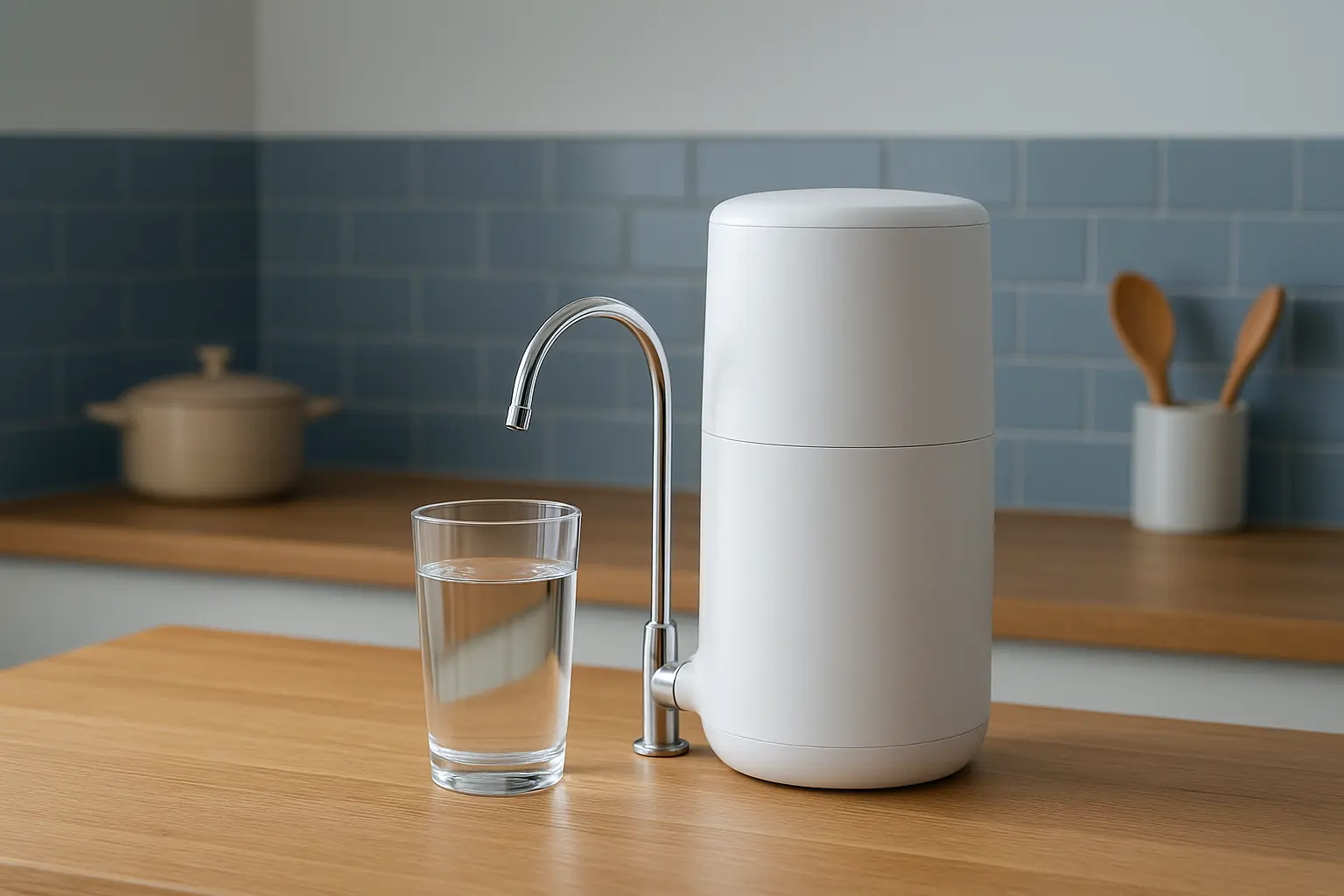
The Best Water Filtration Systems When the Grid Goes Down (An Honest Comparison)
Most people stockpile food when preparing for emergencies. Almost nobody stockpiles enough water—and the few who do often grab the wrong filtration method for their actual situation.
Here’s a number that should stop you cold: the human body can survive roughly three weeks without food, but only three to five days without water—and in heat or physical stress, that window shrinks to 24 hours. Yet a 2022 FEMA survey found that only 44% of Americans have enough water stored for even a 72-hour emergency. The rest are counting on a plan they haven’t made yet.
I’ve spent years researching, testing, and field-using emergency water solutions—from week-long backcountry trips to riding out extended power outages—and I’ve watched otherwise well-prepared people make expensive mistakes because they grabbed whatever Amazon suggested. This guide won’t do that to you.
By the end of this article, you’ll know exactly how every major off-grid water purification method works, where each one fails, and—most importantly—which combination fits your specific scenario. We’re covering chemical tablets, portable filter straws, gravity filters, pump filters, UV purifiers, ceramic filters, solar stills, and rainwater collection. Real numbers. Real tradeoffs. No fluff.
Section 1: Understanding the Enemy — What’s Actually in Untreated Water
The key insight: most people prepare for the wrong contaminants.
When people think about contaminated water, they picture murky swamp water crawling with parasites. That’s a real threat. But depending on your emergency scenario, the bigger danger might be chemical runoff, heavy metals, or viral contamination—and here’s the thing: different filtration methods target completely different threats. Using the wrong one leaves you thinking you’re safe when you’re not.
Waterborne threats fall into four categories:
- Protozoa (e.g., Giardia, Cryptosporidium) — relatively large, 1–15 microns
- Bacteria (e.g., E. coli, Salmonella) — 0.2–10 microns
- Viruses (e.g., Hepatitis A, Norovirus) — 0.02–0.3 microns, far smaller
- Chemical/heavy metal contaminants — require activated carbon or specialized media
A standard hollow-fiber filter like the LifeStraw removes protozoa and bacteria down to 0.2 microns. That sounds impressive—until you realize viruses sail right through it. In North American backcountry streams, viruses are rare enough that this is usually acceptable. But in a flood scenario, a post-hurricane environment, or any situation involving sewage overflow? Viruses become a serious risk, and your filter straw just became false security.
📌 Key Point: Before choosing your filtration method, identify your most likely emergency scenario. Urban flood = virus risk is high. Rural isolation = protozoa and bacteria are the primary concern. Your scenario determines your solution.
Pro Tip: The gold standard for emergency preparedness is a method that handles all four categories. Only a few options actually do this—and we’ll flag them as we go.
Section 2: The Fast, Cheap Options — Tablets and Chemical Treatment
The key insight: chemical treatment is criminally underrated as a backup, and dangerously overrated as a primary system.
Iodine tablets, chlorine dioxide tablets, and sodium hypochlorite (plain bleach) are the cheapest and most portable water treatment options available. A 50-tablet pack of Aquatabs (sodium dichloroisocyanurate) costs around $8–12 and treats up to 50 liters. Katadyn Micropur chlorine dioxide tablets run about $15 for 30 tablets (30 liters). A small bottle of unscented household bleach? Under $3, and 8 drops per gallon treats effectively.
Here’s what the marketing doesn’t tell you:
- Chlorine dioxide (the best chemical option) kills protozoa, bacteria, AND viruses—making it one of the few methods that handles all biological threats. Wait time is 30 minutes for bacteria/viruses, 4 hours for Cryptosporidium.
- Iodine tablets are cheaper but don’t reliably kill Crypto, aren’t recommended for pregnant women or thyroid conditions, and leave a strong taste.
- Bleach works well for bacteria and viruses but does very little against protozoa like Giardia.
The big catch with all chemical methods: turbid (cloudy) water dramatically reduces effectiveness. If your water source has visible sediment, particles physically shield microorganisms from the chemical. You need to pre-filter through a bandana or coffee filter first. In my experience, people skip this step almost every time, which can cut effectiveness by 30–50%.
| Method | Cost | Liters per unit | Viruses? | Portability |
|---|---|---|---|---|
| Aquatabs | ~$0.20/L | 1L per tablet | Yes | Excellent |
| Chlorine Dioxide (Micropur) | ~$0.50/L | 1L per tablet | Yes | Excellent |
| Bleach (8 drops/gallon) | ~$0.01/L | Unlimited | Yes | Good |
| Iodine | ~$0.15/L | 1L per tablet | No | Excellent |
Cost for 1,000 liters: Bleach wins at roughly $10. Chlorine dioxide runs around $500. That math matters for long-term scenarios.
📌 Key Point: Chemical tablets are perfect as a backup or for bugging out light. They’re a terrible primary system for a family of four during a two-week grid outage because you’ll burn through them fast and still have no protection against chemical contaminants.
Section 3: The Workhorses — Filter Straws, Pump Filters, and Gravity Systems
The key insight: the “best” filter depends entirely on whether you’re moving or staying put.
This is where most emergency prep guides just list products. Let’s actually compare them as systems.
Filter Straws (LifeStraw, Sawyer Squeeze, GRAYL)
The LifeStraw Personal ($20) is iconic and genuinely useful—but understand its limitations. It filters up to 4,000 liters, removes protozoa and bacteria to 0.2 microns, but does not remove viruses. It’s also a one-person, one-at-a-time device. You can’t use it to fill a container and share water with a group.
The Sawyer Squeeze ($35) is arguably better: same 0.1-micron filtration, rated for 100,000 gallons (378,000+ liters), and it attaches to standard water bottles and hydration bladders. More versatile, longer lifespan. Still no virus protection.
The GRAYL GeoPress ($90) is different—it uses a press mechanism that filters AND purifies, catching viruses down to 99.99% effectiveness. Produces about 710mL per press, and the cartridge lasts 350 cycles (~250 liters) before replacement at $30/cartridge. More expensive per liter, but the virus protection makes it worth it for uncertain urban scenarios.
Pump Filters (MSR MiniWorks, Katadyn Hiker)
Pump filters are slower and more work-intensive but give you precise control. The MSR MiniWorks EX ($90) filters up to 2,000 liters per cartridge, removes protozoa and bacteria, and the ceramic element can be field-cleaned with a scrubbing pad to extend life. Pumping speed is roughly 1 liter per minute.
📌 Key Point: Pump filters shine when your water source is awkward—a shallow puddle, a trickle from a crack in rock. Gravity filters need enough water depth and flow to work.
Gravity Filters (Sawyer Gravity, Platypus GravityWorks, Berkey)
This is where things get interesting for home or base-camp scenarios. Gravity filters are the highest-output, lowest-effort solution for stationary emergencies.
The Sawyer Gravity system ($50–75) processes 1–4 liters per hour passively—you fill the dirty bag, hang it up, and go do other things. Perfect for families. The Big Berkey ($350–$600) is the heavy-duty home option: stainless steel, holds 8.5 gallons, uses proprietary Black Filter elements rated for 3,000 gallons each (roughly 11,000 liters), removes protozoa, bacteria, AND some viruses, plus heavy metals and chemicals with the fluoride filters added. The per-liter cost over the filter’s life is around $0.01–0.03/liter—exceptionally economical.
The Berkey is heavy, requires countertop space, and costs more upfront. But for a family prepping a home base, it’s the closest thing to a tap you’ll get off-grid.
Section 4: The Underrated Options Most Articles Skip — UV, Solar Stills, and Rainwater
The key insight: UV purifiers are probably the single most underestimated emergency water tool, and solar stills are almost always overestimated.
UV Purifiers (SteriPen)
Ultraviolet light disrupts the DNA of microorganisms, preventing reproduction. The SteriPen Adventurer ($70) treats 0.5 liters in 48 seconds and 1 liter in 90 seconds. It kills protozoa, bacteria, AND viruses—all of them—with no chemicals, no taste change, no waiting 4 hours. A set of 4 AA batteries powers roughly 200 treatments (100–200 liters).
The catch: UV does absolutely nothing about physical particles, chemicals, or heavy metals. Water must be relatively clear, or the UV light can’t penetrate effectively. And it needs batteries or a power source.
In my experience, pairing a SteriPen with a simple pre-filter (even a bandana) gives you fast, comprehensive biological protection in a package that fits in a jacket pocket. This combo costs around $75–$85 total and handles virtually any biological threat.
Solar Stills — The Honest Assessment
Here’s the counter-intuitive truth most survival guides won’t say plainly: solar stills are largely impractical for real emergency water production. A well-constructed ground solar still—plastic sheet over a hole in the ground with a collection cup—produces perhaps 200–600 mL per day under ideal sunny conditions. That’s not enough to sustain one person (minimum 2 liters/day in normal conditions, 4+ liters in heat/activity).
They do have genuine value in two scenarios: as a distillation method (they remove chemicals and salt, making them one of the only options for contaminated groundwater or seawater), and as an absolute last resort when no other option exists. But if you’re counting on a solar still as your primary water plan, make a different plan.
📌 Key Point: Solar stills remove chemical contaminants and produce distilled water—but the output is so low they’re a supplemental tool at best, not a survival strategy.
Rainwater Collection
Often overlooked because it seems too simple—but collecting rainwater is zero cost, zero effort, scalable, and produces relatively clean water that needs minimal treatment. A 1,000 sq ft roof in a 1-inch rainfall event can yield roughly 600 gallons (2,270 liters). Even a basic tarp funnel into a barrel captures meaningful volume.
Rainwater risks: atmospheric pollutants, bird droppings on collection surfaces, and mosquito breeding in storage. A first-flush diverter (diverts the first few gallons that wash the roof), a mesh filter, and a Berkey or chemical treatment downstream gives you a complete, high-volume system. Cost for a basic barrel setup: $50–150.
Section 5: The Master Comparison — What to Actually Buy for Your Situation
| Method | Cost | Liters Output | Portability | Kills Viruses | Removes Chemicals | Best For |
|---|---|---|---|---|---|---|
| Bleach | $3 | Unlimited | Good | Yes | No | Budget backup |
| Chlorine Dioxide Tabs | $15–30 | 30–50L/pack | Excellent | Yes | No | Bug-out bag |
| LifeStraw | $20 | 4,000L | Excellent | No | No | Solo hiking |
| Sawyer Squeeze | $35 | 378,000L | Excellent | No | No | Long-term portable |
| GRAYL GeoPress | $90 | 250L/cart | Good | Yes | No | Urban emergencies |
| SteriPen + pre-filter | $80 | 100–200L/batteries | Excellent | Yes | No | Fast treatment |
| Berkey (home) | $350–600 | 11,000L/filter | Poor | Partial | Yes | Home base |
| Sawyer Gravity | $60 | 378,000L | Good | No | No | Basecamp/family |
| Solar Still | $5–15 | 0.2–0.6L/day | Good | Yes (distillation) | Yes | Last resort only |
| Rainwater + filter | $50–200 | Scalable | Poor | Requires treatment | No | Stationary home |
📌 Key Point: No single method does everything. The most resilient approach is layered: a gravity or Berkey-style filter for home use, chlorine dioxide tablets in your go-bag, and a Sawyer Squeeze or GRAYL as your portable option.
Practical Application — Start Here
Do this right now (10 minutes): Calculate your household’s minimum water requirement. Multiply the number of people by 2 liters/day, then by the number of days you want to be covered. A family of four for two weeks = 112 liters minimum—just for drinking. Double it for hygiene. Now ask honestly: do you have that stored, or a realistic way to produce it?
Do this this week: Order chlorine dioxide tablets (Katadyn Micropur or Aquatabs) for every go-bag and vehicle in your household. Total cost: under $40. This is the fastest, cheapest upgrade you can make to your water security—and it covers viruses that most filters miss.
Work toward this over the next 3 months: Build a layered home system. Step one: a rainwater barrel with first-flush diverter. Step two: a Berkey-style gravity filter for final treatment. Step three: a Sawyer Squeeze per person for mobility. This three-layer system costs $400–$600 total and gives you virtually unlimited water production capacity for a stationary emergency, plus portable options if you need to move.
What’s Next
Off-grid water technology is genuinely improving. Portable electrochemical purifiers—devices that use a small electrical charge to generate chlorine from salt water on demand—are hitting the consumer market now, promising virus-killing power with even simpler operation than UV. Watch for the Drinkable Air and Puralytics lines as they mature.
For going deeper, the CDC’s “Safe Water in Emergencies” guide and the Wilderness Medical Society’s clinical guidelines are the most evidence-based free resources available. If you want one book, Howard Hu’s research on water contaminants in disaster scenarios is invaluable.
The question worth sitting with: If your water source disappeared tomorrow, how many hours before your household was in crisis? Most people, if they’re honest, know the answer is “not many.” The good news is that fixing this problem is cheaper and simpler than almost any other area of emergency preparedness—you just have to actually do it.
Worth sharing?
Send this to someone who would find it useful.