Helium Shortage 2026: How Long Will It Last and What Comes Next?
Published
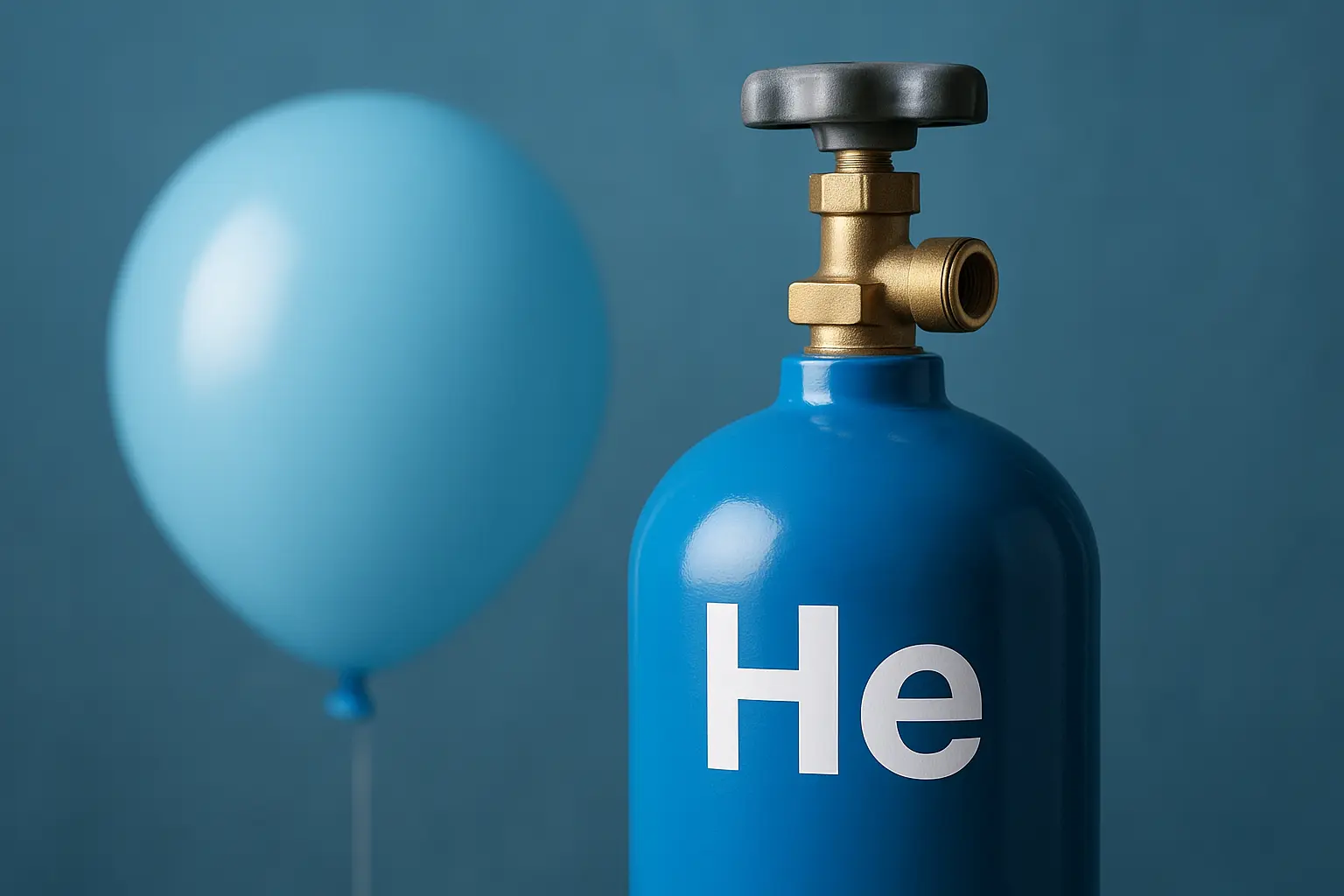
Helium Shortage 2026: How Long Will It Last and What Comes Next?
The weird thing about helium is that people talk about it like it’s a party-supply issue until their hospital, lab, or fab starts calling suppliers in a mild panic.
A few years ago I got interested in helium shortages for the same reason a lot of people do: I kept seeing lazy coverage that jumped straight from “Qatar disruption” to “balloon prices up” and then stopped. Meanwhile, the people who actually care about helium are dealing with MRI uptime, NMR refill schedules, fiber draw lines, leak testing, semiconductor process stability. Very different problem.
And the first fact that usually trips people up is this one: helium is not rare in the universe. It’s everywhere. On Earth, though, usable helium is annoyingly fragile. Once it escapes, it’s gone. Not metaphorically gone. Actually gone, drifting off into space on any human timescale that matters.
So the 2026 crunch is not just “supply got tight.” It’s a good example of how a market can be huge, essential, and still absurdly brittle.
Why helium keeps turning into a problem
Helium forms underground over very long periods through radioactive decay of uranium and thorium. It migrates upward, and then one of two things happens: it gets trapped in natural gas reservoirs, or it leaks away. If it leaks into the atmosphere, that’s basically the end of the story. We do not have some practical industrial way to pull atmospheric helium back out at scale and at sane cost.
That is what makes helium different from other gases people casually lump together. Nitrogen, oxygen, argon: pull them from air. Hydrogen: make it. Helium: you mostly recover it from underground natural gas streams, where the concentration might be as low as 0.1 percent or as high as 7 percent by volume.
Which creates the core headache. Helium supply is a byproduct business. It’s tied to natural gas production decisions that are often being made for reasons that have nothing to do with helium demand.
The map of supply is not comforting either. Roughly 75 percent of global helium comes from just a few places: the United States, mainly the Hugoton field and linked federal-reserve-era infrastructure in Kansas and Texas; Qatar, which on its own accounts for around 30 percent of global supply; and Russia, especially the Amur Gas Processing Plant in Siberia. Algeria and Australia matter too, but they are smaller contributors.
That’s a wild concentration level for something this important. And when Qatar’s Ras Laffan Industrial City had a major production disruption in 2025, it exposed the same weakness people in the industry had been warning about for years: there is almost no cushion in this system.
If you want the short version, it’s this:
- Helium cannot be synthesized.
- It doesn’t have a nice natural recycling loop.
- Once released, it escapes permanently.
- A lot of supply comes from a handful of politically exposed places.
That combination is awful. Honestly, the helium market has been held together with duct tape and long-term contracts for longer than most general-interest coverage admits.
There are also more chokepoints than people realize. Not just “gas field produces helium” and then somehow it arrives.
- Natural gas production decisions at the field level
- Extraction and purification at processing plants
- Liquefaction capacity, because helium has to be cooled to minus 269 degrees Celsius for transport
- ISO container availability and turnaround
- Shipping lanes, especially through the Strait of Hormuz for Qatari exports
- Regasification and destination-side distribution
Most mainstream stories stop at the first bullet. The 2026 situation is uglier because steps three through six are constrained too.
Qatar, force majeure, and why contracts matter less than people think
QatarEnergy’s force majeure declaration matters for a very practical reason: it reminds buyers that a contract is not the same thing as guaranteed molecules in a container.
Ras Laffan is the center of Qatari helium production. Helium is extracted alongside massive LNG operations, run through dedicated trains, liquefied, and loaded into specialized ISO containers that move globally. When that system goes offline, the disruption hits fast because helium storage is limited and expensive. This isn’t crude oil sitting around in giant tanks. Liquid helium needs cryogenic storage, and there’s only so much of that to go around.
Force majeure is one of those phrases people skim past until they need supply. In plain English, it means the supplier can suspend delivery obligations because of extraordinary events outside its control, usually without eating penalties it otherwise might. If you’re a helium buyer on a long-term contract, that can mean your nice-looking volume commitments and price protections suddenly become a lot less comforting.
And yes, spot prices can get ugly. Gasworld and other industry sources have reported spot transactions doubling, sometimes more, during prior shortages. Buyers without allocated contract volumes tend to end up in one of two situations: paying whatever the market is demanding, or simply not getting product.
The pecking order here is not subtle. Long-term contract holders get supply first, even if reduced. Spot buyers, small distributors, and customers relying on supplier discretion are at the back.
Then there’s the part people underestimate: even after production restarts, end users usually don’t feel “back to normal” right away.
The reason is mostly logistical. Liquid helium ISO containers are specialized, expensive, and finite. During a shutdown, containers get stranded in transit, pile up at ports, or sit at customer sites. The ships moving helium containers from Qatar to Asia and Europe are working on roughly 60 to 90 day round trips. Once the flow stops, the whole pipeline gets weird. Once production resumes, it still takes time to refill that pipeline.
That alone can add 2 to 4 months before customers see anything like normalized supply.
Liquefaction is another bottleneck. There just aren’t many helium liquefaction plants. So even if U.S. reserve-linked supply or Algerian output tries to fill the gap, it depends on whether enough liquefaction capacity exists to prep it for transport. In 2022 and 2023, plants operated by Air Products, Linde, and Air Liquide ran into constraints that made Helium Shortage 4.0 worse than it might have been otherwise.
So yes, this is a production crisis. But it’s also a logistics crisis. That’s the part I think public coverage often bungles.
How long this probably lasts
This is the question everybody asks and almost nobody answers directly.
I don’t have a crystal ball, and I might be wrong about the exact timing here, especially if shipping conditions change faster than expected. But based on public industry data, USGS reporting, CryoGas International analysis, and how previous shortages played out, the timeline probably falls into one of three buckets.
Best case: 6 to 9 months of real tightness
This needs a pretty clean recovery path. Ras Laffan would have to return to full or near-full production within about 3 to 4 months. No serious disruption through the Strait of Hormuz. U.S. federal helium reserve-linked volumes and commercial inventories would have to bridge the gap. Then the container pipeline would need to normalize by late 2026.
If that happens, spot prices probably stay 40 to 80 percent above pre-disruption levels during the acute phase, then cool off somewhat while still landing maybe 15 to 25 percent above historical norms as buyers rebuild inventory.
What that looks like in practice:
- MRI operations get allocation pressure, but not widespread shutdowns.
- Big semiconductor fabs with long-term contracts stay mostly protected.
- Balloons and party supply businesses get hammered first, as usual.
The closest analog is probably Helium Shortage 3.0, around 2019 to 2020, when Qatari disruption and U.S. federal reserve transition issues created roughly 8 to 12 months of meaningful tightness.
Base case: 18 to 24 months of expensive, annoying scarcity
This is the scenario that feels most plausible to me.
Qatar resumes production at maybe 70 to 80 percent within 6 months, but full restoration drags out over 12 to 18 months. Logistics then adds another 3 to 4 months before many buyers actually feel the improvement. New supply from U.S. commercial projects and some Algerian expansion helps by late 2026 or early 2027, but not enough to fully replace lost Qatari volumes quickly.
In that version of events, spot prices stay elevated through most of 2026 and into 2027. Hospitals and semiconductor firms start negotiating emergency arrangements. University labs and research users take 20 to 40 percent cuts. Fiber optic manufacturers, which use helium in the drawing process and don’t really have a substitute, feel genuine production pressure.
This is also where a lot of organizations discover too late that “we buy helium regularly” is not the same as “we have helium security.”
Worst case: 3 to 5 years of structural disruption
This requires something bigger going wrong. A prolonged geopolitical shock affecting the Strait of Hormuz. Major additional Ras Laffan damage. Or multiple disruptions at once, say Qatar plus a U.S. or Russian facility problem.
Then you’re not talking about a short squeeze. You’re talking about waiting for entirely new projects to matter: Canada, including North Montney; Tanzania, especially Helium One’s Rukwa project; and additional U.S. sources.
Under that scenario, spot helium could hit 3 to 5 times pre-crisis pricing. Lower-priority uses get priced out or permanently switched where substitution is possible. Some industrial and research users change processes for good. Semiconductor fab expansions could be delayed because supply security becomes part of the capex argument. Strategic reserve discussions in the EU, Japan, South Korea, and Taiwan would probably accelerate.
The big variable separating best case from worst case is not geology. It’s shipping, restart sequencing, and geopolitics around the Strait of Hormuz. Those are things you can actually monitor in near-real time.
Who gets helium first when supply gets rationed
The allocation order during shortages is not based on moral worth. It’s based on contracts, leverage, and how much pain a supplier takes if they fail a given customer.
Roughly, it looks like this:
| Priority Tier | Applications | Why they tend to come first |
|---|---|---|
| Tier 1: Medical | Hospital MRI systems, cryogenic medical equipment | Regulatory pressure, life-critical use, reputational risk |
| Tier 2: Defense and Government | Missile guidance, satellite testing, government research | Contract structure, national security |
| Tier 3: Semiconductor Fabs | Ion implantation, wafer cleaning, lithography | Huge contracts, strategic customers |
| Tier 4: Fiber Optics Manufacturing | Drawing process applications | Helium is process-critical and hard to replace |
| Tier 5: Industrial Leak Detection | Pipeline testing, aerospace components | Safety and technical necessity |
| Tier 6: Scientific Research | NMR spectrometers, particle physics, cryogenic research | Important, but often weaker institutional contracts |
| Tier 7: Welding and Fabrication | Specialty welding gases | Argon can often substitute |
| Tier 8: Entertainment and Retail | Balloons, party supplies | First thing to get cut |
If you’re wondering about MRI scans specifically: Tier 1 status helps a lot, but it doesn’t mean zero effect. During earlier shortages, hospitals generally maintained supply, but at higher cost, and some sites accelerated moves toward zero-boiloff MRI systems or improved recovery because they got tired of living like this.
Semiconductors are more nuanced than the headlines make them sound. A major fab can consume millions of standard cubic feet annually and has serious negotiating leverage. Smaller fabs, foundries tied to research environments, and academic institutions do not.
Also, a pet peeve: balloon coverage gets wildly disproportionate attention because it’s visual and easy. Balloons are only about 6 to 8 percent of global helium demand by volume. The serious story is fiber optics, NMR, MRI, semiconductors. The balloon angle is useful only as a symptom.
What changes after this
The 2026 shortage is painful in the short run, but it probably speeds up changes that were already overdue.
New supply, but on real timelines
There are several projects worth watching.
- United States commercial sources. After Federal Helium Reserve privatization, operators have been building extraction capacity in Wyoming, Kansas, and Montana. Expect incremental additions from 2026 through 2028.
- Algeria. Sonatrach’s partnership with Air Liquide could squeeze out modest expansion, maybe 2 to 5 percent additional global supply by 2027.
- Canada. North Montney and Saskatchewan projects have real potential. North American Helium and Desert Mountain Energy are names people track. Meaningful scale is more of a 2028 to 2030 story.
- Tanzania. Helium One’s Rukwa Basin project is genuinely interesting. Estimates suggest material volumes in the ground, potentially 10 to 20 percent of current global demand. But “in the ground” is not “available to your lab.” Earliest realistic commercial production is around 2028, and East African transport infrastructure is its own issue.
- Russia. Physical supply may exist, but for Western planning this is still unreliable because geopolitics can override availability.
So yes, more supply is coming. No, it is not riding in this month to save you.
Recovery systems suddenly make more sense
This is probably the most durable shift.
Helium recovery for MRI, NMR, and research cryostats has been technically feasible for years. The thing that slowed adoption was economics. When helium was cheaper, a lot of institutions looked at the capex and postponed it.
That math changes fast in a shortage.
A decent recovery setup for a research MRI or NMR system might cost $50,000 to $150,000 upfront, but it can recover 90 to 99 percent of boiloff helium that would otherwise be lost. At current prices, payback periods that used to look like 8 to 10 years can shrink to 2 to 4 years for heavy users.
If you’re a lab manager running NMR spectrometers and burning through more than 100 liters of liquid helium a month, this is probably worth pricing now, not next budget cycle.
MRI technology shifts too
Several manufacturers, including Siemens Healthineers and GE HealthCare, have developed or are developing helium-free or ultra-low-helium MRI systems. Traditional MRI systems use around 1,500 liters of liquid helium. Newer zero-boiloff or near-helium-free designs can reduce that by about 90 percent or, eventually, eliminate it.
This doesn’t solve 2026. It does matter for 2028 to 2032 and beyond.
Where substitution works, and where it really doesn’t
Some uses can switch away from helium. Some can’t.
| Application | Substitute available? | Practical substitute |
|---|---|---|
| Balloon inflation | Yes | Air-filled alternatives, or just skip it |
| Welding shield gas, many applications | Yes | Argon, argon-CO2 mix |
| Leak detection, many cases | Partial | Nitrogen, hydrogen blends |
| Fiber optic drawing | No | None viable |
| MRI superconducting magnets | No, at least currently | Zero-boiloff designs reduce demand instead |
| NMR spectroscopy | No | Some workflow changes possible, but no clean substitute |
| Semiconductor lithography and ion implant | No | Process-integral |
| Weather balloons | Partial | Hydrogen, with safety tradeoffs |
| Rocket fuel pressurization | No | Process-integral |
The important point is that the no-substitute uses are also the highest-value and highest-priority uses. That’s why this shortage matters far more to research and healthcare than to the party-store economy.
If you actually buy helium, here’s what to do
A lot of shortage advice is too vague to be useful. So I’d do the following.
This week, contact your industrial gas supplier and ask two blunt questions: what is my current allocation status, and has force majeure been invoked on my contract? Get the answer in writing if you can. Also ask what volume is allocated to you for the next 90 days. “We haven’t heard anything” is not a supply strategy.
This month, audit your helium use by application. Split it into three piles:
- absolutely critical, no substitute, operation-essential
- important, but maybe there are workarounds
- discretionary, or at least pausable
Then model what happens if your allocation drops 20 percent. Then 40 percent. Then 60 percent. Organizations that game this out ahead of time are dramatically calmer when the cuts actually arrive.
A few specifics:
Hospitals:
Check whether your MRI service contract includes helium supply terms. Confirm your vendor’s Tier 1 allocation position. If you have systems older than 10 years, ask about zero-boiloff upgrade paths and timing.
Semiconductor fabs:
Review force majeure language in supplier contracts. Make sure backup agreements with secondary suppliers are not just theoretical documents in a folder somewhere.
Research labs and universities:
Re-run recovery-system economics using current spot pricing, not 2022 assumptions. And if your institution buys helium in a fragmented way across departments, consolidate it. Procurement leverage matters more than people like to admit.
Distributors and industrial buyers:
If your volume justifies it, dual-source. Also pay attention to origin. Suppliers with U.S.-sourced and U.S.-liquefied inventory are generally in a better position than those heavily exposed to Qatari allocations.
Over the next year, the larger goal is to reduce structural dependence. Recovery systems. Lower-helium equipment where possible. Maybe 60 to 90 days of buffer inventory if you can store it correctly under cryogenic conditions.
That is less exciting than talking about geopolitics, but it’s usually what separates the organizations that cope from the ones that scramble.
What probably comes after the panic
By 2030, the helium market should be more resilient than it was in 2024. More supply from Canada, Tanzania, and expanded U.S. commercial output should reduce how much the whole system depends on Qatar and Ras Laffan. Recovery economics will keep improving as users get burned enough times to finally invest. Zero-boiloff MRI systems will lower medical demand per installed unit.
But that’s the medium-term picture. Right now, the transition is the story.
The base case still looks like 18 to 24 months of elevated pricing, allocation management, and real operational pain for research institutions, smaller manufacturers, and anyone exposed to the spot market. If Strait of Hormuz shipping gets disrupted or there is more infrastructure damage, the timeline gets longer fast.
The useful question for any organization is not really “is helium tight?” It is: did we treat helium as critical infrastructure before this, or are we only doing it now because supply finally got scary?
A lot of institutions learned during Shortages 3.0 and 4.0 that they were more exposed than they thought. The ones that adapted are in better shape now. The ones that assumed each shortage was a weird one-off are back in the same conversation again.
If you want to track this without relying on junk headlines, CryoGas International is worth following for market detail. The U.S. Geological Survey’s annual Mineral Commodity Summaries are useful for production data, even with a lag. Gasworld is still one of the better places to watch spot pricing and industry announcements.
The 2026 helium shortage is serious. It’s manageable if you’ve prepared, much less so if you’ve been winging it. And maybe that’s the slightly uncomfortable takeaway: this crisis is not some freak exception. It’s what a fragile helium market looks like when one of its stress points finally gives way.
Worth sharing?
Send this to someone who would find it useful.