Building Systems That Survive Motivation Loss
Published
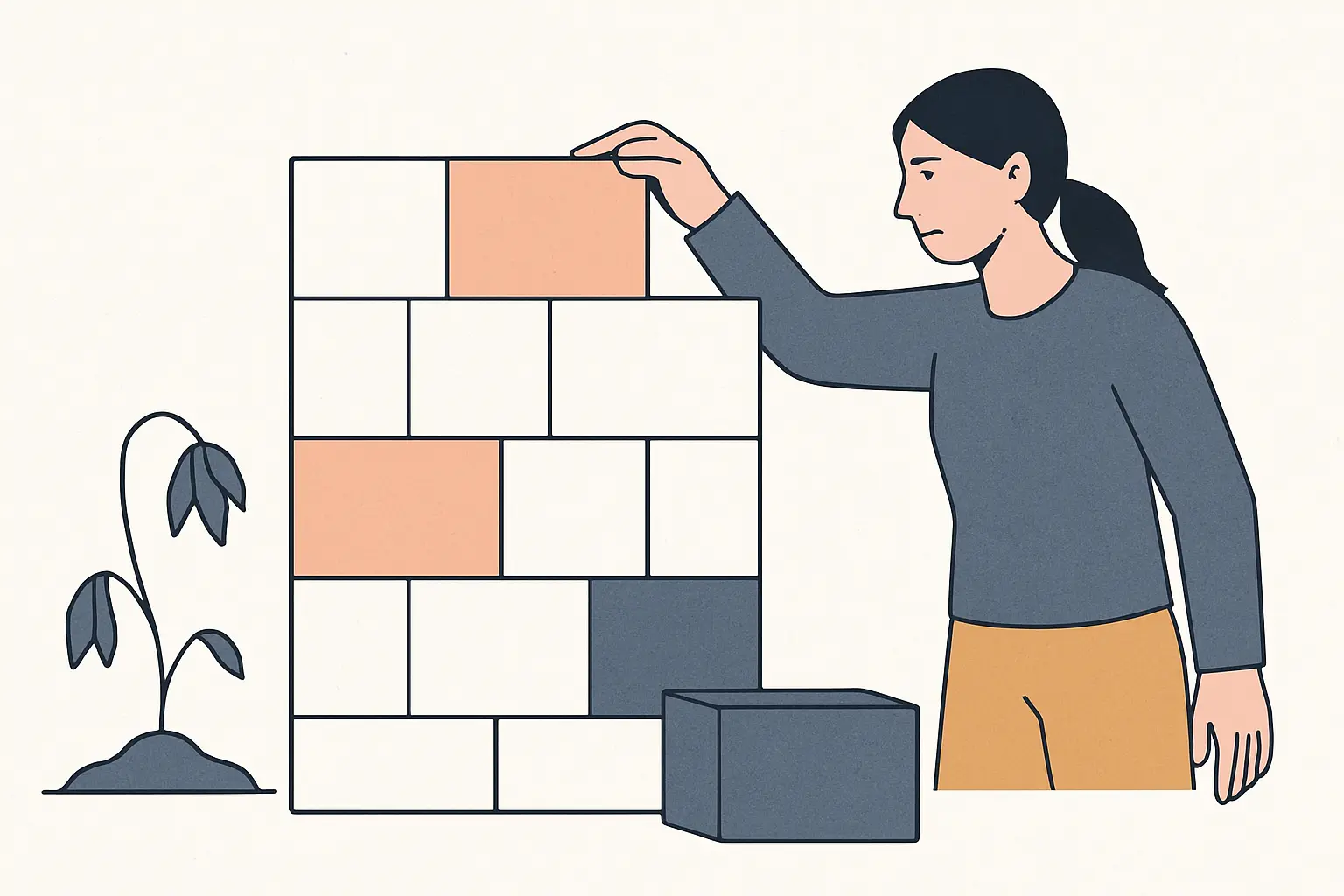
Building Systems That Survive Motivation Loss
Every January, the internet fills up with the same brave promises: “This is the year I get in shape,” “I’m going to save money,” “I’ll finally write that book.” Gyms sell out of memberships. Habit trackers spike in downloads. Productivity YouTube goes on a heater.
And then, quietly, most resolutions collapse.
Not because people are lazy. Not because they “don’t want it badly enough.” Most New Year’s resolutions fail for a more boring, more predictable reason: they’re built on motivation, and motivation is a terrible foundation. It’s weather, not climate. It changes with sleep, stress, workload, heartbreak, hormones, seasons, and whether your boss decided to schedule a 7 a.m. meeting.
If you want to win at any long-term goal, you need a system that survives your lowest-energy days. You need defaults, automation, and a practical replacement for motivation: discipline and habit. Not the romantic version of discipline either. The quiet version that lives in your calendar, your bank settings, your environment, and your “what happens if I do nothing” baseline.
This article is about building those systems, so you don’t have to rely on willpower when motivation disappears, because it will.
Why Most Resolutions Will Fail This Year (And It’s Not Your Character)
A resolution is usually a sentence. “I will work out five days a week.” “I will stop eating sugar.” “I will wake up at 5 a.m.” It sounds strong, but it’s missing the only thing that matters: the mechanics.
When people fail, it’s often because the plan assumes an ideal version of themselves will show up consistently. The plan assumes:
You’ll feel inspired after a long day.
You’ll have extra time.
You’ll make perfect choices while tired.
You’ll resist the path of least resistance.
But the real world runs on friction. When something is easy, it happens. When it’s hard, it doesn’t. When it’s optional, it’s delayed. When it’s vague, it’s ignored.
Motivation-based goals collapse under three predictable forces.
First, motivation is inconsistent. It rises when novelty is high and drops when results are slow. Second, life gets noisy. Travel, sick kids, deadlines, bad sleep, and unexpected bills don’t ask permission. Third, most goals compete with comfort. Comfort wins by default unless you redesign the default.
So the real question isn’t “How do I stay motivated?” It’s “How do I design my life so progress happens even when I’m not motivated?”
That’s a systems question.
The Core Idea: You Don’t Rise to Your Goals, You Fall to Your Defaults
When motivation dies, you don’t suddenly become a different person. You become your default self.
Your defaults are what you do when you’re tired, distracted, stressed, and busy. They’re the behaviors you fall into without thinking. Defaults are the hidden operating system of your day.
If you want to build systems that survive motivation loss, you must make the default behavior the right behavior.
That means shifting your focus from intense effort to consistent design.
Instead of relying on heroic discipline, you build an environment where good habits are the easiest option and bad habits are slightly annoying. Not impossible, not forbidden, just inconvenient enough that your future self doesn’t slip into them automatically.
The best systems are not motivational. They are structural.
Replace Motivation With Discipline and Habit (The Practical Version)
People talk about discipline like it’s a personality trait. In reality, discipline is often just a set of repeated decisions made easier by design. You don’t need iron willpower. You need fewer decisions.
Habit is what happens when you stop negotiating with yourself.
If you want discipline that lasts, build it with three moves: reduce the number of choices, lower the activation energy, and attach the behavior to something that already happens.
You don’t “find motivation” to brush your teeth. You do it because it’s automatic, it’s linked to your morning routine, and the friction to do it is near zero. That’s what your goals should feel like.
Discipline isn’t screaming at yourself in the mirror. Discipline is setting things up so you barely have to think.
Automation: The Unsexy Superpower That Makes You Consistent
Automation is the closest thing we have to a cheat code for behavior change. It works because it removes the daily decision that kills most goals: “Should I do it today?”
If you remove the decision, you remove the debate. And when you remove the debate, you remove the failure point.
Think about where your goals usually fall apart. It’s not the goal itself, it’s the repeated moment of choice. Automation bypasses that moment.
If your goal is saving money, you don’t need a spreadsheet and a monthly burst of motivation. You need automatic transfers on payday. The day your salary hits, money moves into savings and investments before you can spend it.
If your goal is fitness, you can automate commitment. Schedule training sessions like meetings. Pay for a class pack. Arrange a standing gym time with a friend. The “automation” here is social and calendar-based, not digital, but it functions the same way: it makes the behavior the default.
If your goal is healthy eating, automate the supply chain. Your kitchen determines your diet more than your willpower does. Grocery delivery subscriptions, recurring shopping lists, and the habit of ordering the same high-protein staples every week are forms of automation that beat late-night cravings.
Automation isn’t about being extreme. It’s about becoming boringly consistent.
A simple rule for automation that actually works
Automate the actions you want to happen even when your mood is terrible. When you’re exhausted, you’re not going to “choose the right thing.” You’re going to choose the easy thing.
So make the right thing easy and scheduled.
Defaults: The Hidden Engine of Long-Term Success
A default is what happens when you do nothing.
That’s why defaults are more powerful than goals. Goals are hopes. Defaults are reality.
If you want to build systems that survive motivation loss, engineer your defaults in four areas: money, food, time, and environment.
Money defaults decide whether you save or spend. Food defaults decide whether you eat well or snack. Time defaults decide whether you work on your craft or scroll. Environment defaults decide whether you focus or drift.
Your goal isn’t to “be disciplined.” Your goal is to make discipline unnecessary most of the time.
Default design in real life
If your default evening is couch, phone, snacks, and “I’ll start tomorrow,” you don’t need more inspiration. You need a different default.
A better default might be: you walk in the door, you change into training clothes immediately, and your workout is already chosen. Not planned, chosen.
The most common failure I see is people trying to design an ideal life with no friction. Real systems assume friction will happen and still function anyway.
The Real Reason Habit Trackers Don’t Save You
Habit trackers are useful, but they often give people the wrong job. They make you feel like your job is to remember and log habits. That’s not your job.
Your job is to make the habit inevitable.
Tracking is a feedback tool. It’s not the engine. The engine is the system: the time, place, trigger, and reduced friction.
If your habit needs a tracker to exist, it’s not stable yet. The goal is to graduate from tracking to automaticity, where the behavior happens because your day is built that way.
Build “Motivation-Proof” Habits With Identity, Not Intensity
When motivation is high, people go big. They commit to seven-day routines, dramatic diets, and ambitious morning rituals. It feels powerful until reality shows up.
A better approach is to build habits that match who you are becoming, not who you are pretending to be for a week.
Instead of “I’m going to train hard,” anchor to identity: “I’m the kind of person who doesn’t miss two workouts in a row.”
Instead of “I’m going to stop spending,” make it: “I’m a person who pays myself first.”
Instead of “I’m going to write every day for two hours,” try: “I’m a writer, so I write something small every day, even when it’s messy.”
Identity-based habits survive motivation loss because they don’t require a certain mood. They’re just what you do.
The Two-Day Rule: How Pros Stay Consistent Without Being Perfect
Perfection is the enemy of habit. The best systems plan for failure.
Here’s a rule that works because it respects human life: don’t miss twice.
If you miss a workout, fine. If you miss two, you’re now building a new identity: “I don’t work out.”
If you skip a budget check-in, fine. If you skip two, you drift.
If you skip writing, fine. If you skip two, the project dies.
The two-day rule keeps you consistent without requiring you to be flawless. It’s discipline without drama.
Make Bad Habits Harder and Good Habits Easier (Friction Is Your Friend)
Most people try to “resist temptation.” That’s exhausting. A better strategy is to make temptation annoying.
If you want to stop scrolling, you don’t need a speech. Put the apps in a folder, log out, and keep your phone outside the bedroom. Buy a real alarm clock. Make the default night routine phone-free.
If you want to stop impulse buying, remove saved cards, add a 24-hour rule, and set spending alerts. Make purchases slightly slower so your brain has time to catch up.
If you want to eat healthier, stop trusting your future self at 9 p.m. to cook. Pre-cook protein. Keep high-satiety foods visible. Put the snacks where you have to work for them.
This is not about punishment. It’s about engineering.
People with “strong willpower” often just have better friction.
The Power of Pre-Commitment: Pay Now So You Don’t Pay Later
When motivation is high, use it to build constraints.
That’s the trick. Motivation is still useful, just not as fuel. It’s useful as construction energy.
Use motivated days to set up:
Classes you’ve prepaid for
A training partner who expects you
A scheduled weekly grocery order
A recurring calendar block for deep work
Automatic bill pay and automatic investing
A prepared workspace with everything ready
This is how you convert temporary motivation into lasting structure.
It’s the adult version of setting your clothes out the night before.
Systems for Common Goals (Fitness, Weight Loss, Saving Money, Productivity)
People often search for practical examples, so let’s make this concrete. The goal here is not a perfect plan, it’s a plan that survives stress, travel, and bad weeks.
Fitness and exercise consistency
The mistake is relying on motivation to “feel like training.” A motivation-proof system starts with an embarrassingly small minimum and a fixed schedule. Three days a week at the same time beats five random days fueled by hype.
If you struggle to start, reduce the barrier. Commit to showing up and doing ten minutes. Ten minutes becomes twenty. The win is showing up. Once showing up is automatic, intensity becomes easy.
You can also build a default by preparing your gym bag the night before and keeping it in the car or by the door. That tiny detail eliminates a surprising amount of friction.
Healthy eating and weight loss
Most weight loss plans fail because they assume you’ll cook healthy meals while tired and hungry. The system fix is food logistics.
Build a repeating grocery list. Choose three default breakfasts and three default lunches you can repeat. Keep protein ready. Make it easier to eat well than to improvise.
Late-night eating is often a fatigue problem disguised as a willpower problem. A system might include a set kitchen “closing time,” a default herbal tea, and brushing your teeth early. That sounds simplistic, but habits that survive motivation loss are built from small, repeatable anchors.
Saving money and personal finance
If you want to save money consistently, stop depending on end-of-month leftovers. Pay yourself first automatically.
Set up automatic transfers to savings, emergency fund, and investment accounts on payday. Then build a default spending plan with separate accounts: one for bills, one for spending, one for saving. When your spending account is empty, the decision is made.
Personal finance success is mostly default design. It’s less about spreadsheets and more about making the right behavior automatic.
Productivity and deep work
Most productivity advice fails because it assumes you’ll “focus harder.” You won’t. Not reliably.
A motivation-proof productivity system uses time blocks and environment. Put your most important work in the earliest reliable window. Reduce distractions by default: clean desk, single tab, phone out of reach.
Create a starting ritual so your brain knows what’s happening. Same time, same place, same first action. The ritual is a cue, and cues are what habits run on.
Edge Cases: What If You’re Burned Out, Depressed, or Overwhelmed?
Sometimes motivation loss is not a mindset issue. It’s a capacity issue.
If you’re burned out, the system should not demand more output. It should focus on recovery defaults: sleep routine, simplified commitments, gentle movement, sunlight, and reducing decision fatigue.
If you’re dealing with depression or anxiety, discipline language can backfire. In that case, the system should be smaller and kinder. The goal might be “two minutes” instead of “two hours.” Progress can look like maintaining the baseline and keeping appointments, including professional support when needed.
A good system respects reality. It does not shame you for being human.
The One Question That Builds Better Systems Than Motivation Ever Will
When you’re designing a habit, ask:
“What will I do on the day I least feel like doing this?”
If your plan has no answer, the plan is fantasy.
A system that survives motivation loss has a minimum viable version. It has a fallback routine. It assumes chaos. It includes automation, defaults, and pre-commitment.
That’s how you stop failing the same resolutions every year.
Closing: The Goal Is Not to Be Motivated, It’s to Be Set Up
Motivation is a spark. It’s useful, but it’s not reliable.
If you want real change, build systems that make progress the default. Automate what you can. Pre-commit where it matters. Reduce friction for the habits you want and add friction to the habits you’re trying to escape. Keep the minimum small enough that you can do it on bad days. Then let repetition do what motivation never could.
Because the people who win long-term are not the most inspired.
They’re the most prepared.
Worth sharing?
Send this to someone who would find it useful.